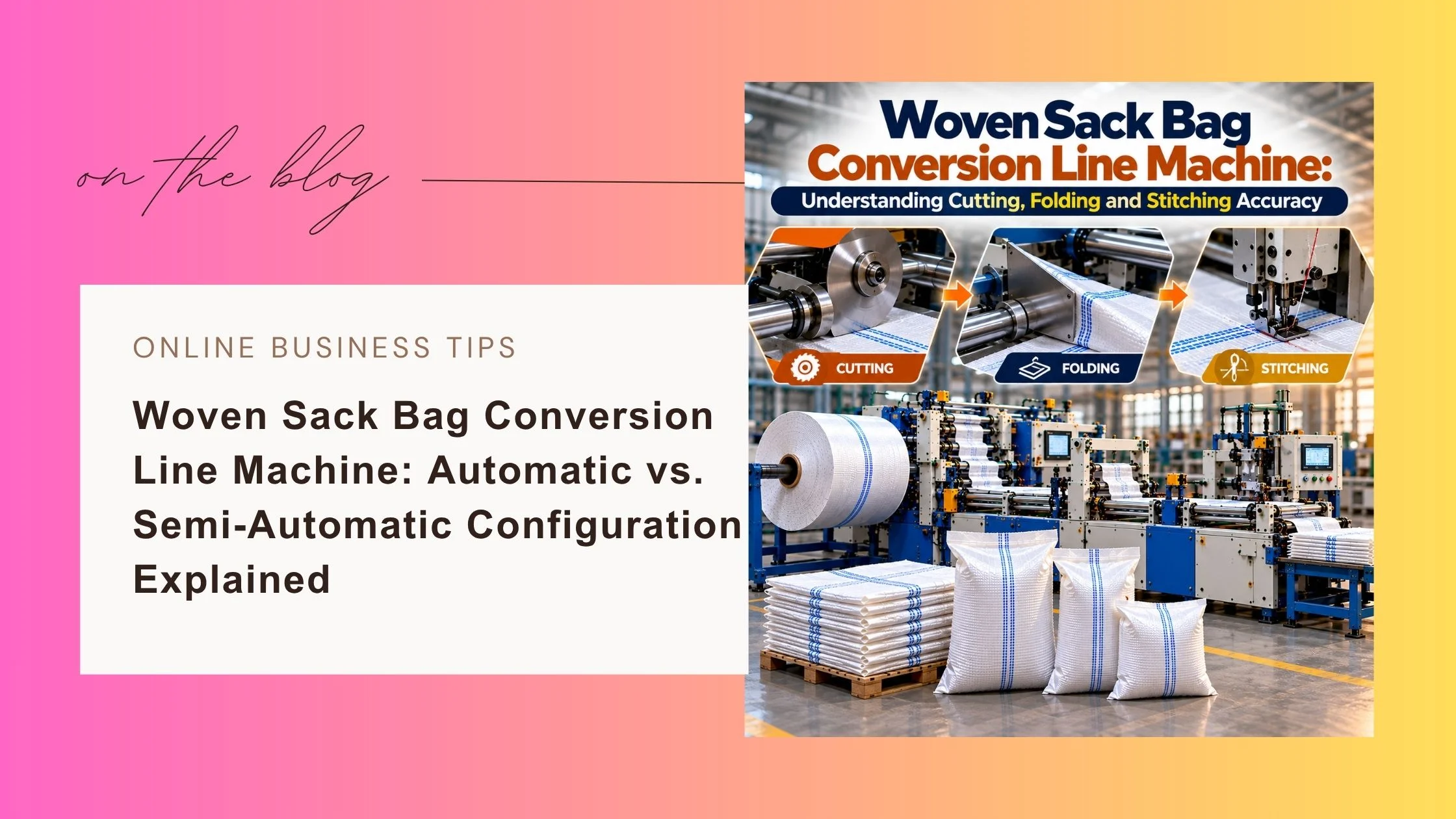
Woven Sack Bag Conversion Line Machine: Cutting Accuracy

August 11, 2026
A PP woven bag production line can look impressive on a factory floor: rolls turning, fabric moving, cutters running and stitching heads working almost rhythmically. But buying the wrong machine can turn that impressive setup into an expensive lesson.
For manufacturers, choosing the right PP Woven Bag Making Machine is about much more than checking maximum speed. You need to consider bag dimensions, material thickness, production volume, automation, cutting accuracy, stitching quality, energy use, maintenance and the type of finished bags you plan to produce.
The right machine should fit your production strategy rather than forcing your factory to adapt around its limitations. If you are also evaluating PP woven packaging for your own business, you can explore Oberon's PP woven packaging solutions for a practical view of finished products and applications.
What Is a PP Woven Bag Making Machine?

A PP Woven Bag Making Machine is equipment used to convert woven polypropylene fabric into finished bags or sacks. Depending on the configuration, the production process can include fabric feeding, printing, cutting, folding, gusseting and stitching.
It is important to understand that a complete PP woven bag manufacturing operation usually involves several connected machines rather than one machine doing absolutely everything. Tape extrusion and circular weaving may produce the fabric, while downstream equipment converts that fabric into finished bags.
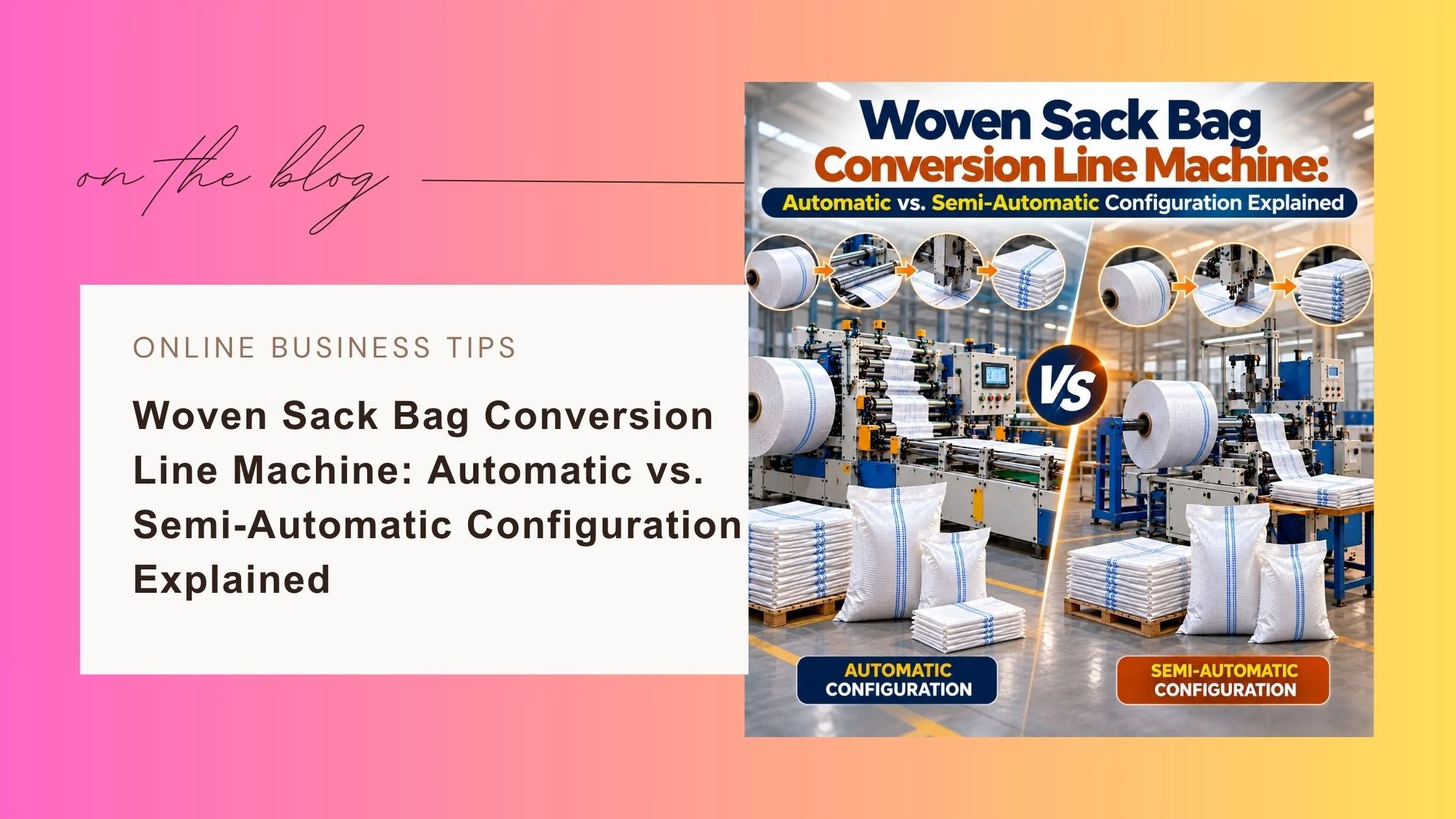
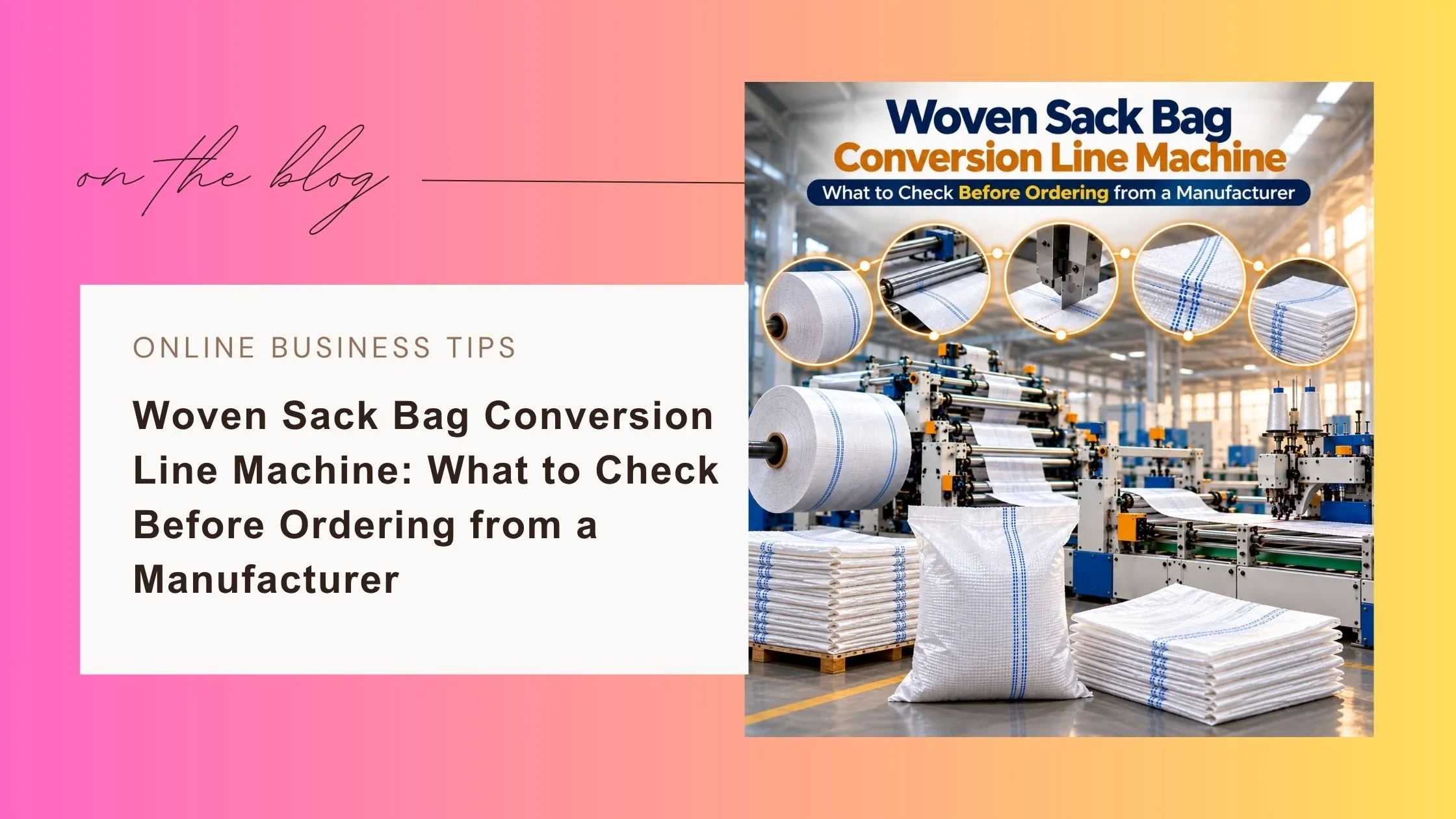
A typical production flow can therefore include woven fabric production, printing, cutting and bag sewing. The exact setup depends on whether you produce standard open-mouth sacks, printed bags, laminated bags, gusseted bags or other specialised formats.
When comparing a PP Woven Bag Making Machine, always ask exactly what operations are included. “Automatic” can mean very different things depending on the machine configuration.
How Does a PP Woven Bag Making Machine Work?
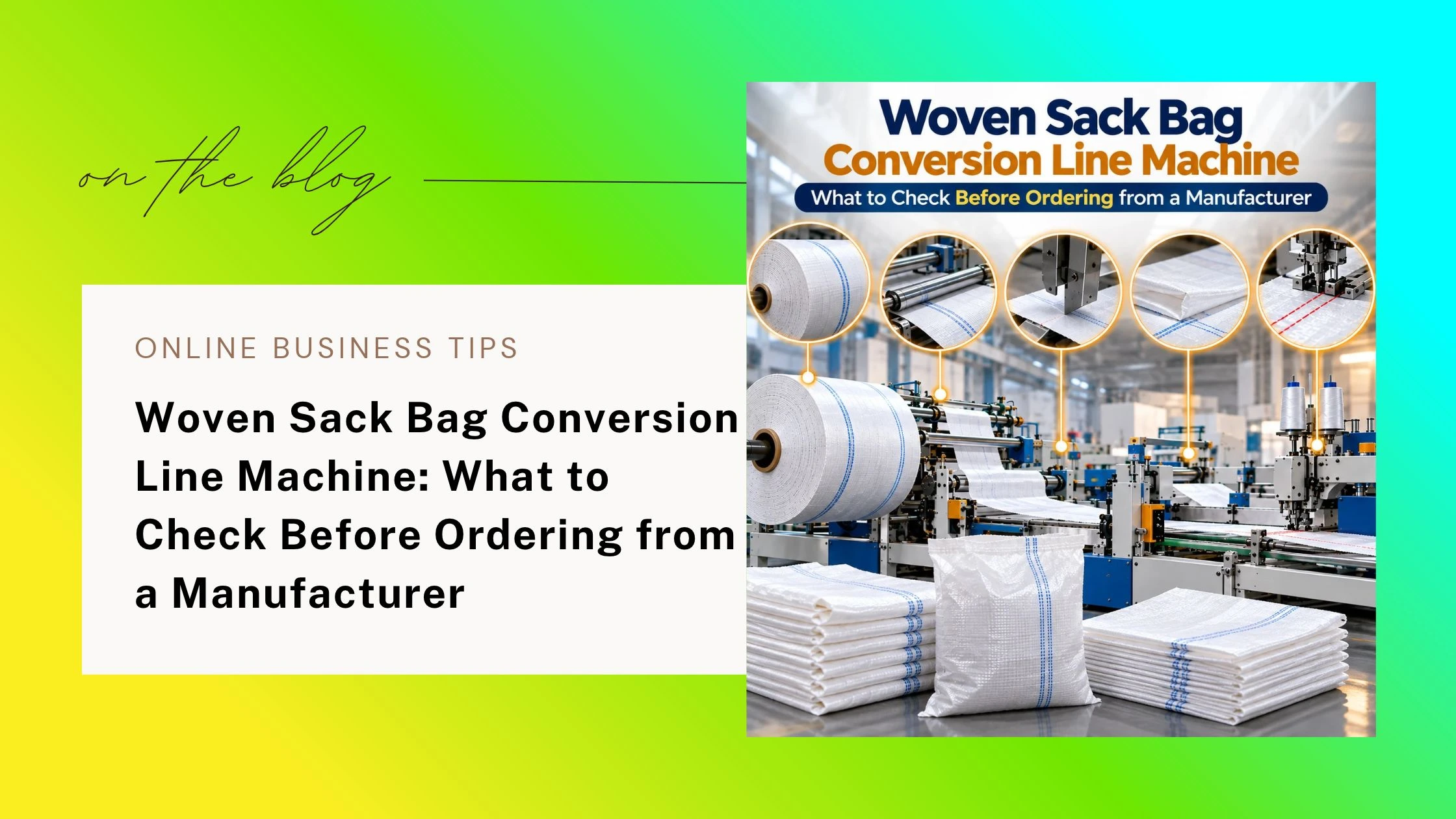
The process starts with woven PP fabric supplied from a loom or fabric roll. The fabric is fed into the converting section, where it can be printed, cut to length and prepared for sewing.
For a standard open-mouth sack, the machine may cut the fabric into predetermined lengths before the top and bottom are processed. Depending on the bag design, folding, hemming or gusseting may also be required.
The final stage is generally sewing or closing. This is where a bag closing system becomes important because seam quality directly affects how the finished sack performs during filling, transportation and handling.
A modern PP Woven Bag Making Machine can automate several of these steps, reducing manual handling and helping manufacturers maintain more consistent dimensions. However, automation does not eliminate the need for correct machine setup, material control and operator oversight.
PP Woven Bag Making Machine vs Manual Production
Manual production can make sense for very small operations or highly specialised low-volume work. It generally requires more operator involvement, which can make output and consistency depend heavily on individual skill.
A PP Woven Bag Making Machine is designed to bring greater repeatability into the converting process. Once the machine is correctly set for a specific bag size and material, automated feeding and cutting can help maintain more consistent production.
The advantage becomes more obvious as volume increases. Imagine producing thousands of sacks per day manually. The challenge is not just speed; it is maintaining the same dimensions, seam position and finish across the entire batch.
Automation can reduce repetitive labour and make production planning easier, but it also increases the importance of selecting equipment that matches the actual production requirement.
Key Features to Look for in a PP Woven Bag Making Machine

Not every PP Woven Bag Making Machine is designed for the same production environment. A buyer should evaluate the complete machine configuration rather than focusing on one headline specification.
Important considerations include:
-
Bag length and width range
-
Fabric thickness and material compatibility
-
Cutting accuracy and repeatability
-
Production speed under actual operating conditions
-
Automatic fabric feeding and tension control
-
Stitching or closing configuration
-
Servo or electronic control systems
-
Operator interface and setup convenience
-
Safety systems and machine guarding
-
Spare parts and technical support
A machine advertised with an impressive maximum speed may not maintain that speed across every bag specification. Fabric type, bag dimensions, sewing configuration and operator settings can all affect practical output.
That is why production samples and performance data are often more valuable than a brochure full of impressive numbers.
Understanding the Bag Closing System
The bag closing system is one of the most important parts of a finished bag operation because it determines how the open end or seam is secured.
Different products can require different closing arrangements. A basic open-mouth woven sack may use stitched closure, while specialised packaging may require additional folding, sealing or valve-related operations.
When evaluating an automatic bag closing machine, look at the stitching consistency, thread handling, machine speed, bag positioning and ease of adjustment. The system should work reliably with your intended bag material rather than simply looking fast during a demonstration.
For manufacturers producing heavy products such as agricultural materials, minerals, chemicals or construction materials, seam strength becomes particularly important. The closing system should therefore be evaluated as part of the complete packaging specification.
Automatic Bag Closing Machine vs Manual Sewing
A manual sewing station provides flexibility and relatively simple operation, but it requires operators to position and guide bags consistently. This can work for smaller production volumes, but labour requirements increase as output grows.
An automatic bag closing machine reduces manual intervention by controlling the bag movement and sewing process more systematically. This can improve production consistency and reduce repetitive operator tasks.
The right choice depends on volume. A small producer may not need full automation, while a high-volume packaging plant may quickly discover that manual closing creates a production bottleneck.
Before investing, calculate your required bags per hour rather than simply asking how fast the machine can run. That number gives you a much more useful basis for comparing equipment.
Woven Bag Closing Machine and PP Woven Bag Closing Machine
A woven bag closing machine is designed specifically to secure woven packaging after filling or during bag production. The exact configuration can vary according to bag type, seam style and production line arrangement.
A PP woven bag closing machine needs to handle the characteristics of polypropylene woven material without damaging the fabric or creating inconsistent seams. Thread tension, needle selection, stitch density and feeding all influence the finished closure.
The machine should also be easy to adjust when switching between bag sizes. If every product change requires a lengthy setup, theoretical production speed becomes much less meaningful.
For a manufacturer producing multiple sack formats, flexibility can be just as important as maximum output.
HDPE Bag Closing Machine: Is It the Same?
HDPE bag closing machine requirements can overlap with PP woven applications, but the materials and bag construction are not necessarily identical.
HDPE woven or film-based bags can behave differently from PP woven fabric during sewing and handling. A machine must therefore be selected according to the actual material structure and bag construction rather than assuming one setting will suit every plastic sack.
If your factory produces both PP and HDPE packaging, discuss material compatibility with the machine supplier before purchasing. Ask for testing with your actual fabric and finished bag specifications.
A machine that performs beautifully with one material may require different needles, thread, tension or feeding adjustments for another.
Industrial Bag Closing Machine for High-Volume Production

An industrial bag closing machine is built for continuous production environments where reliability matters as much as speed.
High-volume factories need equipment that can operate for long periods without excessive stoppages. Mechanical durability, motor performance, accessible components, lubrication requirements and spare-parts availability should therefore be part of the buying decision.
For heavy-duty applications, a heavy duty bag closing machine may be more appropriate where bags carry dense or abrasive materials. Cement, fertiliser, grains, animal feed and industrial powders can place demanding conditions on packaging.
Do not evaluate heavy-duty equipment solely by physical size. The more useful question is whether the machine can consistently deliver the required seam performance under your actual production conditions.
Automatic Sack Stitching Machine: What Should Buyers Check?
An automatic sack stitching machine can reduce manual handling during the final bag-closing stage. But automation should be evaluated in practical terms.
Check how the bag is positioned, how the stitching head is controlled and how easily operators can change bag sizes. Also examine thread consumption, access to wear components and the availability of replacement parts.
If the machine forms part of a larger line, synchronization matters. A fast cutting machine is not useful if the stitching section cannot keep pace. Likewise, increasing sewing speed may create quality problems if the fabric is not being fed consistently.
A balanced line is generally more useful than one machine operating at a spectacular speed while another section struggles to keep up.
Bag Sewing Machine for Woven Sacks
A bag sewing machine for woven sacks should be selected according to the sack material, seam requirements and production environment.
For standard PP woven bags, sewing needs to create a secure seam while maintaining a clean finish. The machine should handle the fabric consistently without excessive thread breaks, skipped stitches or misalignment.
Operators also need access to adjustment points. Production environments change, and even a well-designed line may require adjustments for different fabric weights, bag dimensions or thread specifications.
When comparing machines, request a demonstration using material similar to what your factory actually produces. A machine test using an ideal sample tells you less than a production trial using your real fabric.
Woven Sack Packaging Machine and Bag Conversion Line
A woven sack packaging machine may form part of a broader bag conversion line. The purpose of a conversion line is to connect several production stages into a more efficient workflow.
For example, fabric may move through printing, cutting, folding or gusseting before reaching the stitching section. The more integrated the line becomes, the more important coordination and control become.
An automated bag stitching system can reduce manual handling between cutting and closing. This may improve workflow and reduce the chance of inconsistent bag positioning.
However, automation should be purchased according to production volume and product requirements. There is little value in paying for advanced integration if your factory produces small batches with frequent product changes.
How to Choose the Right Machine Capacity
Capacity is one of the first numbers buyers usually ask about, but it should not be the only number.
Start with your actual production target. Calculate required bags per shift, working hours, planned maintenance and realistic downtime. Then compare the required output with the machine's practical production rate.
A PP Woven Bag Making Machine operating slightly below its maximum rated speed may provide better long-term reliability than one constantly pushed to its limit.
You should also consider future growth. If production is expected to double within a few years, purchasing equipment with no capacity headroom could create another investment sooner than expected.
The best machine capacity is therefore the one that supports your current business while leaving sensible room for growth.
Machine Automation, Controls and Operator Requirements
Automation can improve consistency, but advanced controls are only useful when operators can understand and manage them.
Look for a clear control interface, accessible adjustment settings and useful fault indicators. Operators should be able to identify common problems without spending half the shift searching through a manual.
Automatic systems can also help with repeat settings. If the machine stores production parameters for different bag sizes, changeovers may become more consistent.
When reviewing a PP Woven Bag Making Machine, ask the supplier to demonstrate a complete changeover rather than only showing continuous production. Changeover time can have a major effect on actual factory productivity.
Maintenance and Spare Parts
A machine is only productive when it is running. That makes maintenance and spare-parts support an important part of the buying decision.
Before purchasing, ask how frequently routine maintenance is required and which components are considered wear parts. Find out how quickly replacement parts can be supplied to your location.
The supplier's technical support model also matters. Remote troubleshooting may solve simple issues, while major mechanical or electrical problems could require on-site assistance.
This is one reason experienced bag closing machine manufacturer and bag closing machine supplier relationships can be valuable. The purchase should be viewed as the beginning of equipment support, not the end of the transaction.
Energy Efficiency and Total Cost of Ownership
The purchase price is only one part of the investment. Electricity consumption, labour, maintenance, spare parts, downtime and product waste all contribute to the total cost of ownership.
A cheaper PP Woven Bag Making Machine may become more expensive over several years if it requires frequent maintenance or produces excessive rejects. Conversely, a higher initial investment can make sense when the machine delivers better reliability, automation or lower operating costs.
Ask suppliers for practical information about power consumption and expected maintenance. If possible, compare machines using the same production assumptions.
The goal is not to find the cheapest machine. It is to find the machine that delivers the best production economics for your particular operation.
Quality Control in PP Woven Bag Production
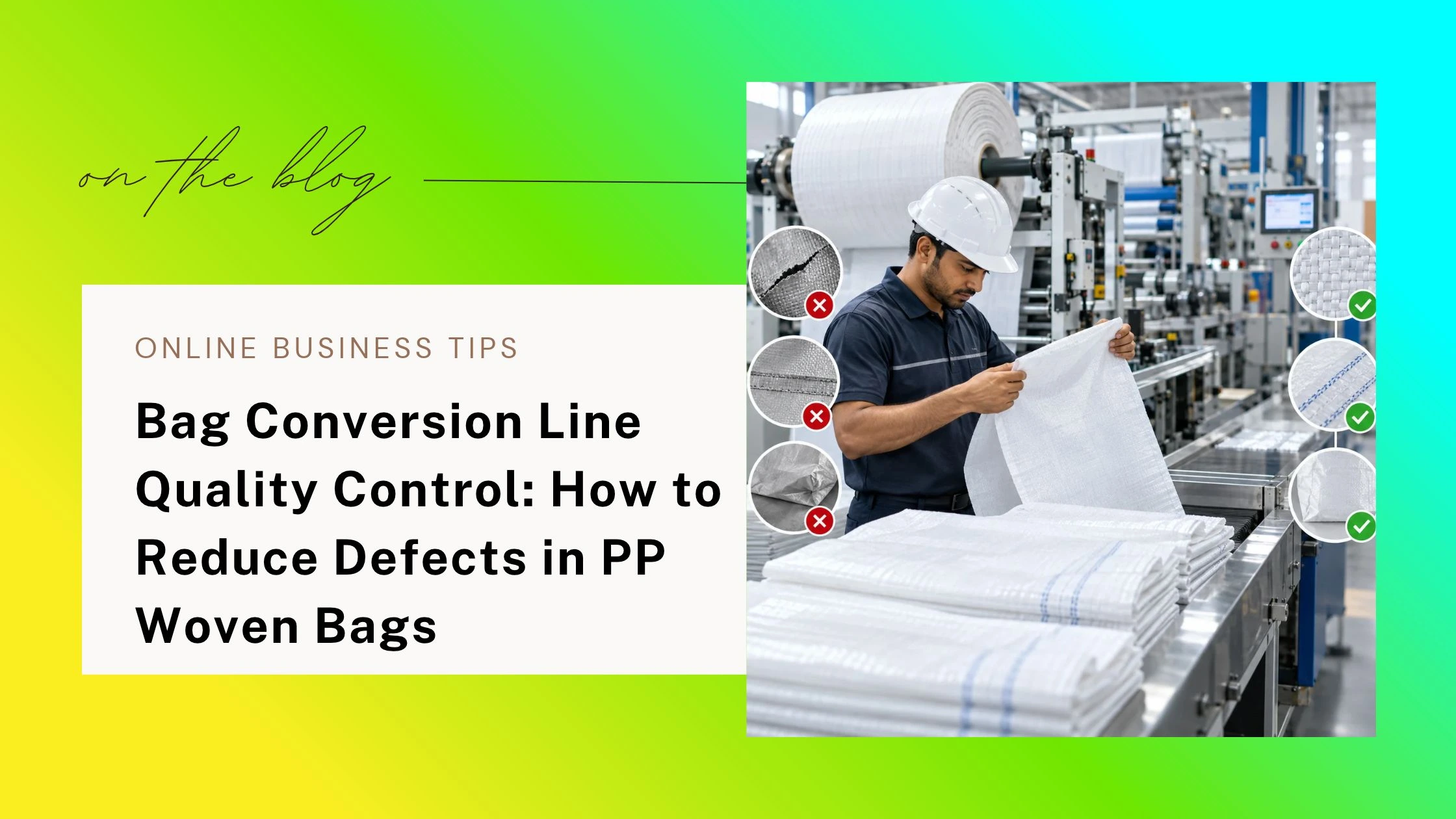
Machine selection directly affects product consistency, but quality control begins with the material and continues through every production stage.
Fabric should have consistent dimensions and suitable strength for the intended application. Cutting must maintain accurate bag dimensions, while sewing should produce reliable seams without excessive thread breaks or skipped stitches.
For food-related packaging, requirements can be more demanding. ISO 23560:2015 specifies characteristics, requirements and test methods for certain woven polypropylene sacks used for bulk packaging of foodstuffs, including 25 kg and 50 kg sacks. The standard was reviewed and confirmed in 2025, so it remains current.
That does not mean every PP woven bag must comply with ISO 23560. Rather, it illustrates why buyers should identify the applicable product and market requirements before finalising machine specifications.
Common Buying Mistakes to Avoid
One common mistake is choosing a machine solely because it has the highest advertised speed. Production speed without consistent quality does not create useful output.
Another mistake is ignoring changeover time. If your factory produces several bag sizes, long setup periods can reduce actual daily productivity significantly.
Buyers also sometimes focus on machine price while overlooking spare parts and service availability. A machine that sits idle while waiting weeks for a critical component is not a bargain.
Finally, avoid purchasing equipment before defining the finished bag specification. Width, length, fabric type, bag style, stitching requirements and expected output should be clear before comparing machines.
Questions to Ask a Machine Supplier Before Buying
Before signing an order for a PP Woven Bag Making Machine, ask the supplier to demonstrate the equipment with specifications close to your intended production.
Confirm what materials the machine can handle, what bag dimensions are supported and what output can realistically be achieved. Ask about electrical requirements, installation, operator training, maintenance schedules and spare parts.
It is also worth asking about warranty coverage and technical support. Clarify whether commissioning is included and how support is provided after installation.
A strong supplier should welcome detailed questions. If the answers become vague whenever you ask about downtime, service or real-world output, consider that a warning sign.
Is a PP Woven Bag Making Machine Worth the Investment?
For manufacturers producing woven sacks at meaningful volumes, automation can improve consistency, reduce repetitive labour and create a more predictable production workflow.
The value depends on your production volume, bag specifications, labour costs, available floor space and growth plans. A machine that is ideal for a large export-oriented factory may be unnecessary for a small producer.
The right approach is to calculate your production requirement first and then match equipment to it. Consider not only today's output but also expected growth, product changes and maintenance capacity.
A PP Woven Bag Making Machine should ultimately be judged by useful production, not by the number printed on its specification sheet.
Why the Complete Production Line Matters
A bag machine does not operate in isolation. Fabric quality, printing, cutting, sewing and packing all influence the finished product.
If one stage produces inconsistent material, downstream equipment may struggle. Uneven fabric can affect cutting, while inaccurate cutting can create stitching problems. Poor stitching can then compromise bag performance.
That is why buyers should evaluate the complete production workflow rather than treating the PP Woven Bag Making Machine as a standalone purchase.
For manufacturers already selling PP woven products, understanding the finished packaging requirements can also help when defining machinery specifications. Oberon Industries, through its packaging business, works with PP woven and BOPP packaging products for international markets.
Final Buyer's Checklist
Before purchasing, make sure the machine has been evaluated against your actual production requirements. The following checks cover the areas that deserve the most attention:
-
Confirm bag dimensions, fabric type and finished bag style.
-
Compare practical output rather than only maximum rated speed.
-
Test cutting and stitching using representative material.
-
Check automation, changeover time and operator requirements.
-
Review power consumption, maintenance and spare-parts availability.
-
Confirm installation, training, warranty and technical support.
-
Calculate total cost of ownership rather than purchase price alone.
The machine should fit your production strategy, floor space, workforce and future expansion plans. If it does, the investment becomes much easier to justify.
Conclusion
Choosing the right PP Woven Bag Making Machine is a production decision, not simply a machinery purchase. The best equipment matches your bag specifications, required output, automation level, material characteristics and future growth. Buyers should carefully evaluate cutting accuracy, stitching quality, closing systems, changeover time, maintenance, energy consumption and after-sales support. A reliable bag conversion line should also be considered as a complete workflow, because fabric, printing, cutting and closing all influence the final sack.
If you are evaluating PP woven packaging requirements or planning your next production investment, take the time to define your finished bag specifications before approaching suppliers. For businesses looking for dependable PP woven packaging solutions, contact Oberon for product information, bulk orders and export support. The team serves international buyers with PP woven bags, BOPP bags, woven fabrics and customised packaging solutions.
Frequently Asked Questions
1. What is a PP Woven Bag Making Machine?
A PP Woven Bag Making Machine converts woven polypropylene fabric into finished bags through processes such as feeding, cutting, folding, gusseting and stitching. Depending on the equipment configuration, several stages can be automated or integrated into a production line.
2. What is the difference between a bag closing machine and a bag sewing machine?
The terms can overlap because both can describe equipment used to close woven sacks. A bag closing machine generally refers to equipment designed to secure the bag opening or seam, while a bag sewing machine for woven sacks specifically highlights the stitching process. The exact configuration depends on the bag type and production line.
3. Is an automatic bag closing machine better for high-volume production?
An automatic bag closing machine can be useful for high-volume operations because it reduces manual handling and can improve consistency. However, the best solution depends on production volume, bag specifications, labour availability and the required level of automation.
4. What should I consider when choosing an industrial bag closing machine?
Consider actual production speed, bag material, seam requirements, machine durability, changeover time, maintenance, spare parts, energy consumption and technical support. For heavy applications, confirm that the machine is suitable for the weight and material characteristics of the finished sacks.
5. How much does a PP Woven Bag Making Machine cost?
The price varies significantly according to machine type, automation level, production capacity, bag dimensions, integration and supplier configuration. Instead of comparing purchase prices alone, buyers should calculate total ownership costs, including installation, energy, labour, maintenance, spare parts and potential downtime.