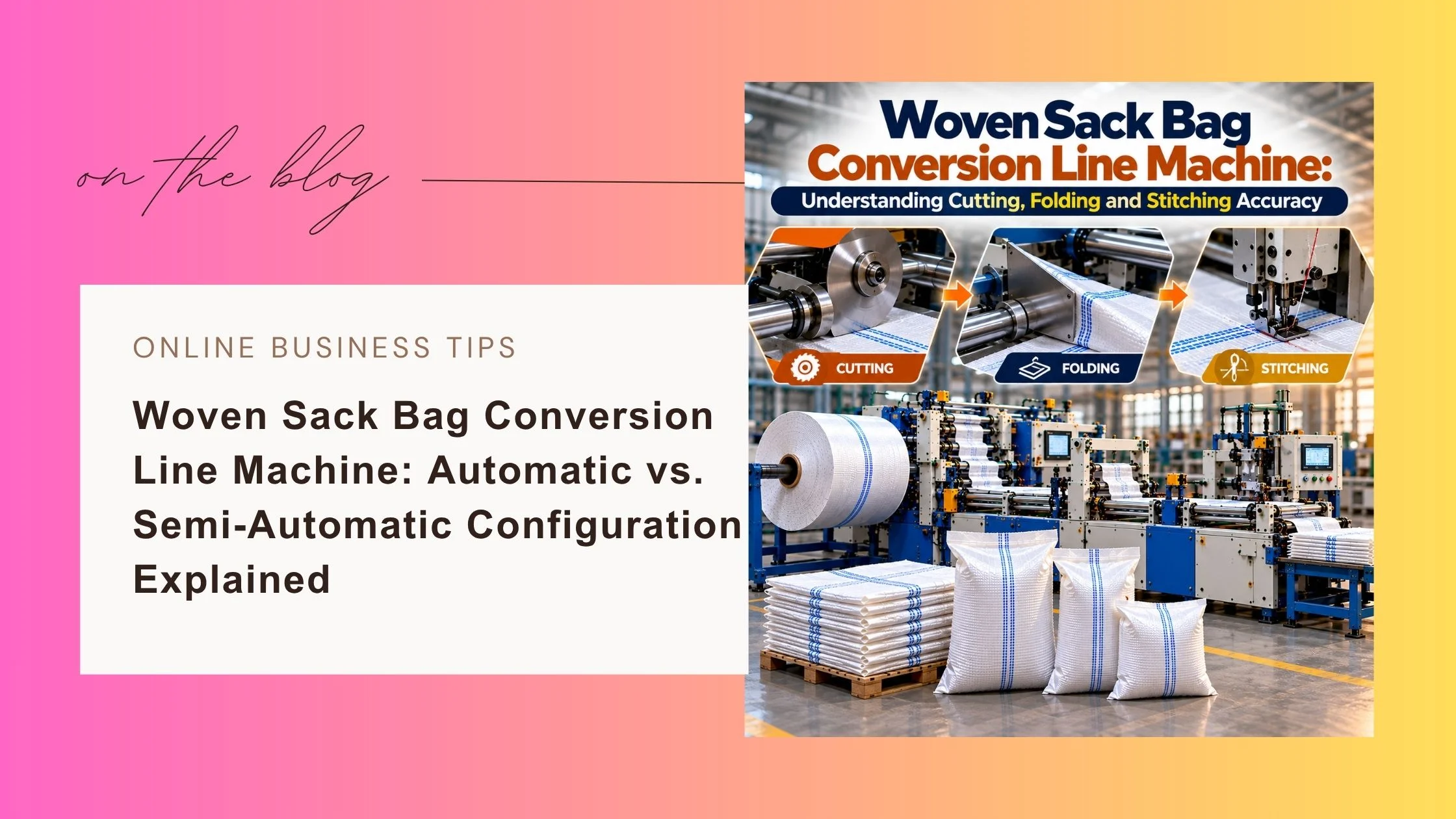
Woven Sack Bag Conversion Line Machine: Cutting Accuracy

August 11, 2026
Introduction
In PP woven bag manufacturing, producing fabric is only part of the job. The real challenge begins when that fabric must be converted into accurately sized, strong, consistent, and market-ready bags. This is where a reliable bag conversion line machine becomes an important part of the production strategy.
A modern conversion line can connect several production stages into a coordinated workflow, helping manufacturers reduce manual handling, improve consistency, and increase production efficiency. For businesses supplying fertilizer, cement, chemicals, agriculture, food grains, animal feed, minerals, and other bulk products, the right equipment can directly influence output quality and operating efficiency.
If you are evaluating a complete bag conversion line for a new plant or upgrading an existing production setup, the key is not simply choosing the fastest machine. You need equipment that matches your bag specifications, production volume, workforce, factory layout, and long-term expansion plans.
What Is a Bag Conversion Line Machine?

A bag conversion machine is industrial equipment used to transform PP woven fabric into finished bags through a sequence of operations such as fabric feeding, cutting, folding, sewing, and other required bag-finishing processes.
Instead of treating each operation as a completely separate production activity, an integrated conversion system coordinates multiple stages. This can help create a smoother material flow and reduce unnecessary handling between machines.
For PP woven bag manufacturers, the exact configuration depends on the final product. A basic sack may require straightforward cutting and sewing, while more specialized bags can require additional operations, such as gusseting, printing integration, valve-related processes, or specific bottom construction.
This is why there is no single conversion line configuration that is ideal for every manufacturer. The correct system should be selected according to the products you actually intend to manufacture.
How Does a PP Woven Bag Conversion Line Work?
The working principle is relatively straightforward: woven fabric enters the conversion section as a continuous roll or prepared material, and the line progressively converts it into individual bag bodies.
Depending on the machine configuration, the process may involve fabric unwinding or feeding, controlled length measurement, cutting, folding or gusseting, sewing, and final bag handling. Automation coordinates these stages so that material moves consistently through the production process.
A well-designed PP woven bag conversion line focuses on synchronization. If one section operates significantly faster or slower than another, production can experience interruptions, material accumulation, or unnecessary downtime. Therefore, actual line integration is just as important as the rated speed of individual components.
Key Components of a Bag Conversion Line

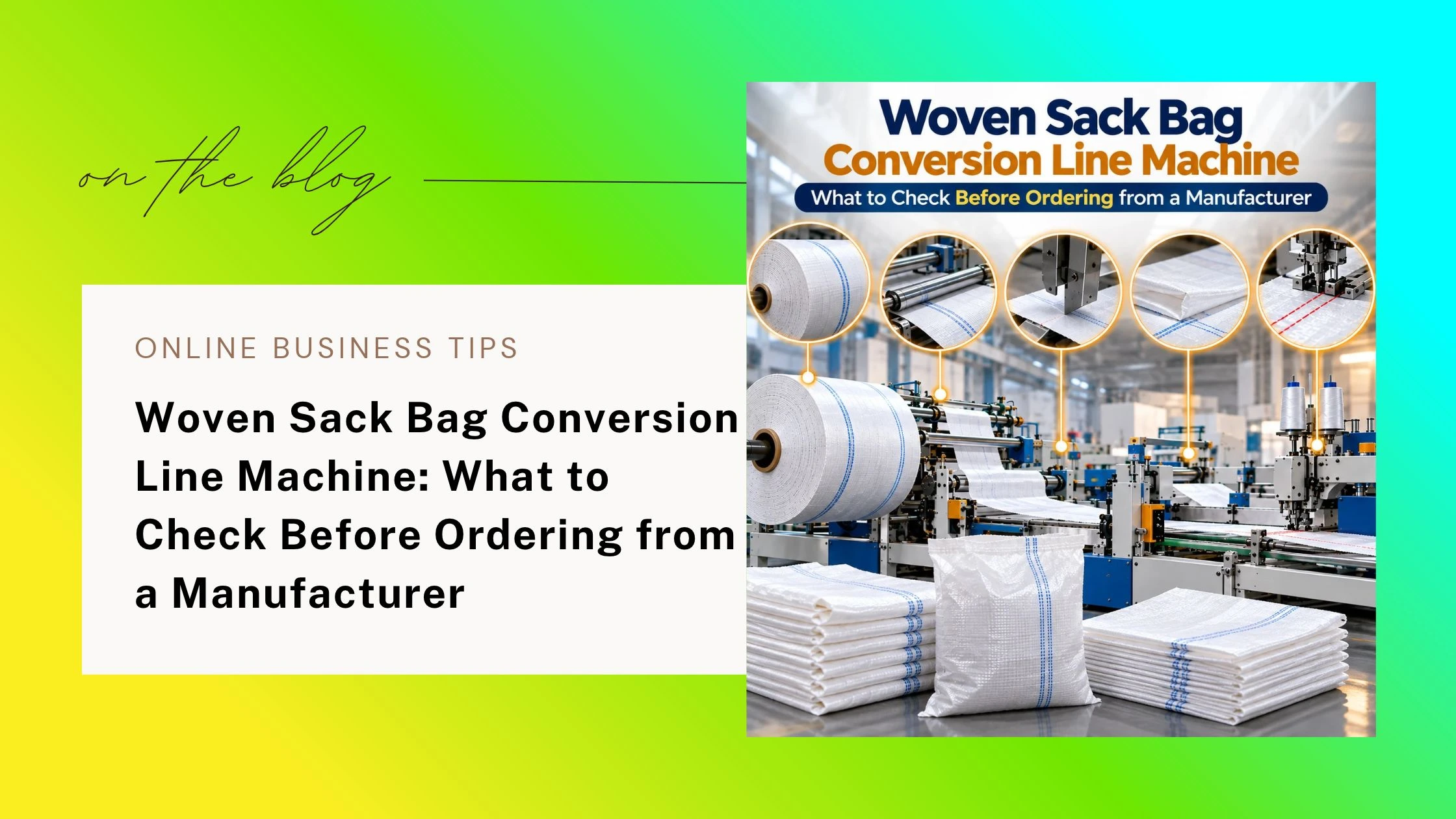
The configuration of bag conversion equipment varies by manufacturer and bag type, but several functions commonly form the core of the production process.
Fabric Feeding and Unwinding
The feeding system controls how PP woven fabric enters the production process. Consistent feeding is important because unstable material movement can affect cutting accuracy and downstream operations.
A good feeding arrangement should accommodate the fabric width, roll characteristics, production speed, and material properties specified for the application.
Cutting Unit
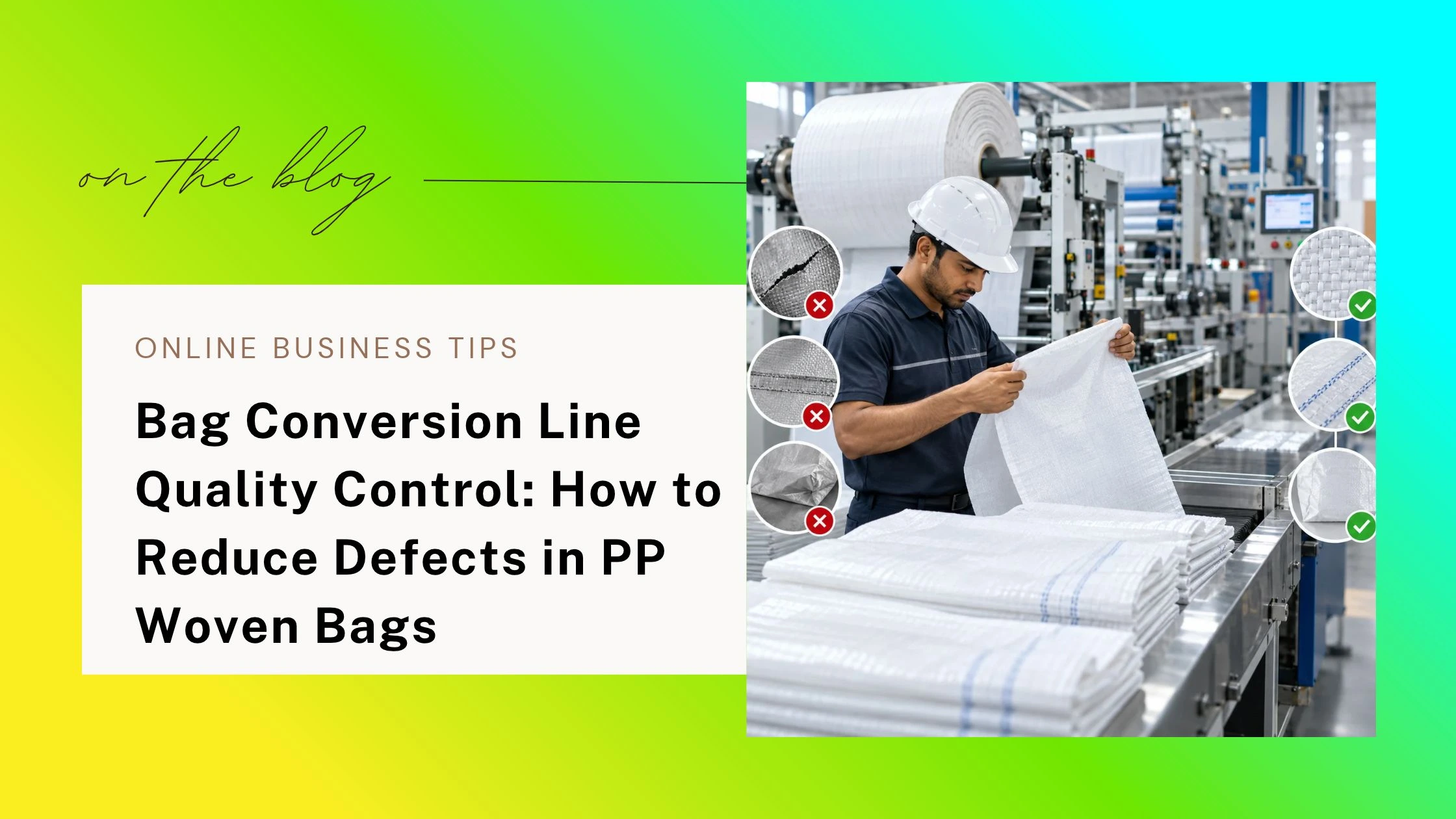
The cutting section determines the finished bag length. Accuracy is critical because even small variations can create problems when bags are stacked, filled, packed, or used on automated filling equipment.
Manufacturers should therefore evaluate cutting precision under continuous production conditions rather than judging performance only from short demonstrations.
Folding or Gusseting System
Depending on the bag design, the line may incorporate folding or gusseting functions. Gusseted bags can provide additional volume and a different finished shape compared with standard flat sacks.
When evaluating an automatic bag conversion line machine, buyers should confirm whether the system supports the bag constructions they expect to manufacture rather than assuming every configuration can handle every bag style.
Sewing and Bag Closing
After cutting and forming, the bag typically requires a closing operation. Sewing quality affects bag strength, appearance, and resistance to handling stresses.
The sewing system should be matched to the fabric construction, thread requirements, bag specification, and desired production speed.
Control and Automation System
Modern industrial bag conversion lines increasingly rely on automated controls to coordinate machine functions, monitor operating parameters, and reduce unnecessary manual intervention.
Automation does not simply mean pressing a start button. The practical benefit comes from repeatability, synchronization, easier parameter management, and reduced dependence on manual adjustments.
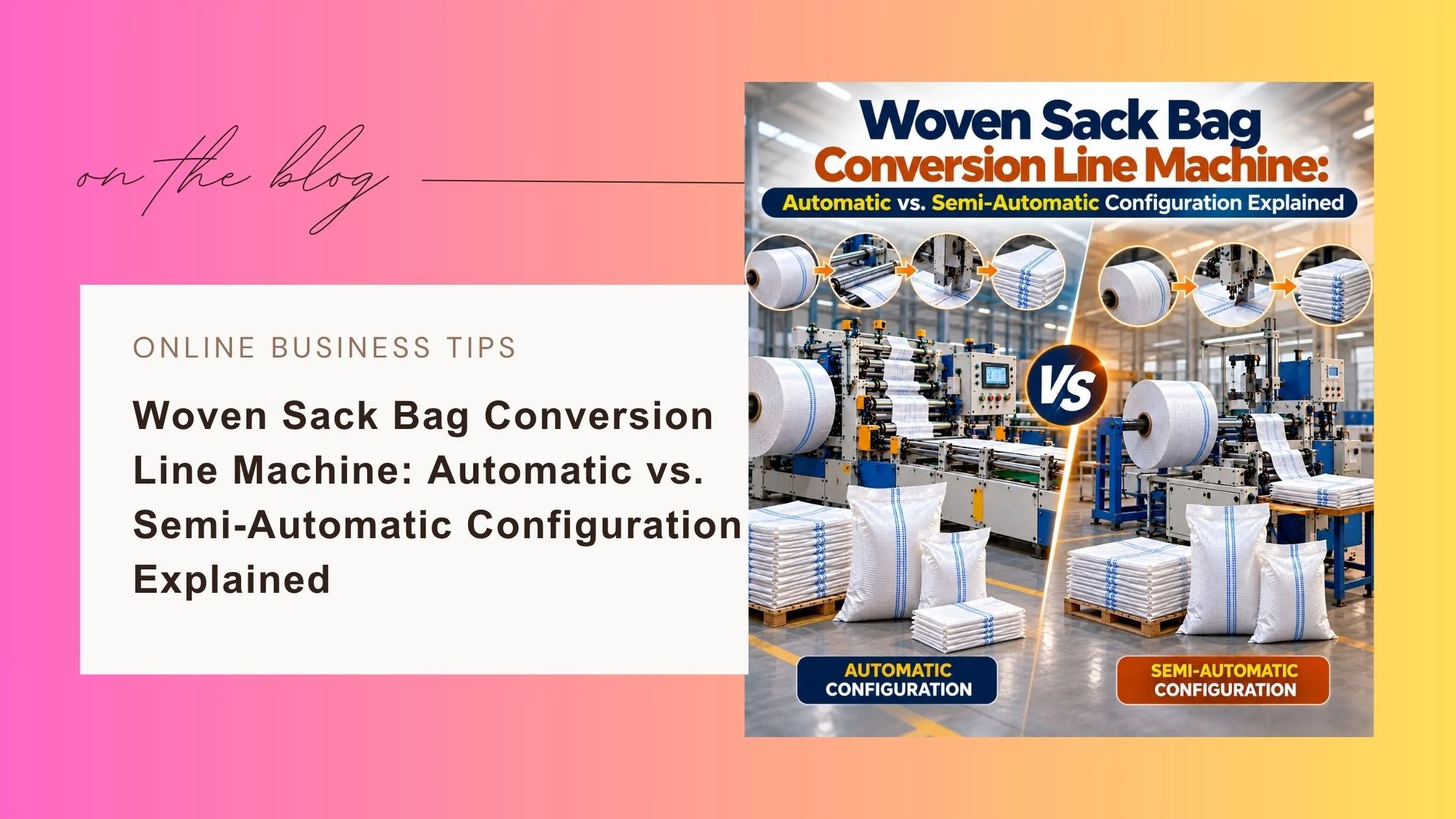
Automatic Bag Conversion Line Machine vs. Semi-Automatic Systems
The decision between an automatic and semi-automatic system should be based on production requirements rather than the assumption that automation is always better.
A semi-automatic setup may make sense for smaller production volumes, frequent product changes, or businesses where capital investment needs to be controlled. It can offer flexibility while still reducing some manual operations.
An automatic bag conversion line machine becomes more attractive when production volumes are high and repeatability is important. Automated material handling and synchronized operations can reduce manual intervention and help manufacturers maintain more consistent production.
For example, a manufacturer producing several thousand bags per day for regular customers may benefit more from automation than a small operation producing short batches with frequent specification changes.
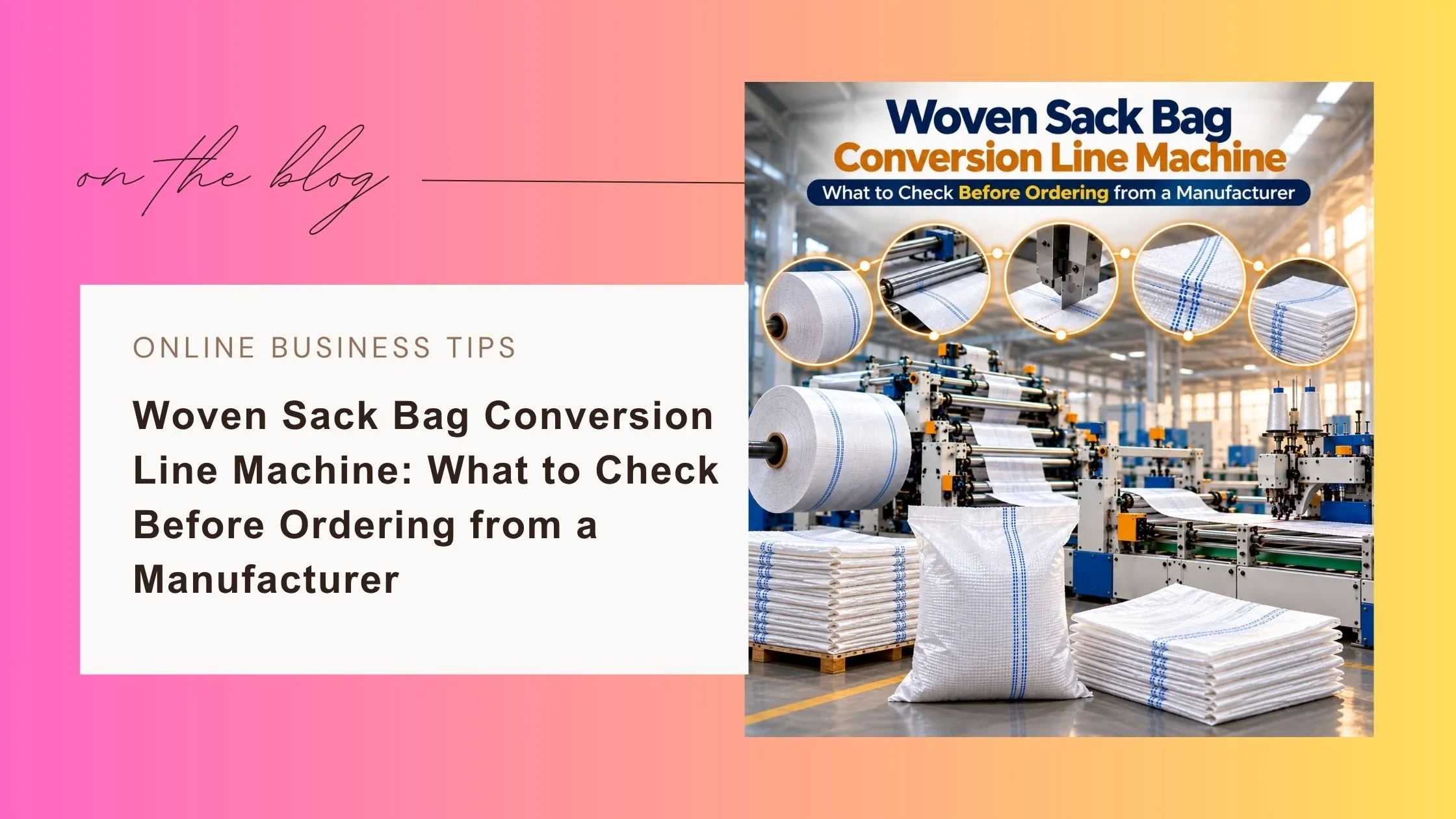
What Should You Consider Before Buying a Bag Conversion Line?

Buying industrial machinery should start with the product specification, not the machine brochure. Before contacting a bag conversion line supplier, define what you need the equipment to produce.
1. Bag Specifications
Start with bag length, width, fabric type, thickness or GSM range, construction, sewing requirements, gusset requirements, and intended application.
A line designed around your actual product range will generally be more useful than equipment selected solely according to its maximum advertised speed.
2. Production Capacity
Determine your realistic daily or monthly production requirement. Then consider expected growth.
If your current requirement is moderate but you expect substantial volume growth over the next few years, choosing an industrial bag conversion line with appropriate capacity can prevent an expensive replacement or major expansion later.
Do not evaluate speed in isolation. Useful production output depends on uptime, changeover time, operator efficiency, material consistency, maintenance, and rejected bags.
3. Automation Level
Consider how much manual intervention is required at each production stage. Higher automation can reduce repetitive work and improve process consistency, but it can also increase the initial investment and technical requirements.
The right level of automation is the one that makes economic and operational sense for your factory.
4. Material Compatibility
PP woven fabrics can vary significantly in construction and characteristics. Your woven sack conversion machine should be evaluated using the actual materials you plan to process.
Ask the supplier whether production trials can be conducted using representative fabric before finalizing the equipment.
5. Changeover Requirements
Manufacturers serving multiple markets may produce different bag dimensions during the same production week. In such environments, changeover time becomes an important productivity factor.
A machine that is fast during continuous production but difficult to adjust between different bag specifications may not deliver the expected overall efficiency.
Comparing Bag Conversion Equipment: What Really Matters?
|
Factor |
Basic Setup |
Advanced Automated Setup |
|
Manual intervention |
Higher |
Lower |
|
Production consistency |
Operator dependent |
More automated |
|
Changeover |
May require more adjustment |
Designed for controlled adjustment |
|
Production volume |
Small to medium |
Medium to high |
|
Process integration |
Limited |
Higher |
|
Expansion potential |
Moderate |
Generally stronger |
The comparison should not be interpreted as meaning that every manufacturer needs the most automated system. Your production profile should determine the configuration.
A business producing customized or short-run sacks may value flexibility more than maximum throughput. Conversely, a large-volume manufacturer may prioritize continuous production, automation, and integration.
Important Features to Look for in a High-Speed Bag Conversion Line
A high speed bag conversion line should deliver more than an impressive maximum speed specification. Buyers should examine how the equipment performs under realistic production conditions.
Look closely at cutting accuracy, fabric handling, synchronization between stations, sewing consistency, control-system usability, safety systems, maintenance access, and changeover procedures.
Another important factor is stability at the intended operating speed. A line that can technically reach a high speed but frequently requires adjustment or produces excessive rejects may be less productive than a slightly slower system with reliable continuous operation.
For this reason, ask suppliers for practical production data, not only headline specifications.
Bag Conversion Line Machine: New Machine or Upgrade?
For an existing PP woven bag manufacturer, the decision may be between replacing an older system and upgrading the current production setup.
Older machinery may require more manual intervention and frequent maintenance. It can also create bottlenecks when one stage of production cannot keep up with another.
A new PP bag conversion machine can provide an opportunity to redesign the production workflow around current market requirements. However, replacement should be justified through production volume, quality requirements, downtime, maintenance costs, and expected return on investment.
If the existing system is still mechanically sound, targeted upgrades may sometimes improve performance without replacing the complete line. The correct decision depends on the machine's age, condition, compatibility, and available upgrade options.
Safety and Compliance Considerations
Industrial machinery selection should always include safety considerations. Manufacturers should evaluate guarding, emergency-stop systems, electrical protection, operator access, maintenance procedures, and documented risk-reduction measures.
ISO 12100:2010 provides general principles for machinery safety, including risk assessment and risk reduction. ISO states that the standard establishes terminology, principles, and methodology for achieving safety in machinery design. It remains the current published edition while a revised document is under development.
You can review the standard directly through the International Organization for Standardization (ISO) before discussing machinery safety requirements with your supplier.
Safety should not be treated as an optional feature added after purchasing equipment. It should be considered during machine selection, installation, commissioning, operator training, and maintenance planning.
Why Supplier Selection Matters as Much as Machine Selection
Two machines can have similar specifications and still deliver very different ownership experiences. The difference often comes from engineering support, installation, training, spare parts availability, troubleshooting, and after-sales service.
When comparing a bag conversion line manufacturer, ask how the supplier handles commissioning and technical support. Find out whether operating manuals, electrical documentation, maintenance guidance, and recommended spare-parts information are provided.
For international buyers, communication and service responsiveness become even more important. A supplier located in another country may still be a strong choice if it has reliable export experience, technical documentation, remote support, and an organized spare-parts process.
How to Evaluate a Bag Conversion Line Supplier
Before placing an order, request a detailed technical proposal rather than relying on a general quotation.
The proposal should clearly identify the machine configuration, production specifications, compatible material range, automation level, electrical requirements, installation requirements, included components, warranty terms, commissioning arrangements, and expected delivery schedule.
Ask for production videos, technical documentation, references where appropriate, and a demonstration using material similar to yours. A serious bag conversion line supplier should be able to explain not only what the machine can do, but also the operating conditions under which the stated performance is achieved.
This approach helps buyers compare suppliers on actual engineering value instead of comparing only the initial purchase price.
Installation, Training and After-Sales Support
The installation stage can significantly influence the first few months of machine operation. Correct alignment, electrical installation, machine setup, calibration, and operator training should be planned before the equipment arrives.
Training should cover normal operation as well as basic troubleshooting, cleaning, adjustment, preventive maintenance, and safe shutdown procedures.
Spare-parts planning is equally important. Critical wear components should be identified before commissioning so that production does not stop for an avoidable replacement issue.
For international manufacturers, remote technical assistance can be particularly valuable. Clear documentation, video support, spare-parts identification, and responsive communication can reduce the impact of unexpected downtime.
How Much Does a Bag Conversion Line Machine Cost?
There is no universal price for a bag conversion line machine because the investment depends on the machine configuration, automation level, production capacity, bag specifications, included equipment, customization, and supplier.
A basic configuration and a fully integrated high-speed production line should not be compared simply on price. The cheaper option may require more labor, deliver lower output, or provide fewer capabilities, while a higher-investment system may be justified by greater production efficiency.
The better approach is to calculate the total investment against expected production requirements. Consider equipment price, installation, electricity consumption, labor, maintenance, spare parts, downtime, rejected bags, and expected useful life.
In other words, the purchase price is only one part of the machinery investment.
Common Buying Mistakes to Avoid
One of the most common mistakes is choosing machinery based only on maximum speed. Another is failing to provide the supplier with complete bag specifications before receiving a quotation.
Some buyers also overlook factory-floor requirements, electrical infrastructure, spare-parts availability, operator training, and future production expansion.
A further mistake is comparing quotations that do not contain equivalent machine configurations. One supplier may include additional automation, feeding systems, safety components, or commissioning services while another may quote a more basic setup.
Always compare like-for-like technical specifications before making a final decision.
Is a PP Woven Bag Conversion Line a Good Investment in 2026?
For manufacturers with stable demand and growing production requirements, investing in a modern PP woven bag conversion line can improve production organization, consistency, and scalability.
The strongest business case usually comes when the equipment solves a clear production problem. That could be excessive manual handling, inconsistent bag dimensions, limited output, high labor requirements, frequent downtime, or difficulty maintaining quality as order volumes increase.
The investment should therefore be evaluated as part of the complete manufacturing strategy. A machine that supports your current product range while providing room for future growth can offer more long-term value than equipment selected solely for today's production requirement.
Why Work With an Experienced Bag Conversion Line Manufacturer?
An experienced manufacturer can help translate your product requirements into an appropriate machine configuration. This is particularly important when bag dimensions, material specifications, production volume, and automation requirements vary between customers.
For global buyers, the relationship should extend beyond the machine shipment. Engineering communication, commissioning, operator training, documentation, spare parts, and technical support all contribute to the actual ownership experience.
Oberon Industries provides machinery solutions for manufacturers looking to improve PP woven bag production and conversion capabilities. Buyers should still evaluate any supplier against their own technical requirements, production targets, factory conditions, and service expectations before making a machinery investment.
Conclusion
Choosing the right bag conversion line machine is a production decision, not simply a machinery purchase. Manufacturers should evaluate bag specifications, production capacity, automation, material compatibility, cutting and sewing accuracy, changeover requirements, safety, maintenance, and supplier support. A reliable system should fit the factory's current needs while providing a practical path for future production growth.
If you are planning a new PP woven bag manufacturing setup, expanding production, or replacing outdated equipment, the next step is to compare your requirements with a properly configured conversion solution. Explore the Bag Conversion Line Machine solution from Oberon Industries and request a technical quotation based on your bag specifications, target production volume, and required automation level.
Frequently Asked Questions
1. What is a bag conversion line machine used for?
A bag conversion machine is used to convert PP woven fabric into finished bags through processes such as feeding, cutting, folding or gusseting, sewing, and bag handling. The exact configuration depends on the bag design and production requirements.
2. What is the difference between a bag conversion line and a PP woven bag making machine?
A bag conversion line generally focuses on converting already produced PP woven fabric into finished bags. A complete PP woven bag making machine setup can refer more broadly to equipment involved across different stages of bag production. The terminology can vary between manufacturers, so buyers should always compare the actual machine configuration rather than the product name alone.
3. How do I choose the right automatic bag conversion line machine?
Start with your bag dimensions, fabric specifications, required production volume, automation requirements, product variety, and future growth plans. Then compare machine speed, accuracy, changeover time, safety, maintenance requirements, technical support, and supplier experience.
4. Is a high-speed bag conversion line always better?
Not necessarily. A high-speed line is valuable when the complete production system can maintain stable operation at that speed. Cutting accuracy, material handling, sewing quality, downtime, changeovers, rejects, and maintenance all affect actual productivity.
5. What should I ask a bag conversion line manufacturer before purchasing?
Ask about production capacity, compatible PP woven fabric, bag dimensions, machine configuration, automation, power requirements, installation, commissioning, warranty, training, spare parts, technical support, and expected operating conditions. A production trial using representative material can also provide valuable information before finalizing the purchase.