Woven Sack Bag Conversion Line Machine: Cutting Accuracy
October 11, 2026
Choosing the right machinery configuration is an important decision for manufacturers producing PP woven sacks for fertilizers, cement, food grains, animal feed, chemicals, polymers, and other industrial applications. The choice between automatic and semi-automatic equipment affects production workflow, operator involvement, output consistency, changeover flexibility, maintenance, and overall operating costs.
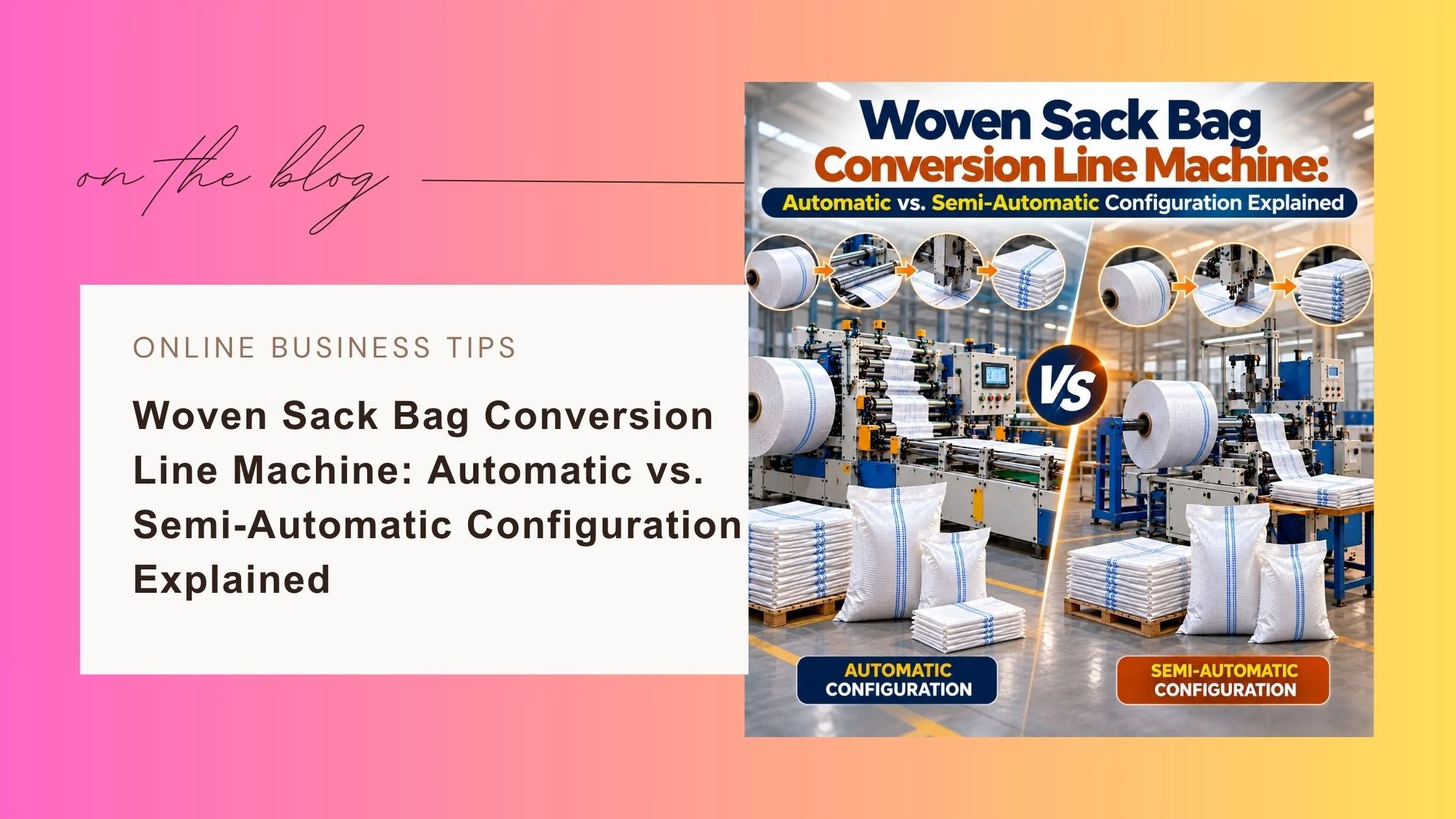
A Woven Sack Bag Conversion Line Machine can be configured with different levels of automation depending on the manufacturer's production requirements. Some systems integrate multiple operations, such as cutting, folding, stitching, and stacking, while others rely on operators to transfer material or perform selected tasks between production stages.
Neither configuration is automatically the best choice for every factory. A manufacturer producing a limited range of bags in moderate quantities may value flexibility and a simpler workflow. A high-volume manufacturer may benefit more from an integrated system that reduces repetitive manual handling and coordinates multiple processes.
Understanding these differences before ordering equipment helps manufacturers select a configuration that fits their products, factory layout, production targets, and long-term business objectives.
What Is a Woven Sack Bag Conversion Line Machine?
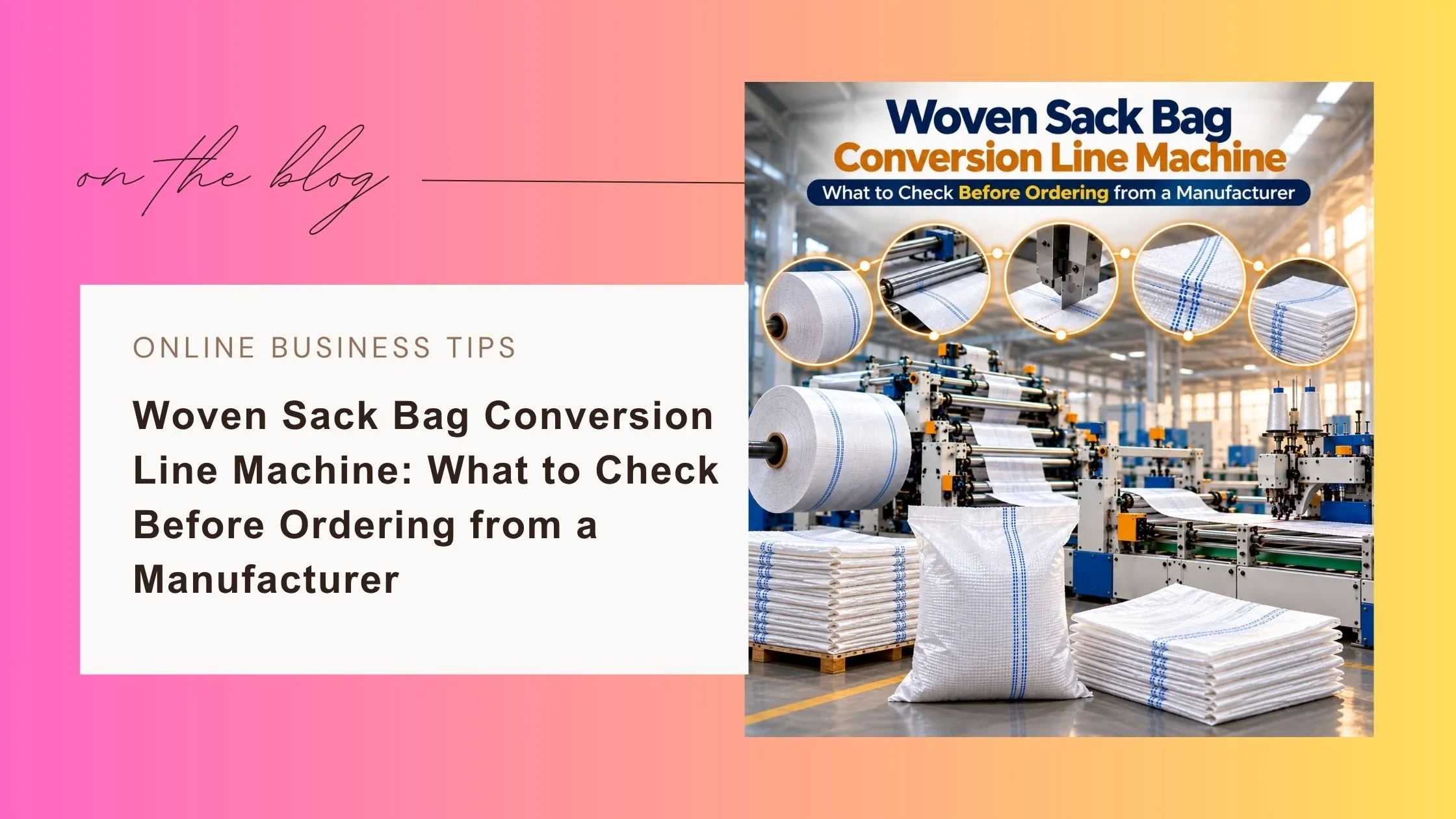
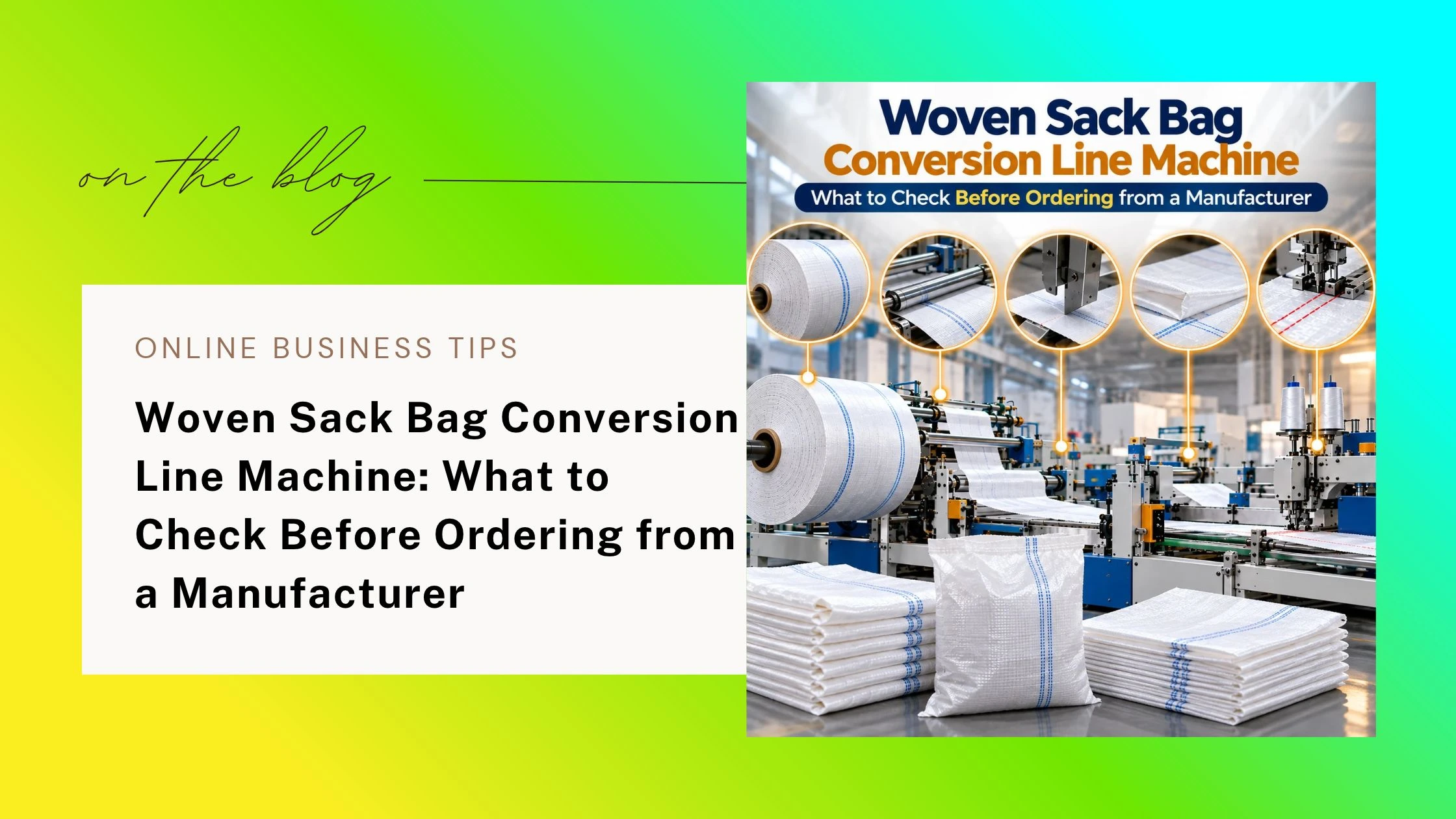
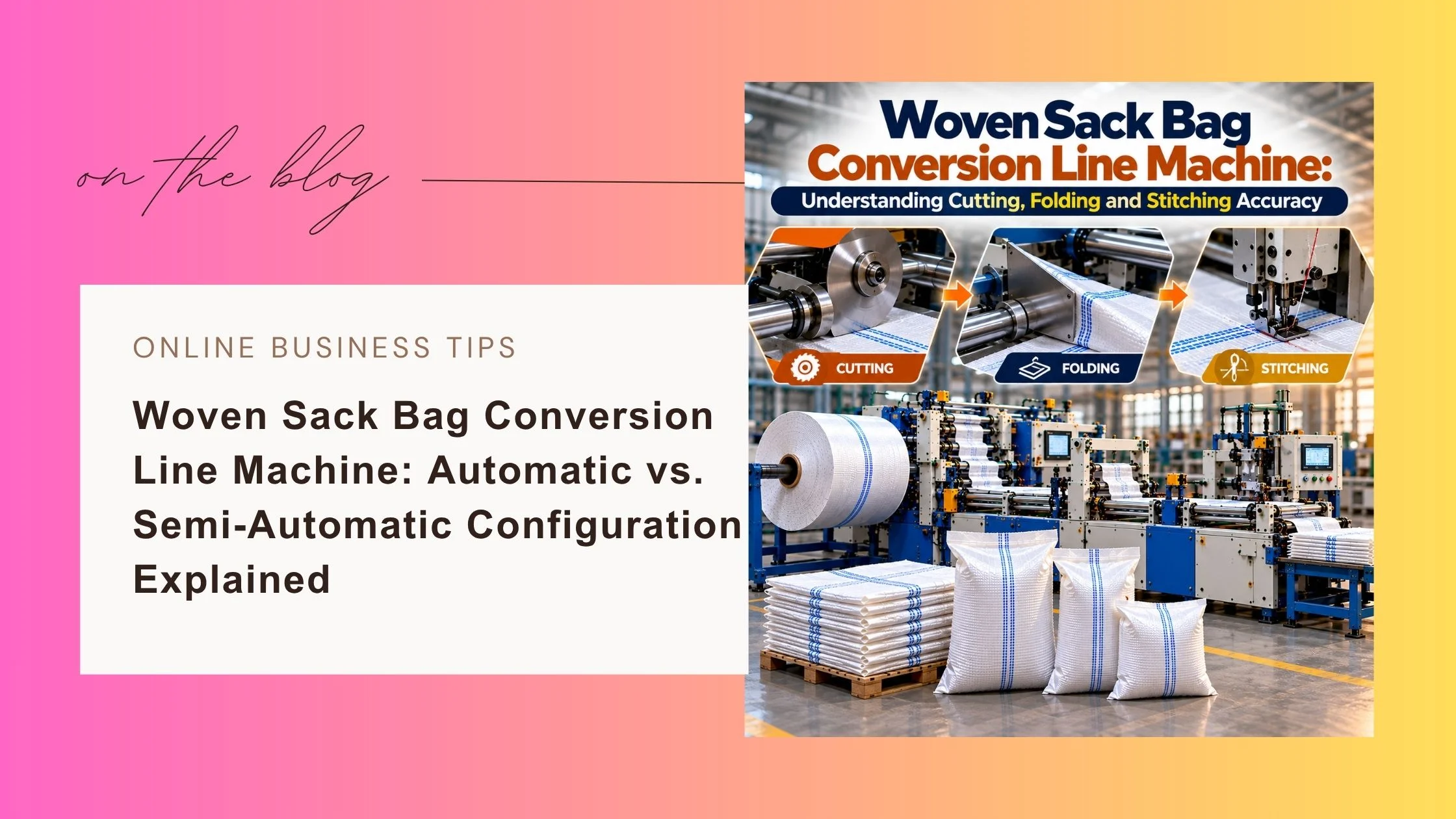
A Woven Sack Bag Conversion Line Machine converts woven polypropylene (PP) fabric into finished sacks through operations such as feeding, cutting, folding, gusseting where required, stitching, transfer, and stacking.
The exact arrangement depends on the bag design and machine configuration. A standard open-mouth sack may require a different process arrangement from a gusseted or specially constructed bag.
The purpose of a conversion line is to transform woven fabric into bags that meet defined dimensional, construction, and quality requirements. Automation can help coordinate the operations, while semi-automatic arrangements may retain more manual handling or operator-controlled steps.
When comparing machinery, buyers should examine the actual functions included in the proposed configuration. The terms "automatic" and "semi-automatic" can mean different things across suppliers, so the equipment list and operating workflow matter more than the label alone.
What Is an Automatic Woven Sack Conversion Line?
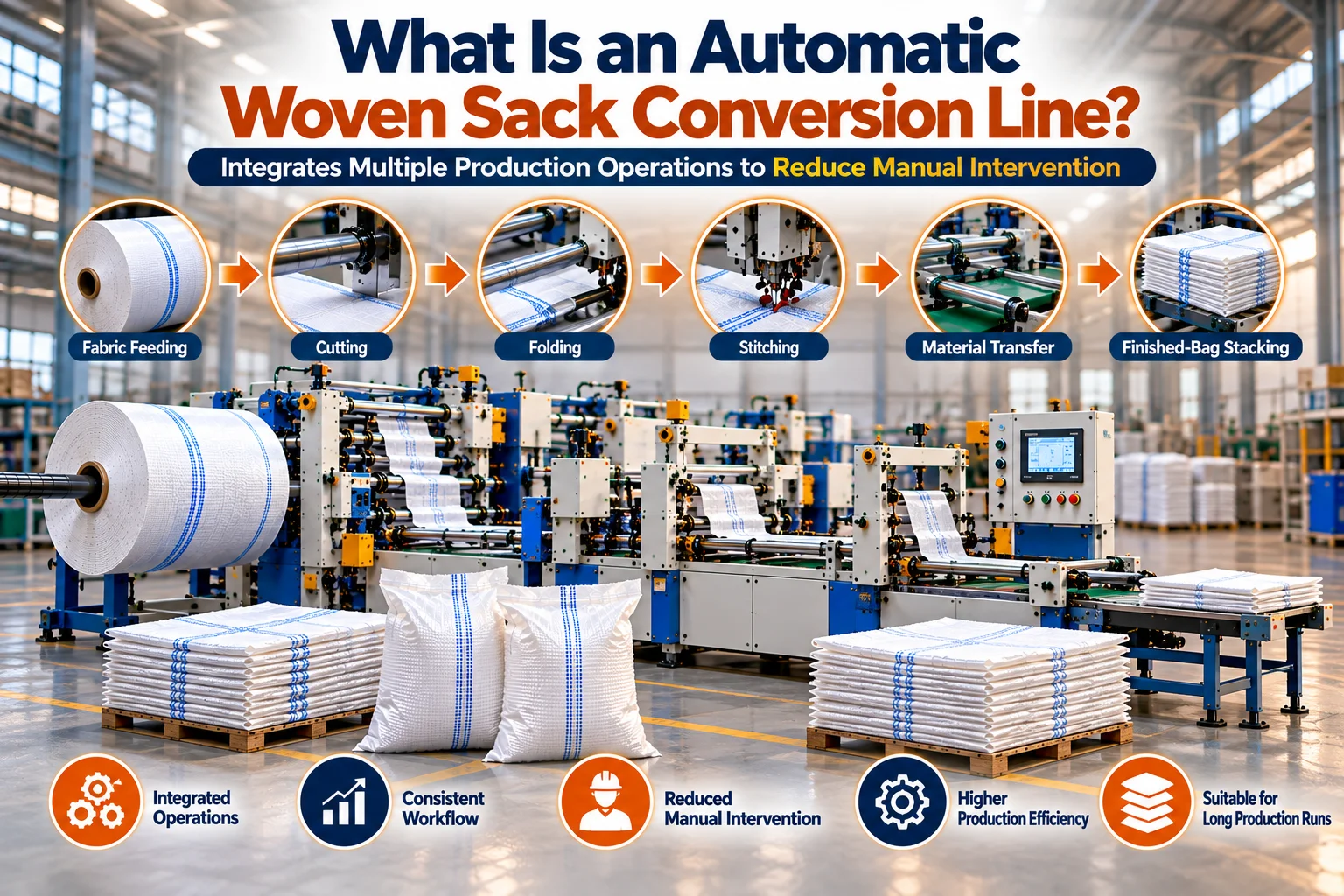
An automatic woven sack conversion line integrates multiple production operations to reduce repetitive manual intervention. Depending on its design, the system may coordinate fabric feeding, cutting, folding, stitching, material transfer, and finished-bag stacking.
An automatic system can use programmed controls, sensors, drives, and coordinated mechanical components to manage production sequences. The level of integration varies by model, so buyers should confirm which operations are automated and which still require operator involvement.
A Woven Sack Bag Conversion Line Machine with a higher automation level can be useful when a manufacturer needs a consistent workflow across long production runs. It may reduce the number of times operators must manually position or transfer individual bags between operations.
However, automation does not eliminate the need for skilled personnel. Operators remain important for setup, monitoring, material preparation, inspection, maintenance, and troubleshooting.
What Is a Semi-Automatic Woven Sack Conversion Machine?
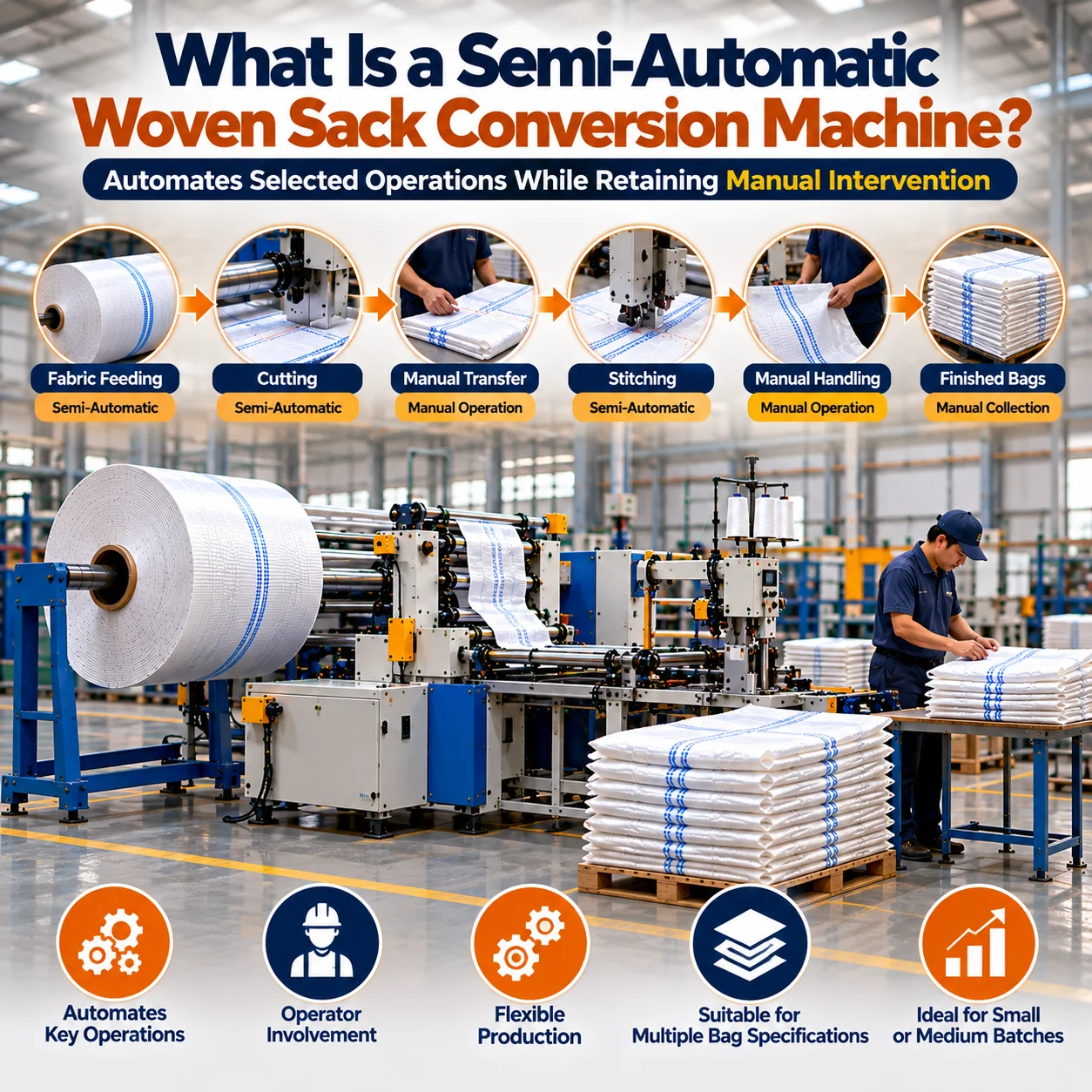
A semi-automatic woven sack conversion machine automates selected operations while retaining manual intervention at other stages. For example, cutting may be machine-controlled while operators handle material transfer, positioning, collection, or selected finishing tasks.
The actual arrangement depends on the equipment. Some semi-automatic systems may automate several important operations, while others may be built around individual machines used in a connected production workflow.
This configuration can suit manufacturers that require a degree of automation but also want operators to retain direct control over particular stages. It may be relevant for factories producing multiple bag specifications, managing smaller production batches, or introducing automation gradually.
A semi-automatic setup is not necessarily less accurate than an automatic system. Its results depend on machine capability, operator practices, maintenance, material handling, and the quality-control process.
Automatic vs. Semi-Automatic: Key Differences
The main difference is how much of the production workflow is coordinated by the machine and how much depends on operator intervention.
|
Comparison factor |
Automatic configuration |
Semi-automatic configuration |
|
Material handling |
More stages may be integrated |
More manual transfers may be required |
|
Cutting |
Can be coordinated with feeding and downstream operations |
May be automated as an individual operation |
|
Folding and stitching |
Can be integrated into the production sequence |
May require manual positioning or transfer |
|
Finished-bag collection |
Automatic stacking may be available |
Manual collection may be required |
|
Operator involvement |
Focuses more on monitoring, setup, and inspection |
May include more handling and positioning |
|
Production workflow |
Suited to integrated, repetitive operations |
Can suit workflows with selected automated stages |
|
Changeovers |
Depends on adjustment design and control system |
May allow direct operator involvement in adjustments |
|
Maintenance |
Requires support for integrated mechanical and control systems |
Depends on the equipment and number of separate machines |
|
Investment |
Depends on integration and included features |
Depends on machine scope and configuration |
|
Best selection criteria |
Required output, consistency, and workflow integration |
Required flexibility, operating method, and production needs |
These are general distinctions, not guaranteed specifications. Actual capabilities should be confirmed with the manufacturer for the proposed machine model.
Which Configuration Offers Better Production Capacity?
Production capacity depends on more than the automation label. Bag dimensions, material characteristics, cutting cycles, stitching requirements, changeovers, operator handling, maintenance, and downtime can all influence actual output.
An automatic line may reduce delays between connected operations because material can move through a coordinated workflow. This can be valuable when a factory produces large quantities of similar bags.
A semi-automatic configuration may perform effectively when production volumes are moderate or the factory regularly changes bag specifications. However, manual transfer or positioning can become a bottleneck if operators cannot keep pace with the upstream process.
When evaluating a Woven Sack Bag Conversion Line Machine, ask the manufacturer for realistic output information based on your bag dimensions, fabric, construction, and required finishing. Maximum machine speed alone does not establish the output that a factory can achieve consistently.
How Do Labour Requirements Compare?
Labour requirements depend on the number of automated operations and how the factory organises its production team.
An automatic line can reduce repetitive handling, positioning, and collection activities. Operators may instead concentrate on controlling production, checking finished bags, managing material supply, and responding to machine alarms or quality issues.
A semi-automatic system may require more direct operator involvement between processes. This can provide greater hands-on control but also makes workflow efficiency more dependent on staffing, training, and production organisation.
Manufacturers should assess labour requirements across the entire workflow rather than comparing only the number of people standing beside the machine. Material preparation, quality inspection, finished-bag handling, and maintenance also contribute to the total workforce requirement.
Which Configuration Provides Better Cutting and Stitching Quality?
Neither automatic nor semi-automatic machinery automatically guarantees better quality. The result depends on the capabilities of the equipment, the stability of the material path, correct machine settings, operator practices, and maintenance.
An automatic system can coordinate cutting and downstream operations to help maintain a repeatable workflow. A semi-automatic setup can also produce consistent results when machines are correctly adjusted and operators follow documented procedures.
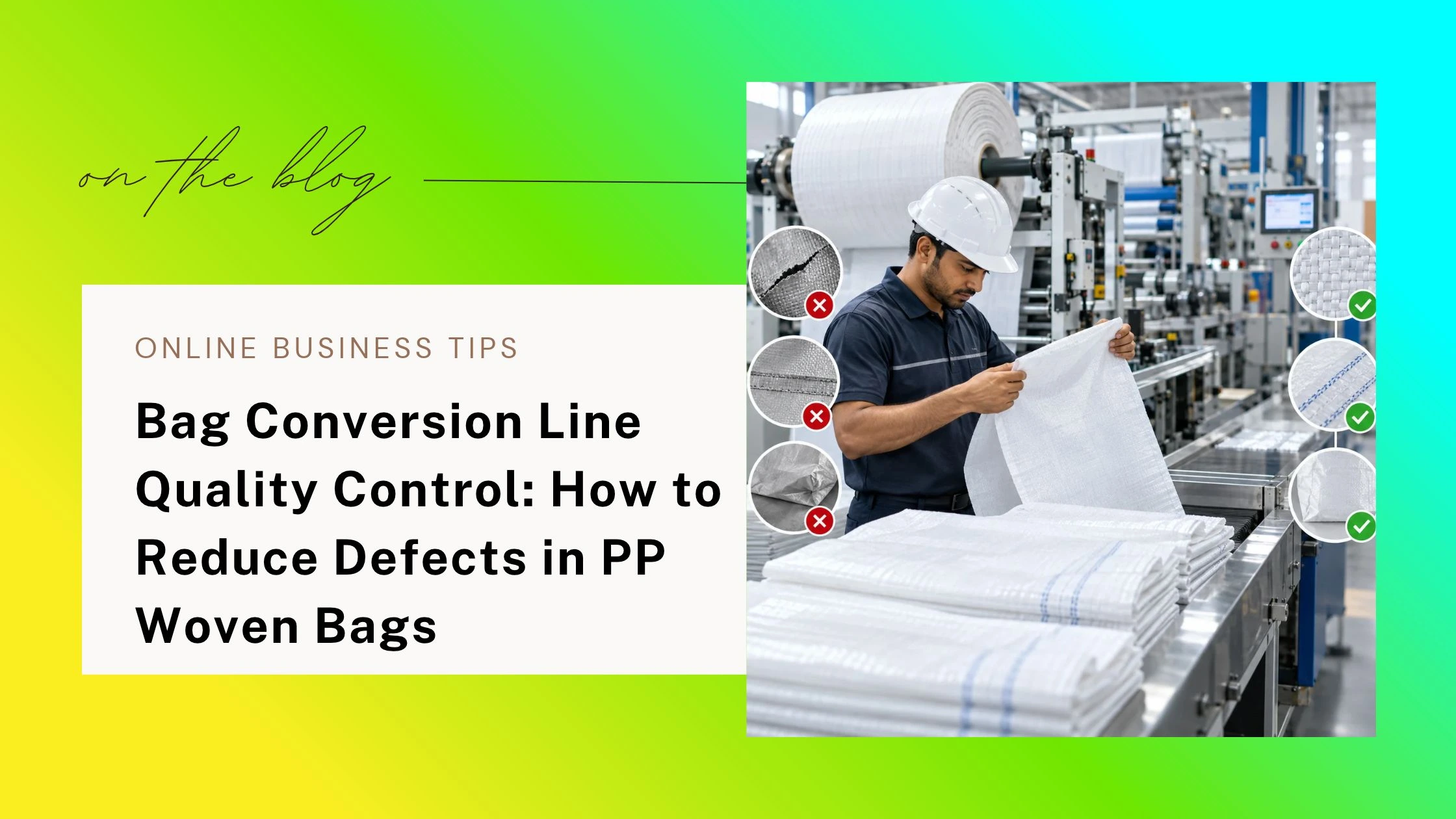
For both configurations, manufacturers should assess cutting accuracy, fold position, seam alignment, stitch continuity, finished-bag dimensions, and any application-specific requirements.
Quality checks should be defined before machinery is selected. If a factory produces sacks for a specific regulated or customer-controlled application, the finished product must meet the relevant specification regardless of the automation level.
Flexibility and Product Changeovers
Product flexibility is especially important for manufacturers supplying different customers or bag specifications.
A factory may need to change bag lengths, dimensions, materials, folding arrangements, or stitching requirements. The ease of making these changes depends on the machine design, adjustment method, control system, and operator training.
A semi-automatic configuration may be attractive when operators need to make frequent adjustments or when the production mix varies considerably. However, this advantage should not be assumed without checking the actual setup process.
An automatic line may also support multiple products when its operating range and changeover functions are designed for that purpose.
Before ordering a Woven Sack Bag Conversion Line Machine, ask the supplier how product changeovers are completed, which adjustments are manual, whether settings can be stored, and what checks are required before production resumes.
Investment Cost and Total Cost of Ownership
Purchase price is important, but it should not be the only factor in the decision.
An automatic system may involve a larger initial investment when it includes additional equipment, integrated controls, automated transfer, and stacking functions. A semi-automatic configuration may require a smaller initial commitment if fewer processes are integrated.
However, the total cost of ownership depends on the complete production setup. Buyers should consider installation, operator training, maintenance, spare parts, energy and utility requirements, downtime, product changeovers, material waste, and expected production needs.
The right financial comparison should reflect the factory's actual operating conditions. A more integrated line may provide value where repetitive handling limits output, while a simpler arrangement may be sufficient where production requirements are modest or highly variable.
Avoid assuming that one configuration always offers lower operating costs. Request a detailed quotation and compare the included functions, operating requirements, and support arrangements.
Maintenance and Technical Support
Both automatic and semi-automatic machinery require preventive maintenance. The difference lies in the components included and how the equipment is configured.
An integrated automatic system may include additional sensors, drives, control components, and coordinated mechanisms that need appropriate maintenance and troubleshooting. A semi-automatic setup may involve fewer integrated control functions, but separate machines can still require substantial servicing and operator attention.
Before purchasing, ask about routine inspection, wear components, recommended spare parts, maintenance access, troubleshooting support, documentation, and operator training.
For international buyers, the availability of remote technical support and replacement parts is particularly important. Production planning should account for how quickly the supplier can help resolve problems that affect output or finished-bag quality.
How to Choose the Right Configuration for Your Factory
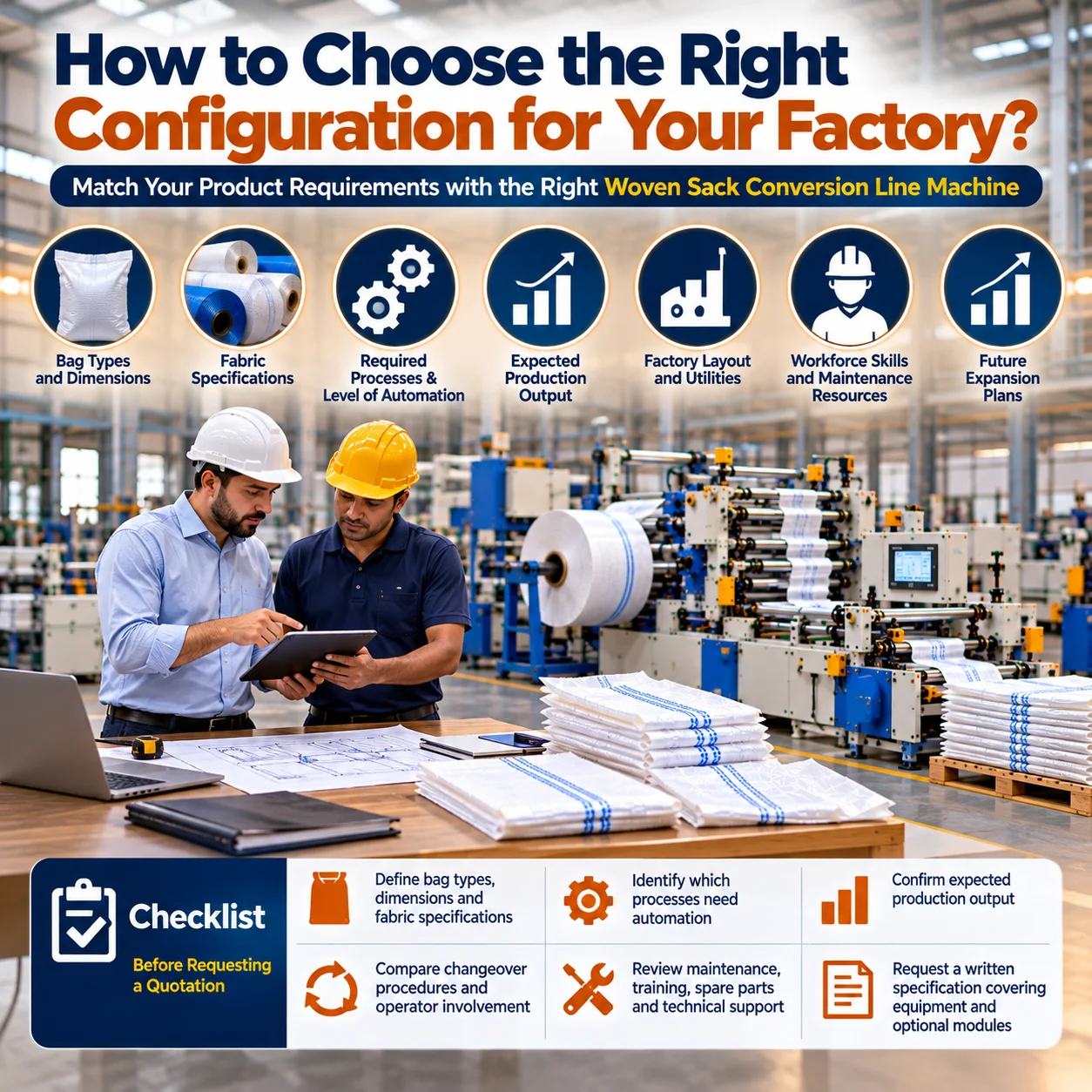
The most suitable Woven Sack Bag Conversion Line Machine is the one that meets your product requirements and fits your planned production workflow.
Manufacturers should begin by identifying the types of sacks they intend to produce, including dimensions, fabric characteristics, construction, stitching requirements, and expected production volumes. Next, they should determine which operations must be integrated and which can remain operator-controlled without creating bottlenecks.
Factory layout, available utilities, workforce skills, maintenance resources, and future expansion plans should also be considered. A configuration that works well for one factory may not suit another with a different product mix or operating model.
Use the following checklist before requesting a final quotation:
-
Define the required bag types, dimensions, and fabric specifications.
-
Identify which processes need automation: feeding, cutting, folding, gusseting, stitching, transfer, and stacking.
-
Confirm expected production output under representative operating conditions.
-
Compare changeover procedures and the operator involvement required.
-
Review maintenance, training, spare parts, installation, and technical support.
-
Request a written specification covering the equipment included and any optional modules.
This preparation helps suppliers recommend equipment based on the factory's actual requirements rather than a general description of automation.
Why Consider Oberon Industries?
Oberon Industries provides bag conversion line solutions for manufacturers working with PP woven and related industrial packaging applications. The appropriate machinery configuration depends on the finished bag, material, required operations, production targets, and factory workflow.
When evaluating a new line, buyers should share their bag specifications, production volume, desired automation level, and quality requirements with the supplier. This helps establish whether a more integrated or semi-automatic arrangement is appropriate.
You can review the Oberon Industries Bag Conversion Line for product information and discuss your requirements directly with the company.
Conclusion
Choosing between automatic and semi-automatic machinery requires a clear understanding of production requirements. Automatic systems can integrate more operations and reduce repetitive handling, while semi-automatic configurations retain operator involvement at selected stages. Neither approach is universally superior; the best choice depends on the product range, required output, flexibility, maintenance resources, quality expectations, and total operating cost.
Before ordering a Woven Sack Bag Conversion Line Machine, define your finished-bag specifications and evaluate the complete production workflow. Compare cutting, folding, stitching, transfer, stacking, changeovers, installation, and after-sales support before deciding on the configuration. Oberon Industries can help manufacturers discuss their PP woven sack conversion requirements and identify an appropriate machinery solution.
Frequently Asked Questions
1. What is the difference between an automatic and semi-automatic woven sack conversion machine?
An automatic line integrates multiple production operations and reduces repetitive manual handling. A semi-automatic machine automates selected processes while retaining manual intervention at other stages. The exact distinction depends on the manufacturer's configuration.
2. Is an automatic woven sack conversion line suitable for every factory?
No. An automatic line can suit manufacturers that need an integrated workflow and consistent output, but its value depends on production volume, bag specifications, changeover frequency, factory resources, and investment objectives. Some factories may be better served by a semi-automatic setup.
3. Does a semi-automatic machine produce lower-quality bags?
Not necessarily. Both configurations can produce consistent bags when the equipment is suitable, settings are correct, materials are appropriate, and inspection procedures are followed. Quality depends on the entire production process, not simply the automation level.
4. Which factors affect the cost of a woven sack conversion line?
Cost depends on the included machinery, automation functions, production capabilities, optional modules, installation, control systems, and support arrangements. Buyers should compare complete technical specifications and operating requirements rather than purchase price alone.
5. Can an automatic conversion line handle different bag sizes?
Some automatic systems support multiple bag sizes within their specified operating range. Buyers should confirm supported dimensions, adjustment procedures, changeover time, and any additional equipment required for different bag constructions.
6. What should I provide when requesting a quotation from a manufacturer?
Provide bag dimensions, fabric type, construction, stitching requirements, expected production volume, desired automation level, factory location, and any applicable product specifications. This information helps the supplier recommend a suitable configuration and prepare a more relevant quotation.