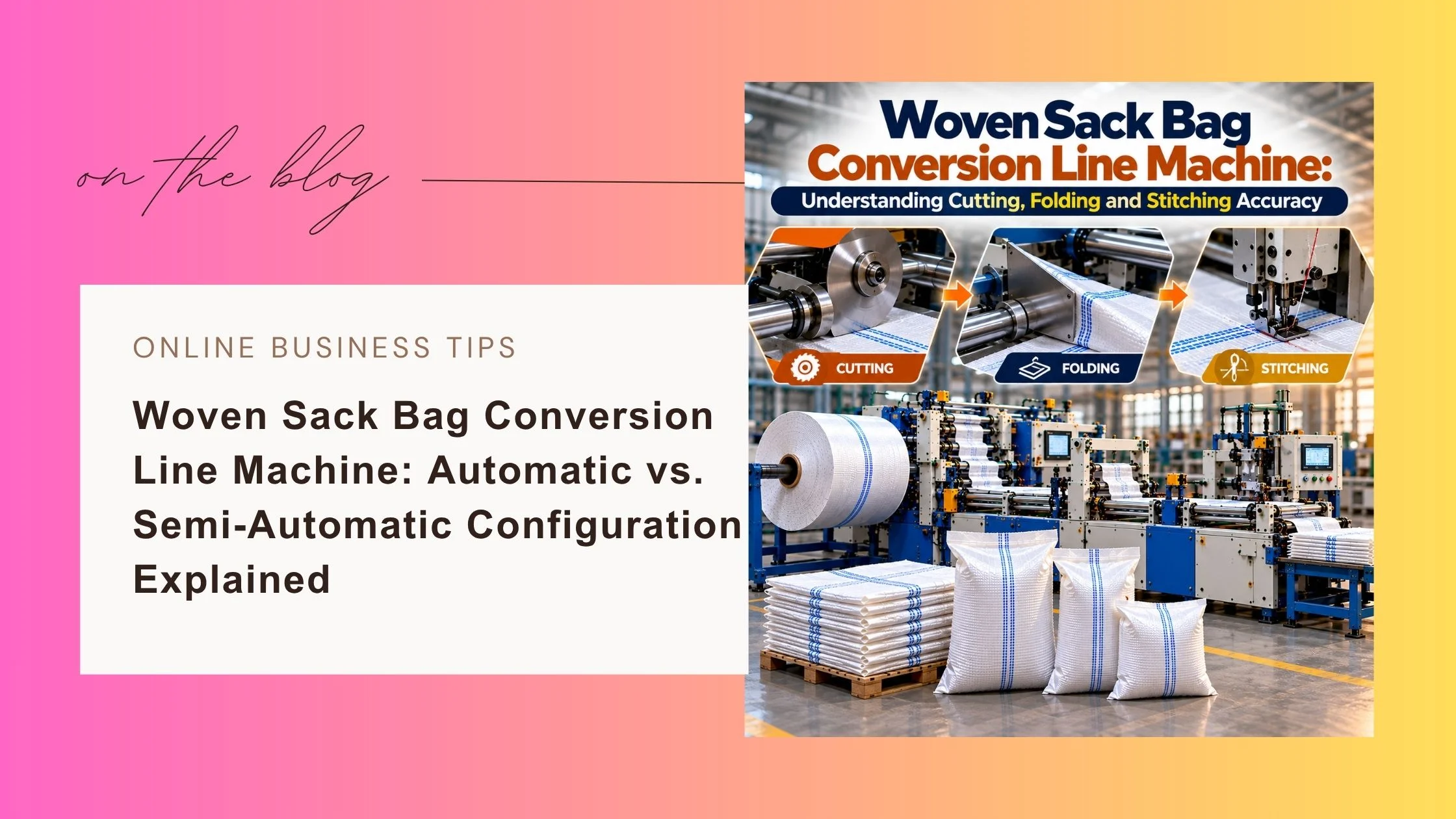
Woven Sack Bag Conversion Line Machine: Cutting Accuracy

August 20, 2026
Introduction
For PP woven bag manufacturers, the machinery decision often looks simple until production volume, product variety, labor, quality, and future expansion enter the picture. A Bag Conversion Line Machine can connect several operations into a coordinated workflow, while conventional equipment usually divides those operations among separate workstations.
If you are planning to upgrade a factory, replace older equipment, or establish a new production unit, understanding this difference can prevent a costly mismatch between machinery and actual production needs. A bag conversion line should be evaluated according to the bags you produce, the volumes you expect, and the level of automation your business can realistically support.
This guide compares the two approaches from a practical manufacturing perspective, covering production flow, speed, labor, quality, flexibility, maintenance, factory layout, investment, and supplier selection.
What Is a Bag Conversion Line Machine?

A Bag Conversion Line Machine is an integrated production system used to convert PP woven fabric into finished bags through a coordinated sequence of operations. Depending on the configuration, the process can include fabric feeding, cutting, folding, gusseting, sewing, and bag handling.
Instead of treating each stage as an isolated task, the line is designed to maintain a controlled flow of material between operations. This can reduce manual transfers and make production easier to synchronize.
The exact configuration varies according to bag dimensions, fabric characteristics, bag construction, production volume, and finishing requirements. For that reason, buyers should focus on the complete machine configuration rather than relying on a generic product name.
What Are Conventional Bag Making Machines?

Conventional bag making machines generally use separate machines or workstations for different production stages. An operator may feed fabric into one machine, move the cut material to another station, and then transfer the semi-finished bag to a sewing or finishing operation.
This approach remains practical for many manufacturers. It can provide flexibility, familiar operation, and the ability to expand production gradually by adding individual machines.
The limitation appears when production volumes become high. More manual transfers can create waiting time, work-in-progress accumulation, operator dependency, and bottlenecks between stages. What works efficiently for a small factory may become difficult to manage when daily output increases substantially.
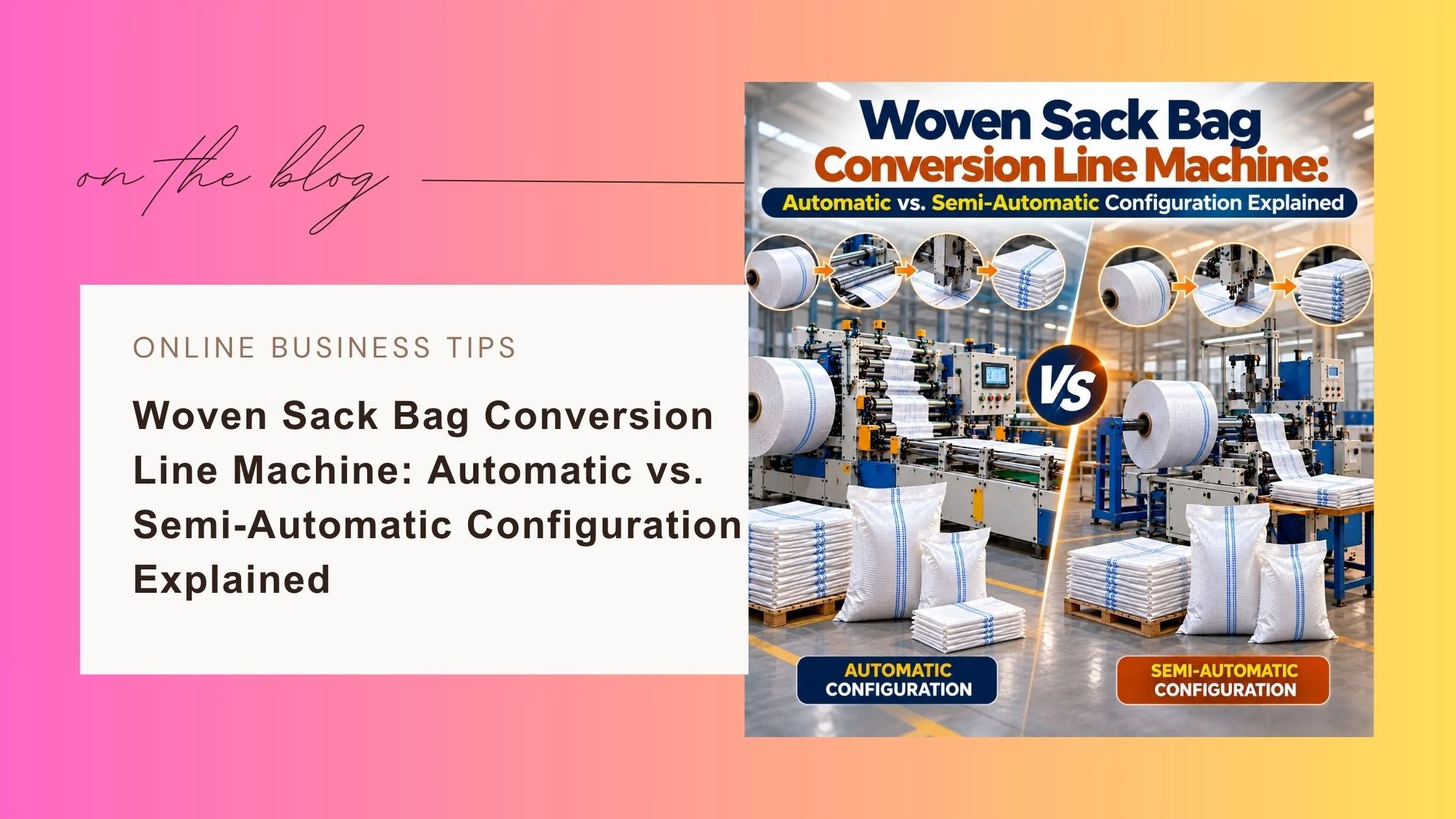
Bag Conversion Line Machine vs Conventional Machines: The Core Difference
The fundamental difference is production integration. A Bag Conversion Line Machine is designed to coordinate multiple operations as one connected production flow, whereas conventional machinery normally relies on separate workstations.
Think of the difference like an organized assembly process versus several independent work areas. Both can produce the same finished product, but the integrated approach aims to reduce unnecessary movement and keep each stage synchronized.
That does not mean automation is automatically the right answer for every manufacturer. A business producing short runs, highly customized bags, or relatively low volumes may value the flexibility of individual machines more than maximum integration.
Production Speed and Practical Output
Speed is often the first specification buyers compare, but maximum rated speed does not tell the complete story. A Bag Conversion Line Machine may reduce delays between production stages because feeding, cutting, forming, and closing operations can be coordinated.
In a conventional setup, one workstation can become a bottleneck even when the other machines have unused capacity. Operators also need time to move material between stages, organize batches, and prepare the next operation.
Practical output depends on more than machine speed. Uptime, changeover time, raw-material consistency, maintenance, operator skill, rejected bags, and production stoppages all affect the number of saleable bags produced during a shift.
For example, a line operating slightly below its maximum rated speed with stable quality may produce more usable bags in a working day than a faster system that requires frequent adjustments.
Automation and Operator Involvement
Automation is another important distinction. Conventional production often requires operators to handle material, position components, transfer semi-finished bags, and coordinate individual machines.
An automatic bag conversion line machine can reduce some of these repetitive activities by coordinating material movement and machine functions. This can make production more consistent and allow operators to focus more on monitoring, quality checks, adjustments, and maintenance.
However, automation does not remove the need for skilled people. Modern machinery still requires operators who understand machine settings, fabric behavior, preventive maintenance, troubleshooting, and safe operating procedures.
The real benefit is a change in how labor is used. Instead of spending most of the shift on repetitive handling, trained personnel can supervise a more organized production process.
Material Flow in a PP Woven Bag Conversion Line
Material flow has a direct effect on productivity. In a conventional arrangement, fabric or semi-finished bags may move between several workstations. Each transfer takes time and introduces another opportunity for handling damage, misalignment, or production delay.
A PP woven bag conversion line is intended to create a more controlled flow from one stage to the next. When feeding, cutting, folding, gusseting, and sewing are correctly synchronized, the production process can become easier to manage.
This is particularly useful for manufacturers producing large volumes of standardized sacks. When the same bag specification is repeated thousands of times, small handling inefficiencies can accumulate into significant production losses.
Cutting Accuracy and Bag Consistency
Bag dimensions are important in fertilizer, cement, agricultural, chemical, animal-feed, and other bulk-packaging applications. Variations in length, width, or construction can affect filling, stacking, handling, and final appearance.
A Bag Conversion Line Machine can provide more controlled movement and repeatable settings across connected operations. When the equipment is properly calibrated and maintained, this can support more consistent bag dimensions.
Conventional equipment can also deliver accurate results, particularly with experienced operators. The challenge is maintaining the same level of repeatability across large production volumes when multiple independent machines and manual transfers are involved.
Quality should therefore be evaluated through actual production trials rather than machine specifications alone.
Changeover and Product Flexibility
Flexibility can be one of the strongest arguments for conventional machinery. A manufacturer producing small batches of different bag sizes may appreciate being able to adjust or operate individual machines independently.
An automatic Bag Conversion Line Machine can also support multiple specifications, but the changeover process must be examined carefully. A highly automated line optimized for long production runs may not be the best fit for a factory changing dimensions several times a day.
Ask the supplier how long a typical changeover takes, which settings can be stored or adjusted, what components require manual adjustment, and whether different fabric widths can be accommodated.
The right system is not the one with the most automation. It is the one that fits the factory's actual production pattern.
Labor Requirements
Labor requirements can change significantly when a manufacturer moves from separate machines to integrated equipment. Conventional setups may need operators at several stages to feed material, transfer batches, monitor machines, and inspect finished bags.
A Bag Conversion Line Machine can reduce some repetitive handling and allow a smaller team to supervise a coordinated process, depending on the degree of automation and the machine configuration.
However, labor savings should never be estimated simply by counting operators. Manufacturers should consider operator skill levels, maintenance staffing, quality-control responsibilities, shift patterns, and training requirements.
Automation can reduce repetitive labor while increasing the importance of technical skills. That is a shift in workforce requirements, not necessarily a complete elimination of labor.
Factory Layout and Space Utilization
Factory layout is another factor that deserves attention before machinery is purchased. Separate conventional machines may require individual operating zones, material staging areas, walkways, and temporary storage for semi-finished bags.
An industrial bag conversion line can create a more organized production route because the operations are positioned as part of a coordinated system. At the same time, the line itself may require a substantial continuous floor area and sufficient access for maintenance.
Before installation, map the movement of raw fabric, operators, finished bags, spare parts, and maintenance equipment. Include electrical connections, service clearance, emergency access, and loading or unloading areas.
A well-planned layout can prevent a situation where a technically capable machine becomes difficult to operate because material has to travel unnecessarily around the factory.
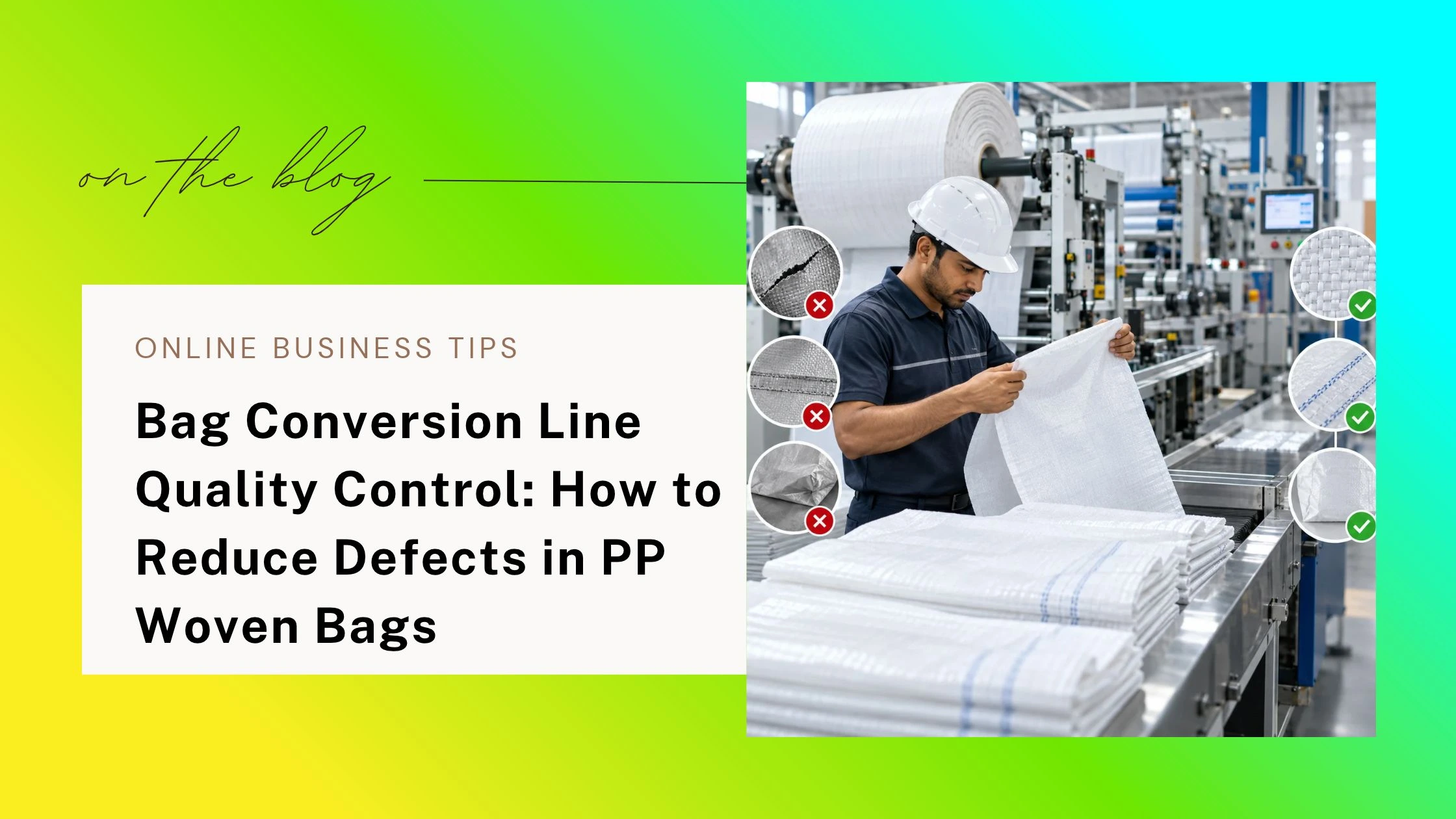
Quality Control and Process Stability
Quality does not come from automation alone. It depends on suitable raw materials, correct machine settings, operator knowledge, preventive maintenance, and consistent inspection.
With conventional equipment, quality checks can take place between individual operations. This can make defects easier to isolate, but it also creates the possibility that a problem continues through several stages before detection.
A Bag Conversion Line Machine can improve process consistency when its stations are properly synchronized. Manufacturers should still inspect dimensions, stitching, fabric condition, sealing or finishing requirements, and overall bag appearance according to their product specifications.
The strongest manufacturing system combines controlled automation with clear quality procedures. Machinery should support quality management, not replace it.
Maintenance, Downtime, and Reliability
Maintenance is often underestimated during machinery selection. A machine that performs well during a demonstration but is difficult to service can create unnecessary downtime after installation.
Conventional machines can be attractive because individual units may be familiar to local technicians. If one machine stops, other stations may continue operating depending on the production arrangement.
An industrial Bag Conversion Line Machine can reduce the number of separate handling stages, but a fault in a critical section can affect the connected production flow. Preventive maintenance therefore becomes particularly important.
Ask the supplier about lubrication points, recommended service intervals, wear parts, electrical components, troubleshooting procedures, spare-parts availability, and maintenance access.
Initial Investment vs Long-Term Value
Purchase price is important, but it should not be the only financial measure. A Bag Conversion Line Machine should be evaluated against the production value it can create over several years, not simply the amount shown on the initial quotation.
Conventional machinery may require a lower initial investment in some cases, while a fully integrated system may require greater capital expenditure.
The better comparison is total ownership value. Consider labor, energy consumption, maintenance, spare parts, floor space, rejected bags, downtime, production capacity, and expected service life.
For a manufacturer with steadily increasing orders, a Bag Conversion Line Machine may justify a higher initial investment if it addresses measurable production bottlenecks and provides room for future growth.
Conversely, a smaller operation may find that separate machines provide better financial flexibility during the early stages of expansion.
Bag Conversion Line Machine vs Conventional Systems: Quick Comparison
|
Factor |
Bag Conversion Line Machine |
Conventional Bag Making Machines |
|
Production flow |
Integrated and coordinated |
Usually divided between separate workstations |
|
Automation |
Higher potential for automated processes |
More operator-dependent |
|
Material handling |
Reduced intermediate handling |
More manual transfers |
|
Production consistency |
Strong repeatability when properly configured |
More dependent on operators and individual machines |
|
High-volume production |
Generally well suited |
Can become more difficult to scale |
|
Flexibility |
Depends on line configuration |
Often flexible for smaller batches |
|
Changeover |
Can be efficient but configuration-dependent |
Individual machines can be adjusted separately |
|
Factory layout |
Organized continuous workflow |
More separate work areas may be required |
|
Initial investment |
Typically higher for integrated systems |
Often lower for staged investment |
|
Best fit |
Growing and high-volume manufacturers |
Smaller, flexible, or gradual-growth operations |
Which System Is Better for High-Volume Production?
For high-volume PP woven bag manufacturing, integrated equipment can offer significant operational advantages. Continuous material movement, synchronized processes, and reduced manual handling become more valuable as production increases.
Imagine a factory producing several thousand sacks every day. If each bag passes through multiple independent workstations, even small delays at each transfer can accumulate into substantial lost production time.
An automatic woven bag production line can reduce some of these inefficiencies, but actual performance still depends on machine configuration, material quality, operator capability, and maintenance discipline.
When Conventional Machines May Be the Better Choice
Conventional equipment should not be considered obsolete simply because automation is available. There are situations where separate machinery remains a sensible business decision.
A smaller manufacturer may prefer a gradual investment strategy, purchasing individual machines as demand grows. A business producing highly customized bags may also value the flexibility of separate workstations.
Conventional systems can also make sense when local maintenance skills are strong and production volumes do not justify a fully integrated setup.
The key question is whether the production model supports your current business and expected growth. Machinery should solve a real operational problem rather than being purchased simply because a newer technology exists.
When Should You Choose an Integrated Conversion System?
A Bag Conversion Line Machine becomes particularly attractive when production volumes are increasing, manual handling is creating bottlenecks, product consistency needs improvement, or the manufacturer wants a more scalable production workflow.
It can be especially useful when a factory produces standardized bags in large quantities and wants to reduce unnecessary movement between stages.
Before investing, establish measurable targets. For example, determine current output per shift, labor hours per thousand bags, average downtime, reject rates, and changeover time. Then compare those figures with the expected performance of the proposed equipment.
This approach turns machinery selection into a business decision based on production data rather than marketing claims.
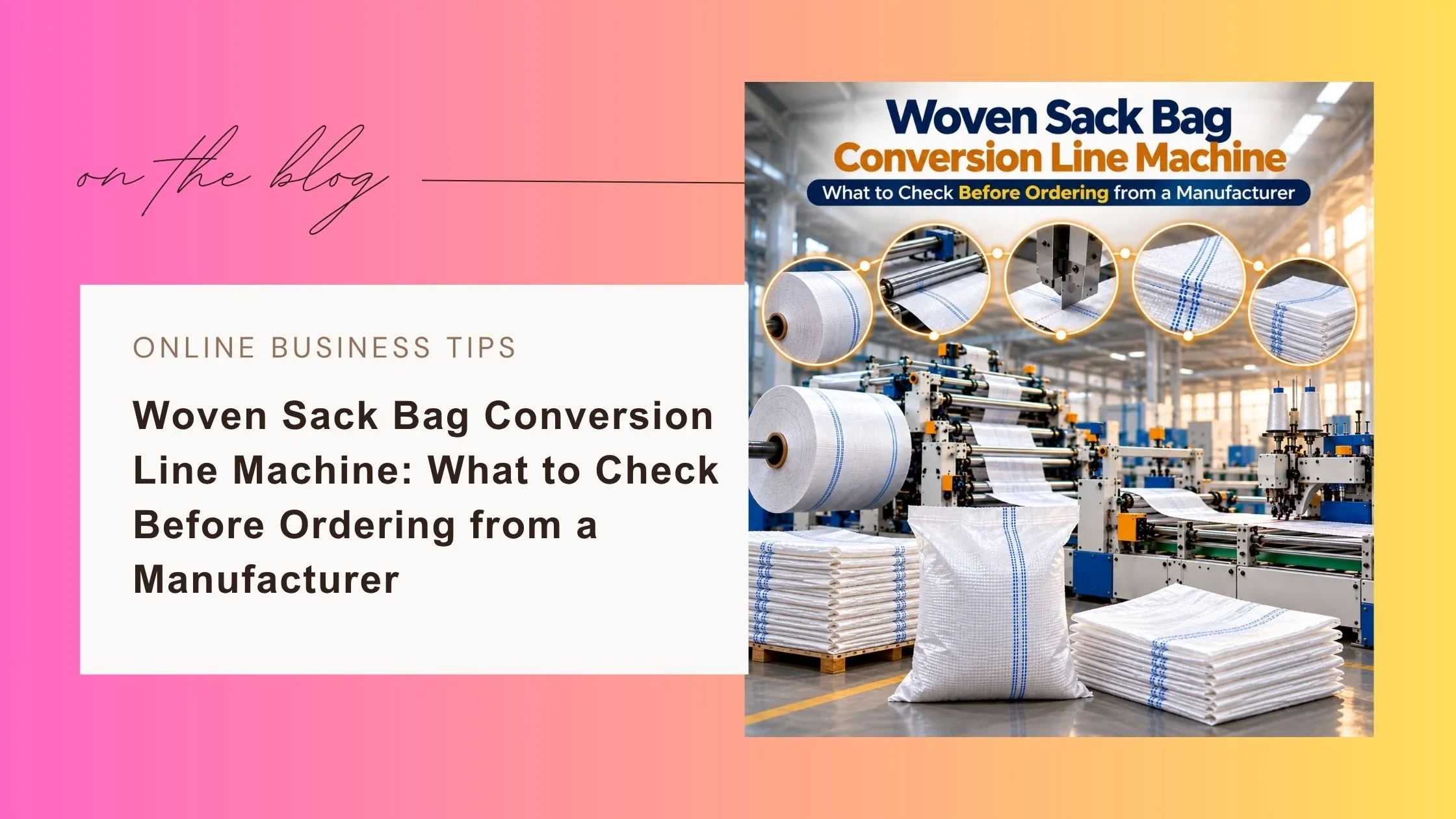
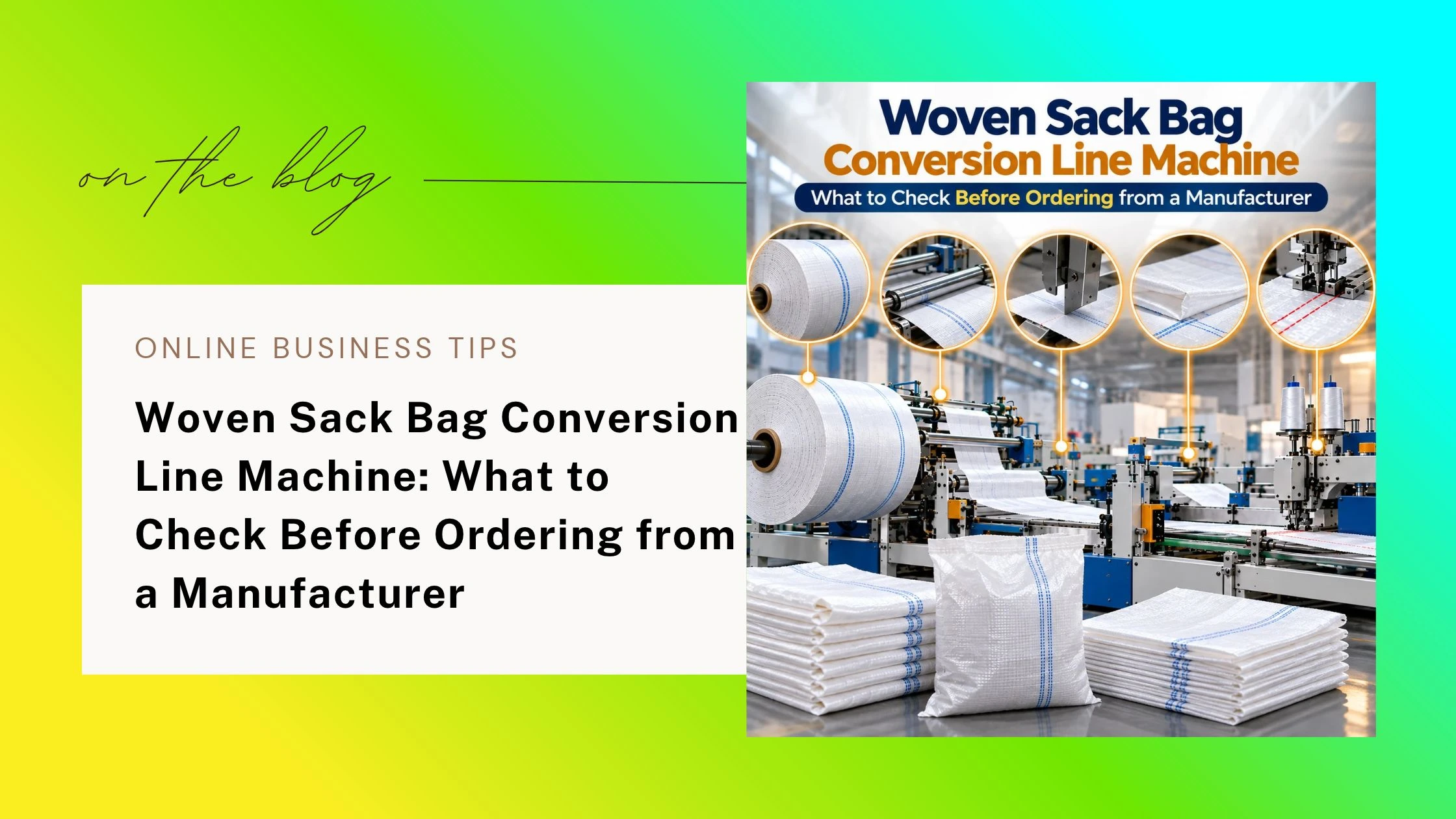
What Should Buyers Check Before Purchasing?

Before selecting bag conversion equipment, buyers should compare complete technical configurations rather than focusing on one headline specification.
The most useful checks include:
-
Confirm bag dimensions, fabric specifications, GSM range, and construction.
-
Compare realistic production output rather than maximum speed.
-
Review changeover procedures for the sizes you actually manufacture.
-
Check automation, safety systems, maintenance access, spare-parts availability, and technical support.
-
Request a production demonstration using representative PP woven fabric.
These checks help determine whether the equipment will work effectively in your actual factory rather than only on a specification sheet.
Safety and Machine Design Considerations
Safety should be considered during machinery selection, installation, commissioning, operation, and maintenance. Cutting systems, rotating components, sewing mechanisms, electrical equipment, moving material, and maintenance activities can present different hazards.
ISO 12100 provides general principles for machinery design and a methodology for risk assessment and risk reduction. Buyers should discuss applicable safety requirements with the manufacturer and verify that guarding, emergency stops, operator instructions, and maintenance procedures are appropriately addressed.
You can review the standard through the International Organization for Standardization at ISO 12100 — Safety of machinery.
The objective is not simply to purchase equipment containing safety components. The entire production process should be designed and operated with risk reduction in mind.
How Supplier Selection Affects the Investment
The machine itself is only one part of the purchase. Selecting a Bag Conversion Line Machine from the right supplier can also affect commissioning speed, operator confidence, spare-parts planning, and the long-term reliability of the production system.
Installation, commissioning, training, technical documentation, spare parts, troubleshooting, and after-sales service can influence long-term performance just as much as the initial specifications.
When comparing a bag conversion line manufacturer, ask whether the supplier understands PP woven bag production and can recommend a configuration based on your actual products.
For international buyers, communication and service responsiveness are especially important. Documentation should be clear, spare parts should be identifiable, and technical support should be available when production problems occur.
Oberon Industries supplies machinery solutions for manufacturers seeking efficient PP woven bag production and conversion capabilities. As with any industrial investment, buyers should compare the proposed configuration with their own production targets and factory conditions.
Conclusion
Choosing between a Bag Conversion Line Machine and conventional bag making machines is ultimately a question of production strategy. Conventional equipment can provide flexibility, gradual investment, and familiar operation, while an integrated system can improve material flow, reduce repetitive handling, support consistent production, and provide greater scalability. The right choice depends on your bag specifications, production volume, labor structure, factory layout, investment capacity, and future growth plans.
If you are planning to modernize an existing plant or establish a higher-capacity PP woven bag manufacturing operation, evaluate the complete production workflow before choosing equipment. Explore the bag conversion line solution and contact Oberon Industries to discuss your bag dimensions, target output, automation requirements, and application-specific needs.
Frequently Asked Questions
1. What is the main difference between a Bag Conversion Line Machine and conventional bag making machines?
The main difference is production integration. A Bag Conversion Line Machine coordinates multiple bag-conversion operations into a connected workflow, while conventional setups generally use separate machines and workstations. The integrated approach can reduce material handling and improve repeatability when properly configured.
2. Is an automatic bag conversion line machine always faster than conventional equipment?
Not necessarily. Integrated equipment can improve practical output by reducing transfers and coordinating operations, but real production depends on uptime, changeovers, material quality, maintenance, operator skills, and rejected bags. Maximum rated speed should therefore not be treated as the only measure of productivity.
3. Is a PP woven bag conversion line suitable for small manufacturers?
It can be suitable when the manufacturer has sufficient production volume or expects strong growth. However, small businesses with short production runs, frequent customization, or limited capital may find individual machines more flexible. The decision should be based on total production economics rather than machine size alone.
4. Does a woven bag conversion machine require skilled operators?
Modern automated equipment benefits from operators who understand controls, machine settings, material behavior, quality checks, preventive maintenance, and basic troubleshooting. Good supplier training can help operators develop these skills and use the equipment safely and consistently.
5. How should I compare bag conversion machinery suppliers?
Compare machine configuration, realistic output, compatible materials, automation, changeover requirements, safety, installation, training, warranty, spare parts, and after-sales support. A production trial using your intended PP woven fabric can provide valuable evidence before you place an order.