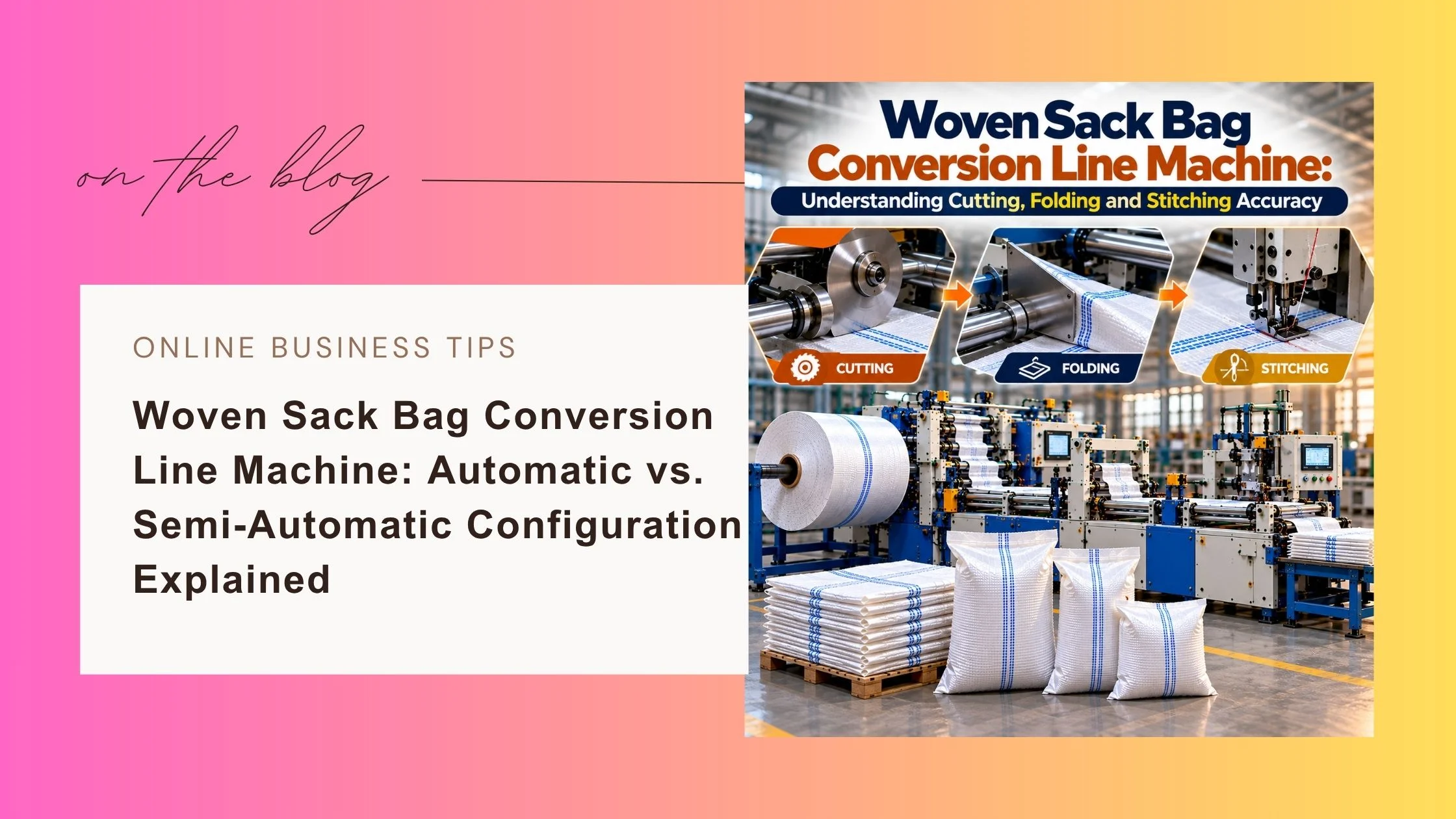
Woven Sack Bag Conversion Line Machine: Cutting Accuracy

September 05, 2026
Buying a bag conversion line is only the beginning. The real production journey starts when the equipment arrives at your factory and must be positioned, connected, commissioned, tested, and prepared for continuous operation.
A well-planned Bag Conversion Line Installation can reduce commissioning delays, prevent unnecessary modification costs, and help the production team reach stable output faster. Poor preparation, on the other hand, can create problems with factory space, electrical supply, material flow, machine access, ventilation, operator movement, and maintenance access.
For manufacturers planning a new facility or upgrading an existing plant, installation should therefore be treated as part of the overall project rather than an afterthought. Before purchasing a bag conversion line, the factory should understand the space, utilities, layout, foundation, handling, and commissioning requirements associated with the selected equipment.
Why Bag Conversion Line Installation Planning Matters
Industrial machinery needs more than physical floor space. The surrounding factory environment must support safe operation, efficient material movement, maintenance, electrical connections, and future production requirements.
During Bag Conversion Line Installation, even small planning mistakes can become expensive. A machine positioned too close to a wall may make maintenance difficult. An undersized electrical system can create installation delays. Poor material-flow planning can cause operators and forklifts to interfere with each other.
Good preparation allows the installation team to focus on assembling and commissioning the equipment instead of solving avoidable factory problems. It also gives management a clearer understanding of the total bag conversion line setup cost before production begins.
What Is Included in a Bag Conversion Line Installation?
Bag Conversion Line Installation involves much more than placing the machine on the factory floor. It typically covers equipment positioning, mechanical assembly, alignment, electrical connections, utility connections where applicable, control-system checks, trial operation, operator training, and final production verification.
The exact process varies according to the machine configuration and supplier. A simple line may require fewer installation activities than a more integrated system containing multiple conversion stages, conveyors, automatic handling, printing, or other auxiliary equipment.
Before equipment arrives, the supplier and factory team should agree on the installation scope. Clarifying who is responsible for unloading, positioning, electrical cabling, foundation preparation, commissioning, consumables, and operator training can prevent misunderstandings later.
Bag Conversion Line Space Requirements

Factory space is one of the first issues to address when planning a bag conversion machine setup. The required footprint should not be calculated from the machine dimensions alone.
The factory must also provide sufficient space for operators, raw-material movement, finished-bag handling, electrical panels, maintenance activities, inspection, and safe access. Additional clearance may be needed around moving components and access doors.
A practical layout should separate production movement from unnecessary traffic. Raw woven fabric should be able to reach the line without crossing heavily used finished-goods pathways, while completed bags should move toward inspection, packing, or storage without creating bottlenecks.
The final dimensions depend on the specific machine configuration, so buyers should obtain an equipment layout drawing from the supplier before finalizing the factory floor plan.
Recommended Factory Planning Zones
For a typical bag production facility, consider the following functional areas:
-
Raw-material storage and preparation
-
Bag conversion machinery
-
Operator and inspection areas
-
Finished-bag collection and packing
-
Spare-parts and maintenance storage
-
Electrical and utility access
-
Material movement and forklift pathways
These areas do not need identical amounts of space. Their purpose is to create a logical production flow that minimizes unnecessary handling.
Bag Conversion Line Factory Layout
A good bag conversion line factory layout should follow the direction of production. Ideally, materials enter the production area from one side, move through the conversion stages, and leave as finished bags without excessive backtracking.
For example, woven fabric can move from raw-material storage toward the conversion line, while completed bags move toward inspection and packing. This simple linear flow can reduce unnecessary movement and make production easier to supervise.
The layout should also consider future maintenance. Technicians need enough room to access motors, electrical panels, cutting systems, stitching mechanisms, sensors, and other service points.
If the factory expects to install additional machines later, leaving strategic expansion space can also prevent major layout changes in the future.
Bag Making Machine Factory Setup
A bag making machine factory setup should be planned around both the machine and the supporting infrastructure. Flooring, electrical distribution, lighting, ventilation, compressed air where required, material storage, and handling equipment can all influence installation.
The floor should be suitable for the equipment's weight and operating conditions. Depending on the machine design, the supplier may specify particular foundation, anchoring, leveling, or vibration requirements.
Lighting is another practical consideration. Operators and maintenance personnel need adequate visibility around production and inspection areas. Good lighting can also make it easier to identify defects, monitor machine components, and perform routine maintenance.
The factory environment should be clean and organized because dust, loose materials, and poor housekeeping can interfere with production and create safety risks.
Bag Machine Power Requirements
Bag machine power requirements depend on the exact line configuration, installed motor capacity, control system, auxiliary equipment, and factory electrical standard.
Manufacturers should never estimate electrical requirements from a generic machine category. Instead, request the supplier's electrical specification showing connected load, voltage, frequency, phase requirements, recommended protection, and any auxiliary power requirements.
Electrical planning should include enough capacity for the machine as well as supporting systems. The factory may also need appropriate distribution panels, circuit protection, grounding, cable routing, emergency isolation, and other electrical infrastructure according to applicable local requirements.
The International Electrotechnical Commission (IEC) develops international standards covering electrical and electronic technologies, making it a useful reference point when planning industrial electrical installations.
Important: Final electrical design should always be reviewed by a qualified local electrical professional and matched to the machine supplier's documentation and applicable regulations.
Electrical and Utility Preparation Before Installation
The most efficient Bag Conversion Line Installation begins before the machine reaches the factory. Electrical connections, utility points, cable routes, and other infrastructure should be prepared in advance according to approved equipment drawings.
If compressed air is required, the factory should verify pressure, flow, air quality, and connection requirements. If the equipment uses other utilities, their capacity should be confirmed before commissioning.
Cable routing also deserves attention. Cables should be protected from mechanical damage and organized so that they do not interfere with operator movement or material handling.
A pre-installation checklist between the machine supplier and factory engineering team can identify these requirements before delivery rather than during installation.
Foundation, Leveling and Machine Positioning

Machine positioning affects both operation and maintenance. Depending on the equipment design, the supplier may specify leveling tolerances, anchoring arrangements, floor strength, or other foundation requirements.
Before installation, the factory should verify that the intended location meets those requirements. The machine should then be positioned according to the approved layout rather than wherever sufficient floor space happens to be available.
Correct leveling and alignment can be particularly important for equipment containing moving mechanical systems. Installation technicians should follow the manufacturer's procedures rather than improvising adjustments.
The factory should also preserve access to emergency stops, control panels, inspection points, and service areas once the equipment has been positioned.
Bag Production Line Installation: Delivery to Assembly
Once the equipment arrives, the first stage involves receiving and inspecting the shipment. Components should be checked against packing documentation, particularly if the line consists of several machines or modules.
Safe unloading requires suitable lifting equipment and trained personnel. Large industrial components should not be moved using improvised methods simply to save time.
After inspection, the equipment can be positioned according to the approved layout. Mechanical assembly, alignment, connections, guarding, sensors, and control-system components are then completed according to the manufacturer's procedures.
The exact sequence varies by machine, so the supplier's installation documentation should take priority over generic installation practices.
Machine Commissioning: What Happens After Installation?
Machine commissioning is the stage where the installed equipment is checked and progressively brought into production-ready condition.
Commissioning normally involves verifying mechanical operation, electrical systems, controls, safety functions, sensors, machine settings, and supporting utilities. The line can then be operated under controlled conditions to confirm that the equipment responds correctly.
A production trial is especially valuable because it moves the evaluation from "the machine turns on" to "the machine produces the required bags." Representative fabric and the intended bag specifications should be used whenever practical.
The commissioning team can then identify adjustments needed for cutting, folding, stitching, feeding, speed, tension, or other production parameters before commercial production begins.
Testing Production Quality During Commissioning
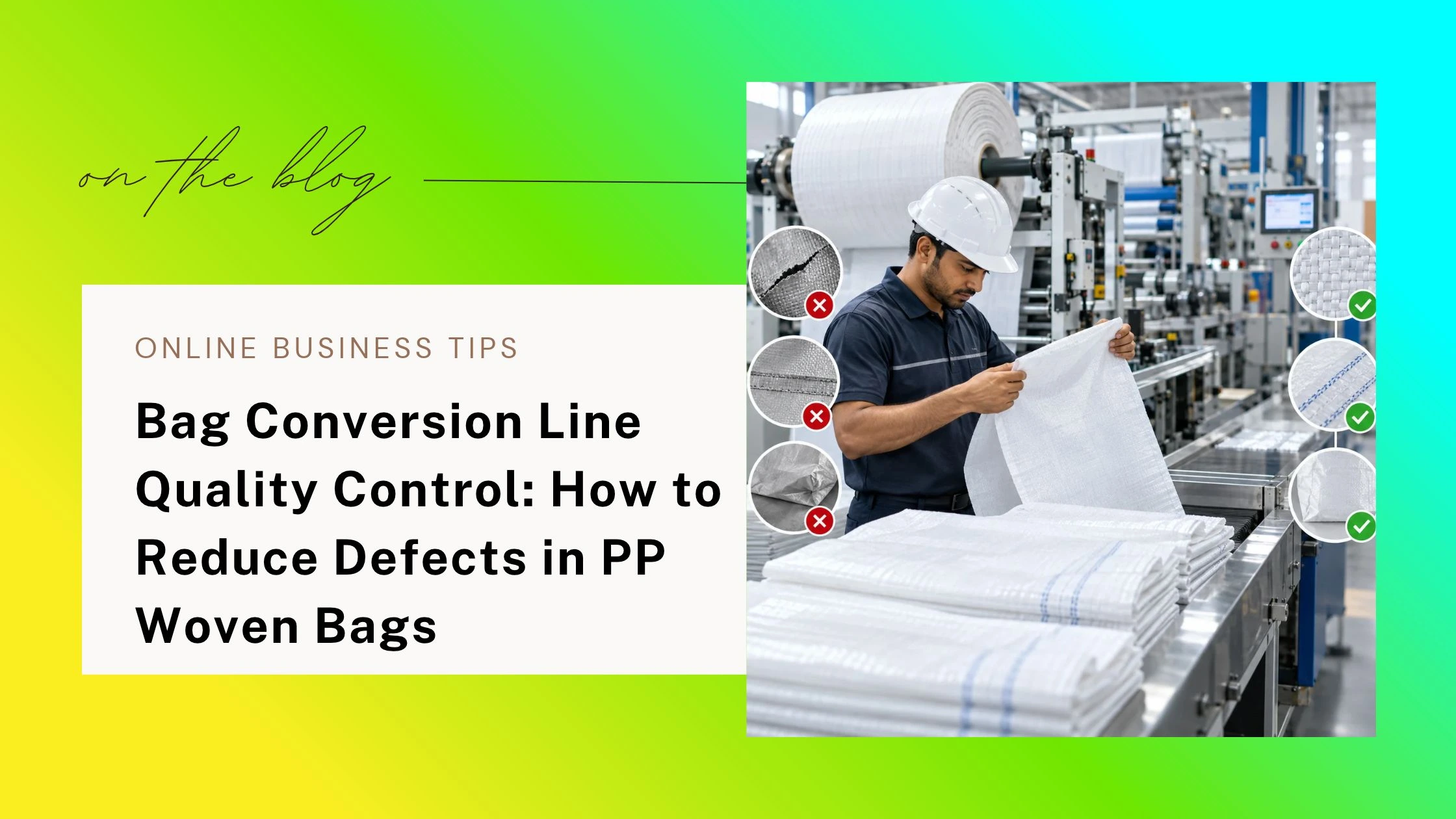
Successful commissioning should include quality verification as well as mechanical testing. The finished bags should be checked against the customer's specifications.
Important characteristics may include dimensions, cutting accuracy, stitching quality, bag appearance, seam integrity, printing alignment where applicable, and overall construction.
The exact quality checks depend on the bag application. A standard agricultural sack may have different acceptance criteria from a premium printed BOPP bag or a heavy-duty industrial sack.
Documenting the initial production results can also establish a useful baseline for future maintenance and performance monitoring.
Operator Training During Bag Conversion Line Setup
A machine can be correctly installed and still perform poorly if operators do not understand how to run and maintain it.
Operator training should cover normal startup and shutdown procedures, machine settings, material loading, production adjustments, basic troubleshooting, cleaning, safety procedures, and routine inspections.
Maintenance personnel may require additional training covering lubrication, wear components, sensors, electrical systems, preventive maintenance, and recommended spare parts.
Training is particularly important during the early production period because operators learn how the machine behaves under real manufacturing conditions. Experienced operators can often identify abnormal sounds, feeding issues, product defects, or other early warning signs before they develop into larger problems.
Safety During Industrial Machine Installation
Industrial machine installation should be performed with appropriate attention to mechanical, electrical, lifting, and operational safety. Installation activities can expose workers to risks that are different from normal production.
Moving heavy components, connecting electrical systems, working around elevated equipment, and testing machinery before guards are fully installed all require controlled procedures.
The factory should follow applicable local occupational safety regulations and the equipment manufacturer's safety instructions. The International Labour Organization (ILO) provides international guidance and resources related to occupational safety and health.
Once installation is complete, operators should understand emergency stops, machine guards, restricted areas, and safe operating procedures before commercial production begins.
Bag Conversion Line Setup Cost
Bag conversion line setup cost varies widely because it depends on the equipment configuration and the condition of the existing factory.
The machine purchase price is only one part of the overall project. Installation support, transportation, unloading, electrical infrastructure, foundation work, auxiliary equipment, operator training, initial spare parts, and factory modifications can all contribute to the final cost.
For this reason, manufacturers should distinguish between the equipment quotation and the total installed project cost.
|
Cost Area |
Potential Requirement |
|
Equipment |
Conversion line and selected modules |
|
Transportation |
Freight, insurance and local movement |
|
Installation |
Mechanical and technical installation support |
|
Electrical work |
Panels, cabling, protection and connections |
|
Factory preparation |
Flooring, foundation and layout modifications |
|
Utilities |
Compressed air or other supporting systems |
|
Training |
Operator and maintenance instruction |
|
Spare parts |
Recommended startup inventory |
|
Commissioning |
Trial production and technical adjustments |
Getting these costs identified early creates a more realistic investment budget.
Common Bag Conversion Line Installation Mistakes
Many installation problems are not caused by complicated engineering issues. They often come from inadequate preparation.
A common mistake is finalizing the factory layout before receiving the supplier's equipment drawing. Another is underestimating the space needed for maintenance and material movement.
Electrical capacity is another frequent concern. Assuming that an existing factory supply is sufficient without checking the machine's actual requirements can cause avoidable delays.
Other problems include inadequate lifting arrangements, insufficient operator training, poor material flow, and starting commercial production before commissioning has been properly completed.
Planning these issues in advance can make the installation process considerably smoother.
How to Prepare Your Factory Before the Machine Arrives

Preparation should ideally begin as soon as the machine configuration is finalized. The supplier should provide technical drawings, utility requirements, installation instructions, and other relevant documentation.
The factory engineering team can then verify floor dimensions, access routes, electrical capacity, foundation conditions, utility connections, lighting, ventilation, and material-flow requirements.
Before delivery, confirm that the machine can physically enter the facility. Door widths, ceiling height, loading areas, internal pathways, and lifting capacity can become critical when moving large equipment into position.
A short pre-installation meeting involving the supplier, factory management, electrical team, maintenance personnel, and production team can help ensure that everyone understands their responsibilities.
A Practical Installation Timeline
The installation timeline depends on machine complexity, factory readiness, shipping conditions, and supplier support. A prepared facility can generally move through installation more efficiently than one requiring major infrastructure work at the same time.
A typical project progresses from site preparation to delivery, unloading, mechanical assembly, electrical and utility connections, alignment, testing, commissioning, operator training, and production approval.
Do not treat the first successful machine start as the end of the project. The more meaningful milestone is stable production of bags that meet the required specifications.
How to Make Bag Conversion Line Installation More Efficient
The simplest way to reduce installation delays is to prepare the factory before the equipment arrives. Approved drawings and utility specifications should be available to the engineering team, and required infrastructure should be completed or scheduled.
It also helps to establish one project owner who coordinates communication between the supplier and factory. This person can track delivery, installation, electrical work, commissioning, training, and documentation.
Finally, maintain a record of commissioning results and machine settings. This creates a reference point for future troubleshooting and production optimization.
A well-documented Bag Conversion Line Installation gives the factory more than a functioning machine—it creates a foundation for stable long-term production.
Conclusion
Bag Conversion Line Installation is a complete factory-engineering process rather than simply placing machinery on the production floor. Successful installation depends on adequate space, a logical factory layout, suitable flooring and foundation conditions, correctly planned electrical and utility infrastructure, safe material movement, professional assembly, machine commissioning, and operator training. Preparing these elements in advance can reduce delays and help the production line reach stable operating performance more efficiently.
If you are planning a new bag production facility or upgrading an existing plant, it is worth discussing installation requirements before finalizing your equipment purchase. Oberon Industries can help you evaluate the appropriate conversion line configuration and understand the practical requirements for installation and commissioning. You can also review the bag conversion line solution and request technical information or a quotation based on your factory and production requirements.
Frequently Asked Questions
1. How much factory space is required for a bag conversion line?
The required space depends on the specific line configuration, machine dimensions, auxiliary equipment, material flow, and maintenance access. Manufacturers should use the supplier's approved layout drawing and add sufficient clearance for operators, servicing, material handling, and safe movement.
2. What are the main bag machine power requirements?
Power requirements depend on the machine's installed motors, controls, auxiliary equipment, voltage, frequency, and phase configuration. The supplier should provide the exact connected-load and electrical specifications before the factory prepares its power infrastructure.
3. What happens during machine commissioning?
Machine commissioning verifies that the installed equipment operates correctly and safely. It can include mechanical and electrical checks, control-system testing, safety verification, trial production, machine adjustment, quality inspection, and operator training.
4. What should be completed before the machine arrives?
The factory should ideally complete the required floor or foundation preparation, electrical infrastructure, utility connections, access planning, lifting arrangements, lighting, and production-area layout. The supplier's technical drawings should be used as the primary reference.
5. What does bag conversion line setup cost include?
Setup cost can include installation, transportation, unloading, factory modifications, electrical work, utility preparation, foundation work, training, commissioning, and initial spare parts in addition to the machine purchase price. The exact cost depends on the project and factory conditions.