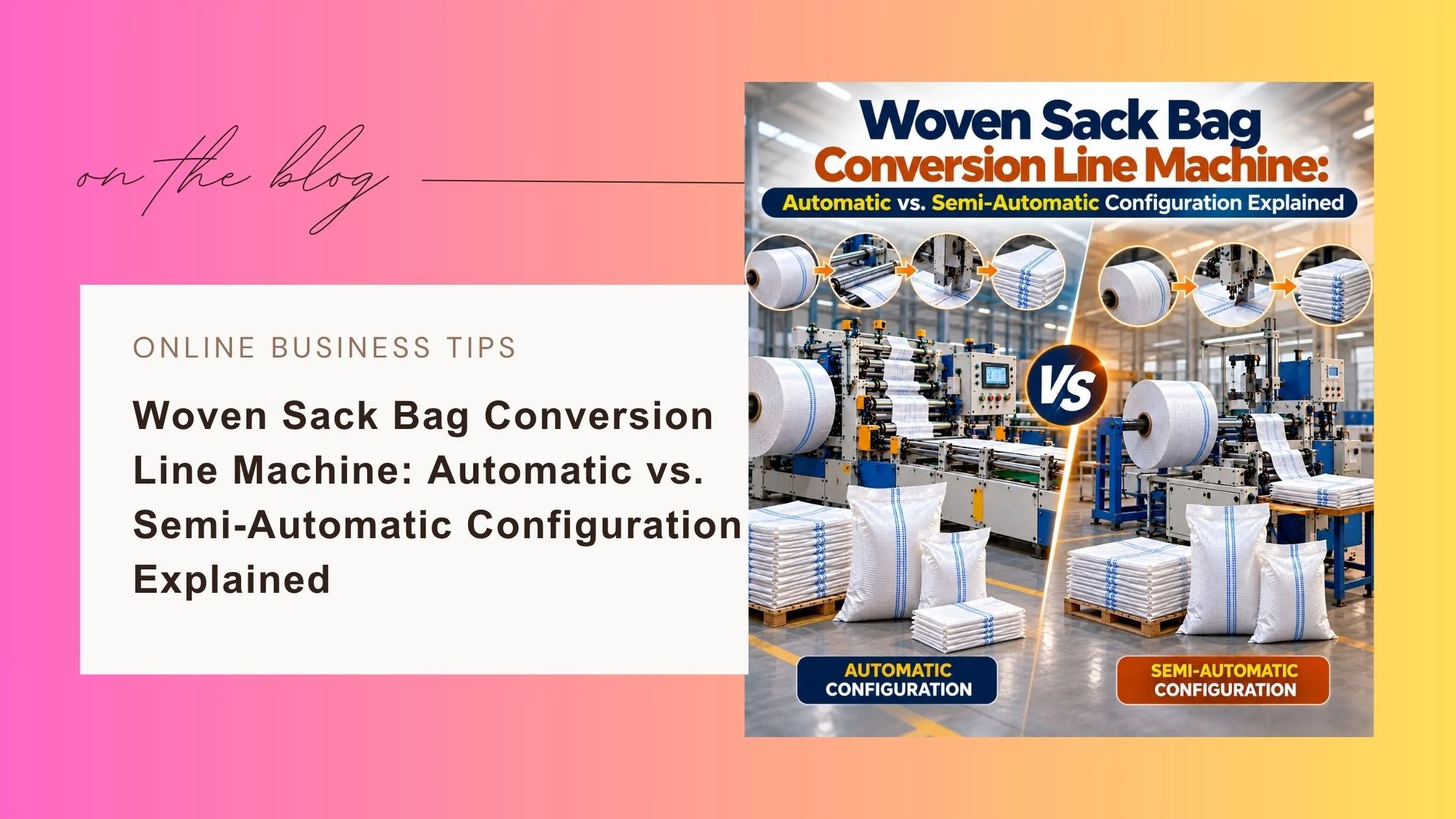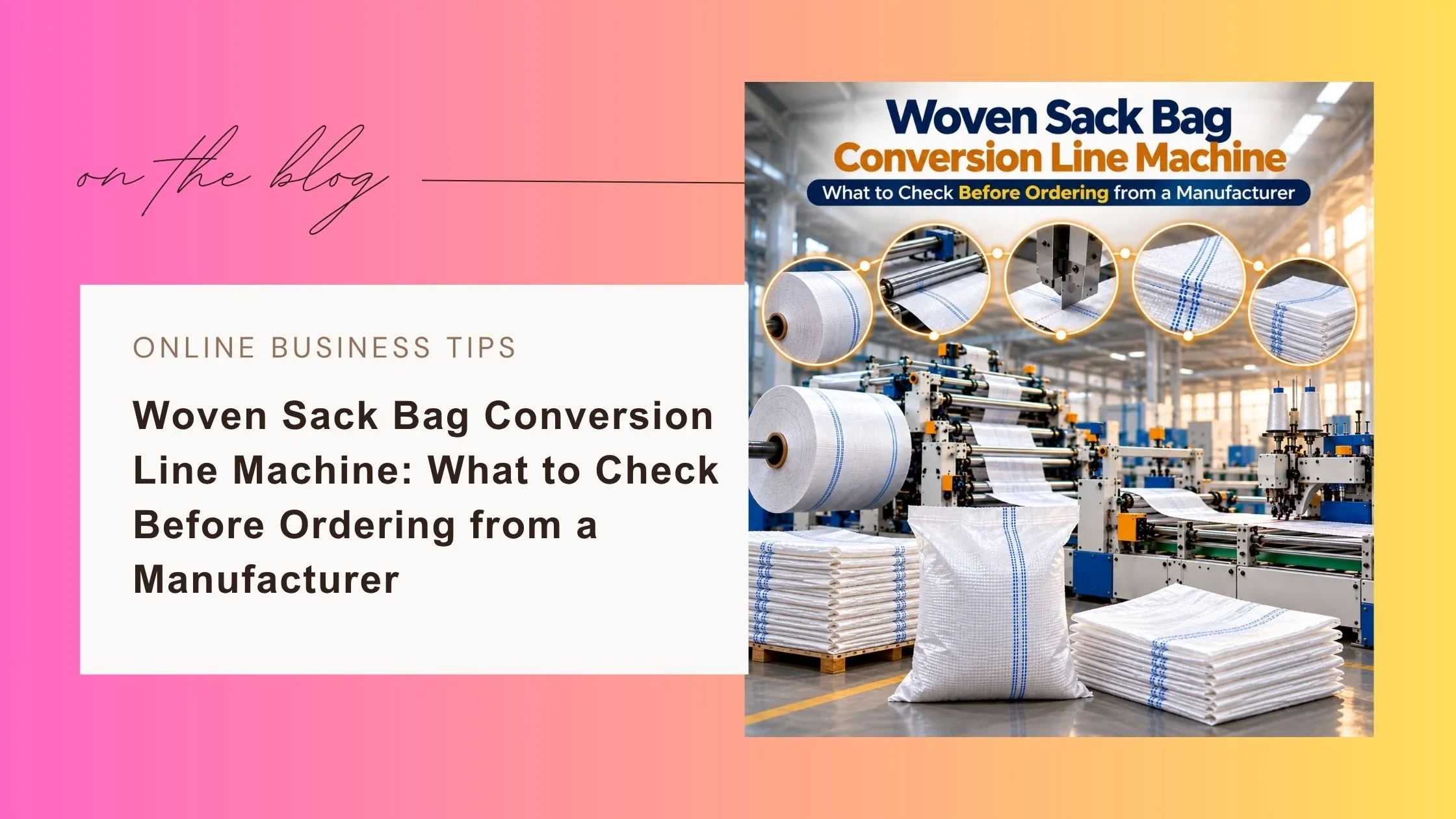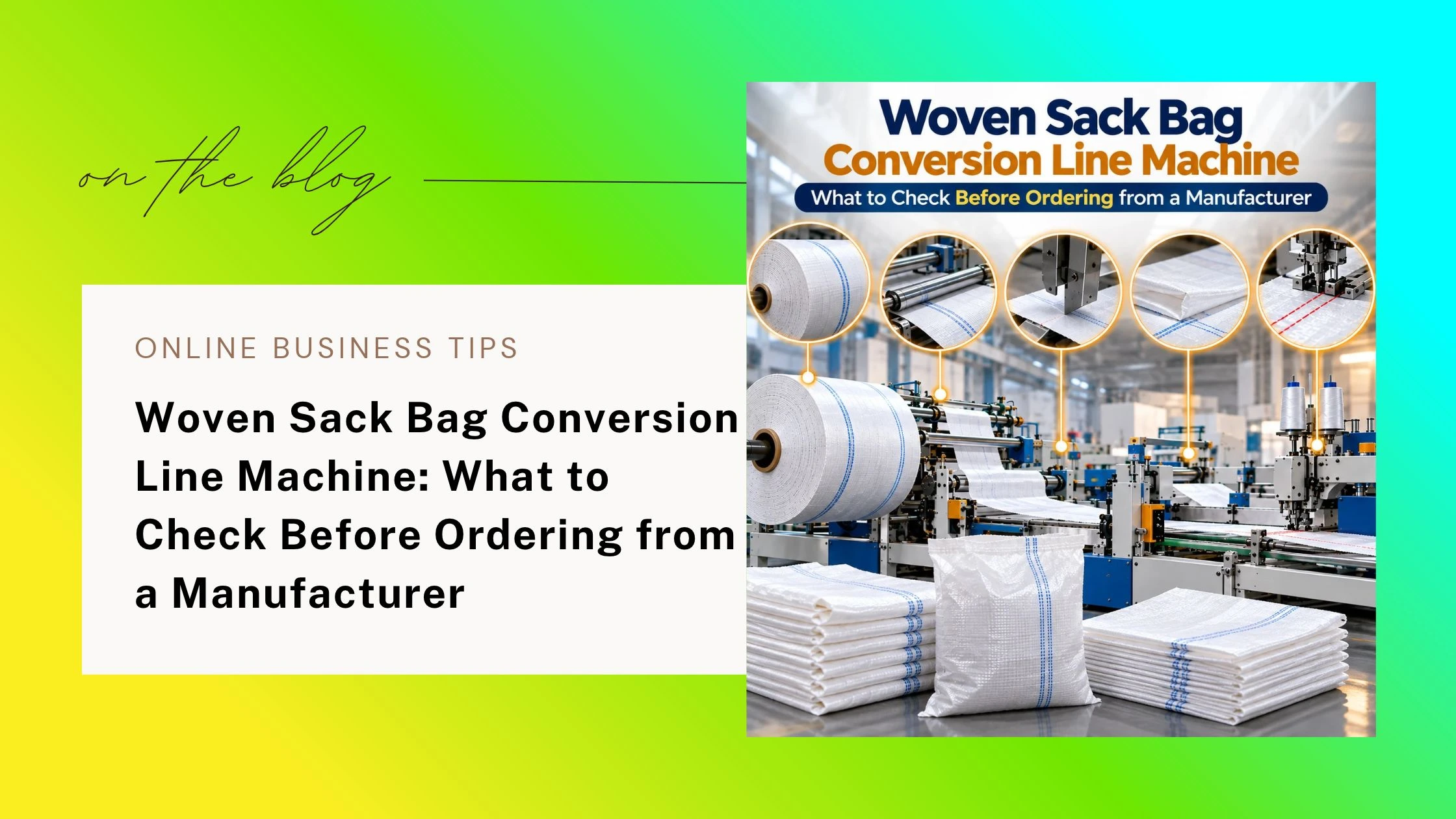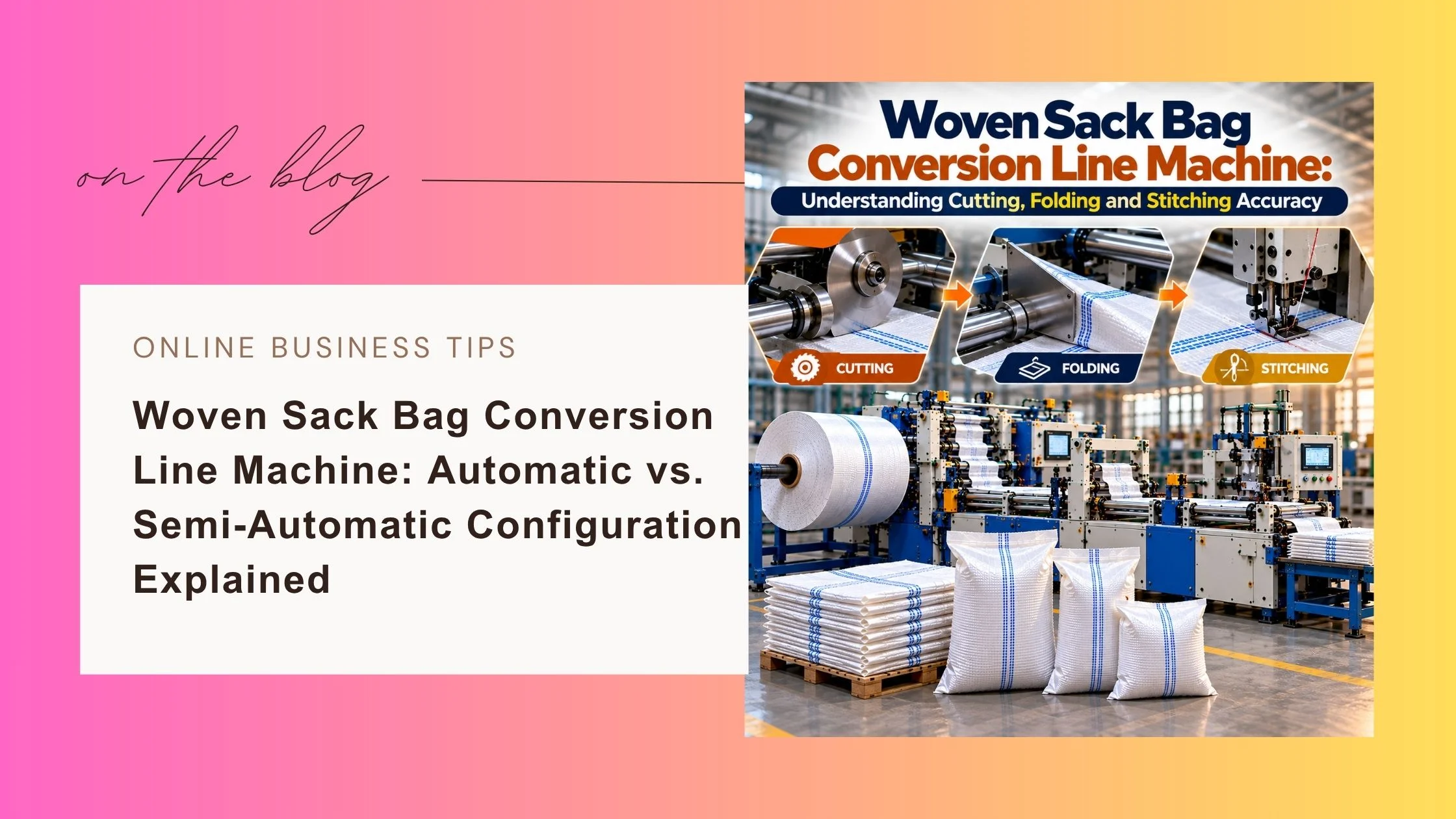
Woven Sack Bag Conversion Line Machine: Cutting Accuracy

September 01, 2026
Introduction
In bag manufacturing, a production line rarely chooses a convenient moment to stop. It waits until a large order is due, a shipment is scheduled, or everyone has finally gone home. That is why Bag Conversion Line Maintenance should sit at the heart of your production strategy rather than becoming an afterthought when something starts making an unpleasant noise.
A well-maintained conversion line can deliver more consistent production, fewer unexpected stoppages and a longer useful operating life. From cleaning and machine lubrication to inspections, spare-parts planning and professional servicing, small maintenance actions can prevent surprisingly expensive problems. If you are reviewing your equipment or planning an upgrade, explore bag conversion line solutions alongside your maintenance requirements.
The smartest manufacturers treat maintenance as production protection. You are not simply keeping metal, motors and electrical components tidy; you are protecting output, quality, delivery schedules and your investment. A few minutes spent checking a machine today can save hours of troubleshooting tomorrow.
Why Bag Conversion Line Maintenance Matters

Bag Conversion Line Maintenance keeps critical components operating within their intended conditions. During continuous production, cutting, folding, sewing, feeding and conveying systems experience mechanical movement, vibration, heat and material contact. Over time, even a small amount of wear can affect alignment or production accuracy.
The important point is that maintenance does not mean waiting until something breaks. Preventive maintenance for bag machines focuses on identifying wear before it becomes a failure. A loose fastener, contaminated sensor or poorly lubricated bearing may appear minor, but the same issue can eventually create rejected bags or an unexpected shutdown.
I always prefer a planned maintenance mindset because it gives production teams control. Instead of asking why the machine stopped, you can ask what needs attention before the next production run.
Create a Practical Maintenance Schedule
A good Bag Conversion Line Maintenance schedule should match machine usage, operating conditions and manufacturer recommendations. A line running one shift per day will experience a different maintenance load from equipment operating continuously across multiple shifts.
Daily checks can focus on cleanliness, unusual noises, visible damage, sensors and material-feed areas. Weekly inspections can go deeper into moving components, fasteners, belts and pneumatic connections. More detailed servicing can then take place at planned intervals based on operating hours and equipment requirements.
The schedule should also record what technicians actually find. Maintenance history becomes valuable because recurring faults often reveal patterns. If the same bearing, sensor or drive component repeatedly causes problems, your team can investigate the underlying reason rather than repeatedly treating the symptom.
Machine Cleaning Is More Important Than It Looks
Dust and polypropylene particles have a talent for finding places where they absolutely should not be. Accumulated debris can interfere with sensors, moving parts, cooling areas and material-feed mechanisms, especially in busy manufacturing environments.
Regular cleaning forms one of the simplest parts of Bag Conversion Line Maintenance. Operators should remove production residue using methods recommended for the equipment and avoid forcing debris into sensitive electrical or mechanical areas. Cleaning should never become an excuse for spraying unsuitable liquids around electrical components.
A clean machine also makes inspections easier. When surfaces are covered with accumulated dust, oil or production residue, small leaks and signs of wear can hide in plain sight. Clean equipment gives your maintenance team a much better visual starting point.
Machine Lubrication: Small Task, Big Consequence
Machine lubrication deserves particular attention because friction gradually turns movement into wear. Bearings, chains, guides and other moving components may require specific lubricants and application intervals, depending on the machine design.
More lubricant does not necessarily mean better lubrication. Excess lubricant can attract dust and create its own problems, while the wrong product may affect seals or components. Follow the equipment manufacturer's instructions for lubricant type, quantity and frequency.
As part of Bag Conversion Line Maintenance, technicians should also inspect components while lubricating them. If a bearing feels rough, a chain has excessive slack or a guide shows unusual wear, lubrication alone will not solve the underlying issue.
Inspect Cutting and Feeding Systems Regularly
Cutting and feeding systems directly influence finished bag quality. If material does not feed consistently, the machine may produce variations in dimensions, positioning or cutting accuracy. That creates a quality problem before anyone notices a major mechanical failure.
Bag Conversion Line Maintenance should therefore include regular inspection of cutting components, rollers, guides and feeding mechanisms. Look for unusual vibration, uneven wear, material tracking problems and changes in cutting performance.
If operators notice that bags gradually become less consistent, do not automatically blame the raw material. The cause may involve alignment, tension, worn components or incorrect machine settings. Good troubleshooting starts with evidence rather than guesswork.
Preventive Maintenance vs Reactive Repairs
There is a simple difference between preventive and reactive maintenance. Preventive work happens before a failure, while reactive repair happens after the machine has already stopped or performance has deteriorated.
Reactive repairs can sometimes be unavoidable. Components fail, accidents happen and production environments are not magical places where machinery lives forever. However, relying entirely on breakdown repairs can make bag making machine downtime harder to predict and more expensive to manage.
A planned approach generally gives you more control over labour, spare parts and production scheduling. You can often arrange maintenance during a planned production gap rather than discovering a problem halfway through a critical order.
|
Maintenance approach |
Main advantage |
Main risk |
|
Preventive |
Reduces unexpected failures |
Requires planning |
|
Reactive |
Responds directly to faults |
Can cause costly downtime |
|
Predictive |
Uses condition information to anticipate issues |
Requires monitoring and analysis |
Understanding Bag Conversion Line Troubleshooting
When production suddenly stops, the first temptation is often to press buttons until something happens. Resist it. Bag Conversion Line Troubleshooting works best when technicians follow a logical process.
Start with the symptoms. Is the machine refusing to start, producing inconsistent bags, stopping intermittently or making an unusual sound? Then identify whether the problem appears mechanical, electrical, pneumatic, control-related or material-related.
Operators should document fault messages and changes in machine behaviour rather than relying on memory. A technician who knows exactly when the problem occurs can usually diagnose it more efficiently than someone receiving the classic explanation: “It was working fine, then it just… wasn't.”
Safety should always come first during inspection and repair. For broader machinery-safety guidance, consult the UK Health and Safety Executive's machinery guidance.
Spare Parts Planning Can Prevent Long Delays
Bag machine spare parts deserve a place in your maintenance strategy. A relatively inexpensive component can cause significant downtime if you do not have a replacement available and must wait for delivery.
Your critical-spares strategy should reflect the actual machine configuration. Keep commonly replaced consumables and important failure-prone components available according to the manufacturer's recommendations. At the same time, avoid buying huge quantities of parts that may sit unused for years.
A useful spare-parts register should record part numbers, quantities, storage locations and replacement history. This turns spare-parts management from a cupboard full of mystery components into something your production team can actually use.
Electrical and Control-System Checks
Modern conversion equipment can depend heavily on sensors, drives, controllers and electrical systems. A machine can therefore appear mechanically healthy while an electrical or control issue quietly causes intermittent faults.
As part of industrial bag machine maintenance, trained personnel should inspect relevant electrical connections, sensors, control cabinets and protective devices according to the manufacturer's procedures and applicable safety requirements. Do not improvise inside electrical systems simply because a connector looks loose.
Environmental conditions matter too. Excessive heat, dust or moisture can affect electrical equipment. Keeping control areas clean and appropriately ventilated can support reliability, but electrical work should always follow proper isolation and safety procedures.
Professional Servicing and Planned Inspections
Routine operator checks are valuable, but they do not replace qualified technical servicing. Bag conversion machine servicing can involve detailed inspection, calibration, component assessment and adjustments that require specialist knowledge.
Professional servicing becomes particularly useful when you notice recurring faults, declining output, unusual vibration or repeated quality problems. Instead of repeatedly replacing individual parts, a technician can investigate whether alignment, setup, component wear or another underlying issue is responsible.
Oberon Industries can be part of a broader maintenance strategy where equipment support, spare parts and technical knowledge work together. The objective is simple: keep the machine producing rather than turning maintenance into a never-ending repair project.
Reduce Downtime by Monitoring the Right Things

Reducing bag making machine downtime starts with knowing where downtime comes from. Record every stoppage, including its duration, cause and affected production stage. After several weeks, patterns usually become easier to spot.
For example, repeated short stops may point towards sensor contamination or material-feed issues, while longer interruptions may relate to component failure or setup problems. Without records, these events feel random. With records, they become data.
Useful maintenance indicators include average downtime per month, repeat-fault frequency, planned versus unplanned maintenance hours and the time required to restore production. Tracking these figures helps managers determine whether Bag Conversion Line Maintenance is actually improving reliability.
Operator Training Is Part of Maintenance
The person operating the machine every day can become your earliest warning system. Operators hear changes in sound, notice altered feeding behaviour and often spot quality shifts before a formal inspection takes place.
Training should teach operators what normal operation looks like and which warning signs require attention. They should know how to perform routine checks, keep the work area clean and report abnormalities clearly.
This human element matters because Bag Conversion Line Maintenance is not only a technician's responsibility. Maintenance works best when operators, supervisors and technical staff share information rather than treating the machine as someone else's problem.
When Bag Conversion Line Repair Becomes Necessary
Even excellent maintenance cannot prevent every failure. When a component reaches the end of its useful life or an unexpected fault occurs, Bag Conversion Line Repair may become necessary.
The key is to repair the actual cause rather than simply restoring movement. Replacing a damaged component without investigating why it failed can lead to another breakdown shortly afterwards. Excessive vibration, incorrect adjustment, misalignment or overloading may have contributed to the original problem.
After a repair, test the machine carefully before returning to full production. Confirm that the original symptom has disappeared and check product quality during the restart period.
Extend Machine Life Through Better Maintenance
Machine longevity does not come from one dramatic servicing event. It comes from hundreds of sensible decisions repeated over time. Correct lubrication, appropriate cleaning, timely replacement of worn components and proper operating procedures all contribute to equipment life.
Bag Conversion Line Maintenance can also protect your investment by preventing minor faults from developing into expensive secondary damage. A worn component that costs relatively little to replace may cause substantial damage if you allow it to operate beyond its safe or practical service condition.
This is why maintenance should be treated as an operating cost that protects production capacity rather than an expense that adds nothing to the bottom line.
A Simple Maintenance Checklist for Production Teams

For practical Bag Conversion Line Maintenance, keep the checklist short enough that operators actually use it. A useful routine can include:
-
Check for unusual noise, vibration or heat.
-
Inspect material feeding and tracking.
-
Clean sensors and accessible production areas.
-
Check visible belts, rollers, guides and fasteners.
-
Follow the recommended machine lubrication schedule.
-
Record faults and unusual behaviour.
-
Confirm critical spare parts are available.
-
Escalate electrical or mechanical issues to appropriately qualified personnel.
The exact checklist should always reflect the machine manufacturer's instructions and your site's safety procedures. A generic checklist can support good habits, but it should never replace equipment-specific maintenance documentation.
How to Build a Long-Term Maintenance Strategy
A long-term Bag Conversion Line Maintenance programme should combine operator checks, scheduled servicing, spare-parts planning and performance records. The aim is to move gradually from “fix it when it breaks” towards a more predictable maintenance culture.
Review the maintenance history regularly. If a component repeatedly fails, investigate the pattern. If downtime consistently occurs during changeovers, examine the setup process. If output falls gradually, look at wear, alignment, feeding and machine settings.
This approach creates a feedback loop. Production data informs maintenance decisions, maintenance improves machine reliability, and improved reliability supports more predictable production.
Conclusion
Effective Bag Conversion Line Maintenance is ultimately about protecting production. Regular inspections, machine lubrication, cleaning, preventive servicing, spare-parts planning and structured troubleshooting can reduce unexpected downtime while helping your equipment operate more consistently. When maintenance teams use real production data and address the causes of recurring faults, they can make better decisions and extend the practical life of the machine.
If you want to improve reliability, reduce unplanned stoppages or establish a more structured servicing programme, start by reviewing your current maintenance records and machine condition. Then speak with the team at Oberon Industries about your equipment requirements and explore bag conversion line solutions that can support efficient, dependable production for the long term.
FAQs
1. How often should a bag conversion line receive maintenance?
The correct interval depends on the machine design, operating hours, production environment and manufacturer's recommendations. Daily operator inspections should generally complement scheduled technical servicing rather than replace it.
2. What is the most important part of Bag Conversion Line Maintenance?
There is no single universal component. Cleaning, lubrication, inspection, alignment, electrical checks and timely replacement of worn parts all contribute to reliable operation. The most important factor is consistency.
3. Can preventive maintenance eliminate machine downtime?
No maintenance programme can guarantee zero downtime. Preventive maintenance can reduce the likelihood and severity of unexpected failures, but equipment will still require repairs and scheduled servicing throughout its operating life.
5. What should I do when a conversion machine repeatedly stops?
Record the exact symptoms, fault messages, timing and operating conditions. Then investigate the recurring cause instead of repeatedly restarting the equipment. Repeated stoppages often indicate an underlying mechanical, electrical, control or material issue.
6. Does professional servicing extend machine life?
Professional servicing can help identify wear, incorrect settings and developing faults before they cause more serious problems. When technicians follow the machine manufacturer's procedures and replace components appropriately, servicing can support reliability and longer equipment life.