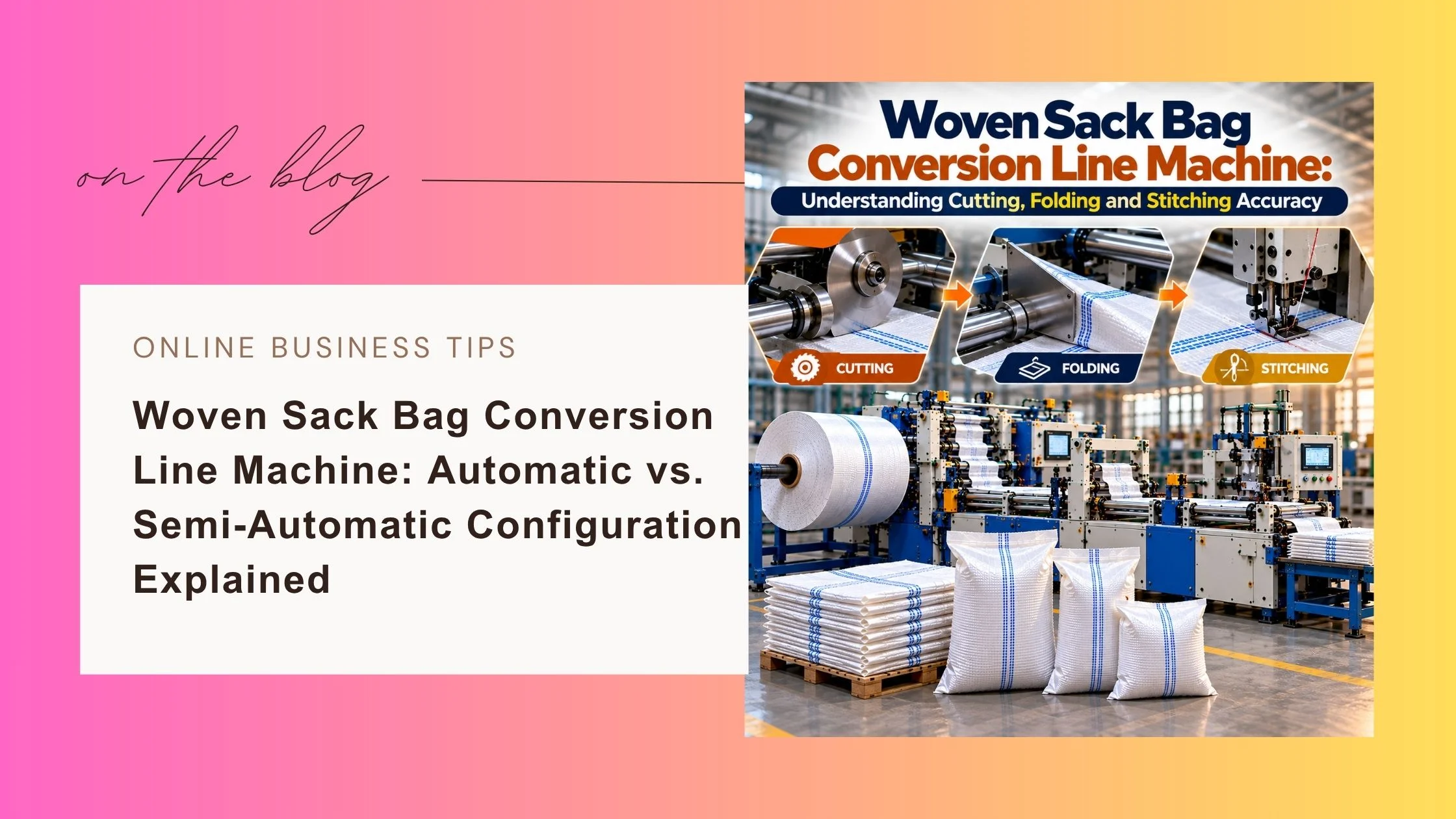
Woven Sack Bag Conversion Line Machine: Cutting Accuracy

September 04, 2026
A single PP woven fabric roll can become many different finished bags—but the final application determines how that fabric needs to be cut, folded, stitched, printed, and finished. From cement sacks and fertilizer bags to rice packaging and industrial woven bags, manufacturers use different conversion configurations to meet different product requirements.
Understanding Bag Conversion Line Applications helps manufacturers choose equipment based on the products they actually intend to produce. Instead of selecting a machine simply because it offers high speed, buyers can evaluate bag dimensions, construction, material, printing requirements, stitching style, and expected production volumes. This approach is especially important for factories serving multiple industries and export markets.
A modern bag conversion line can support a wide range of PP woven packaging formats when the equipment is correctly configured. The right setup can help manufacturers move efficiently from woven fabric to finished, saleable bags while maintaining consistent dimensions and quality.
What Are Bag Conversion Line Applications?
Bag Conversion Line Applications refer to the different types of finished woven bags that can be manufactured using equipment designed to convert PP woven fabric into completed packaging products.
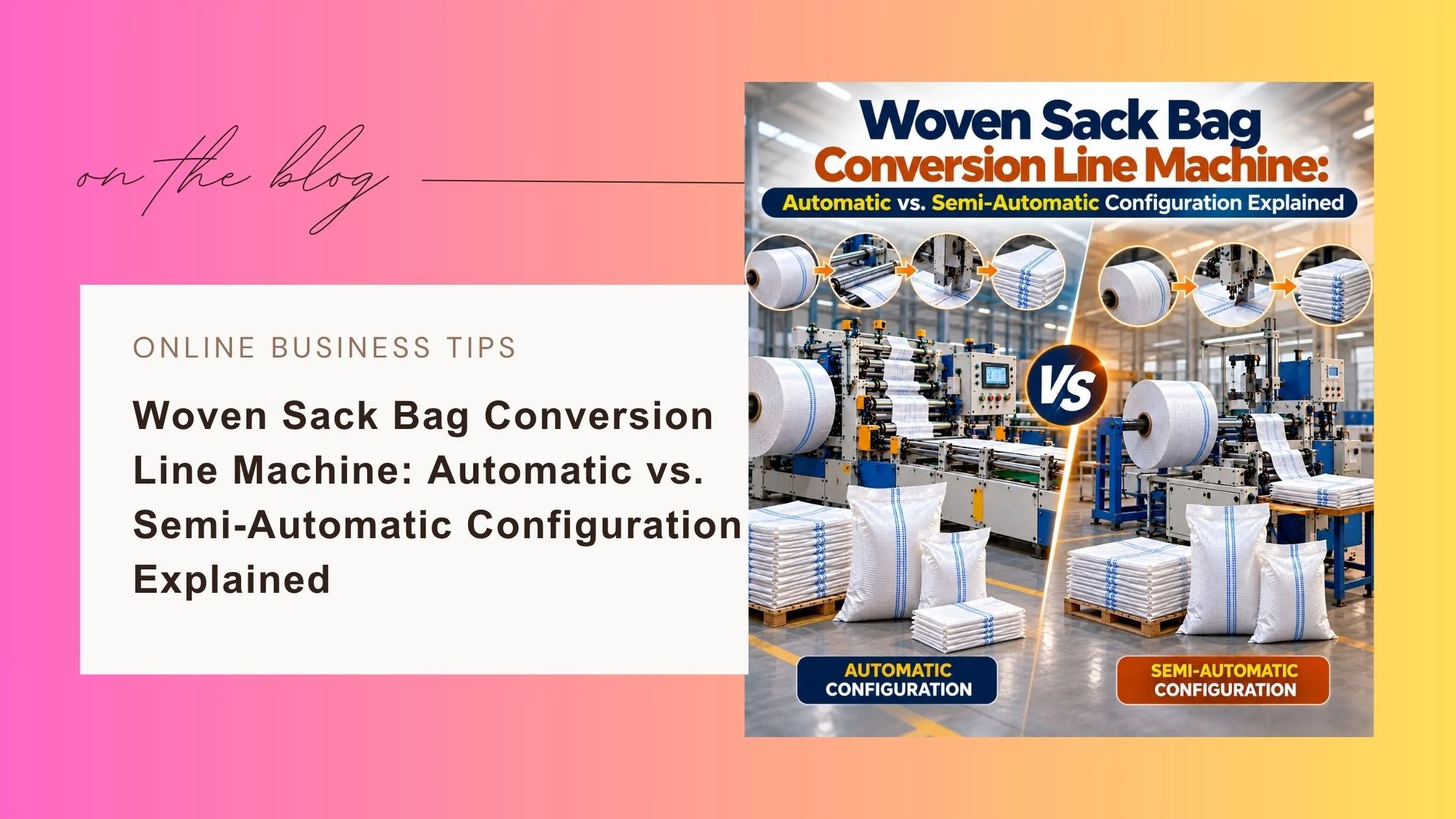
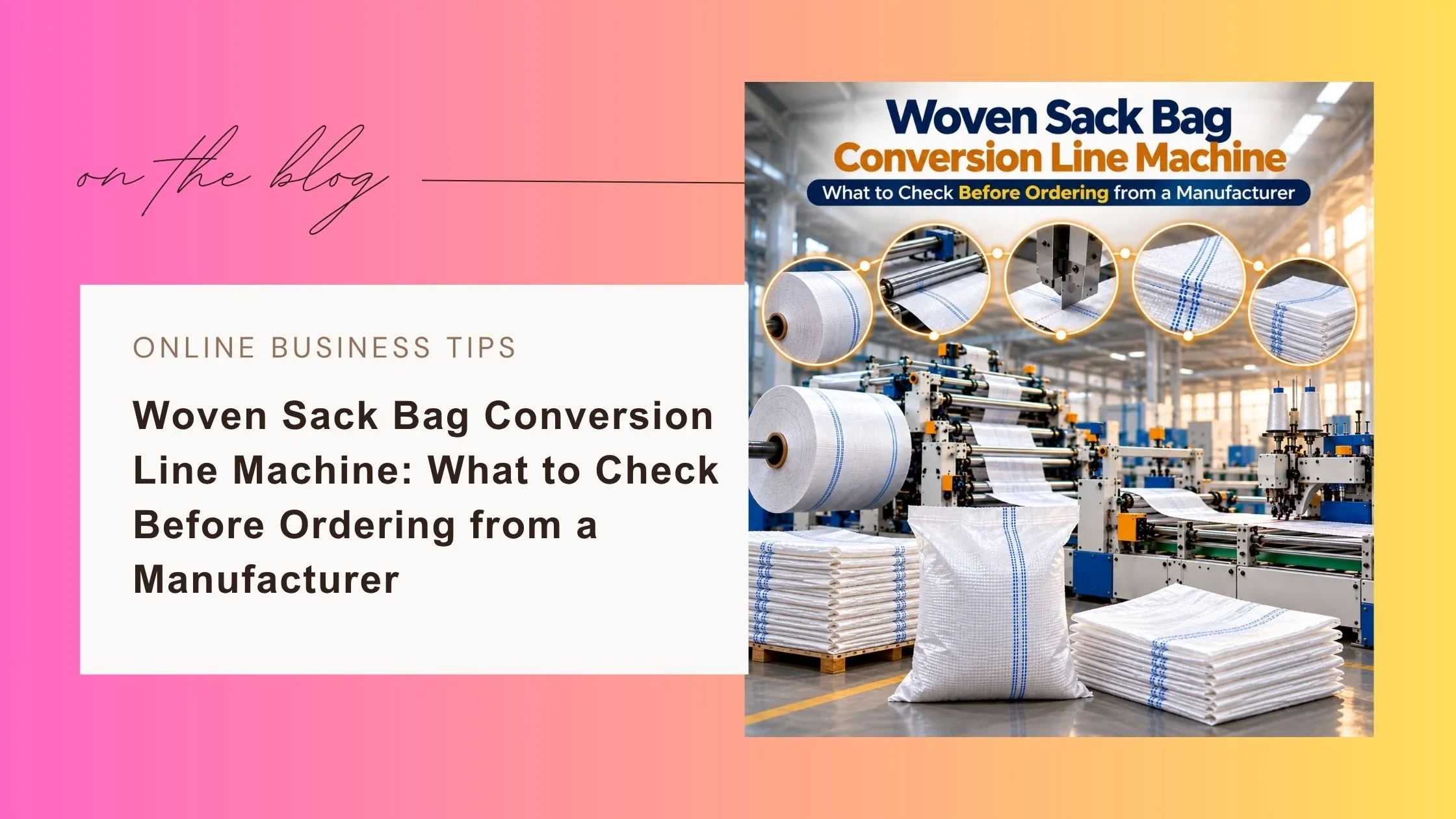
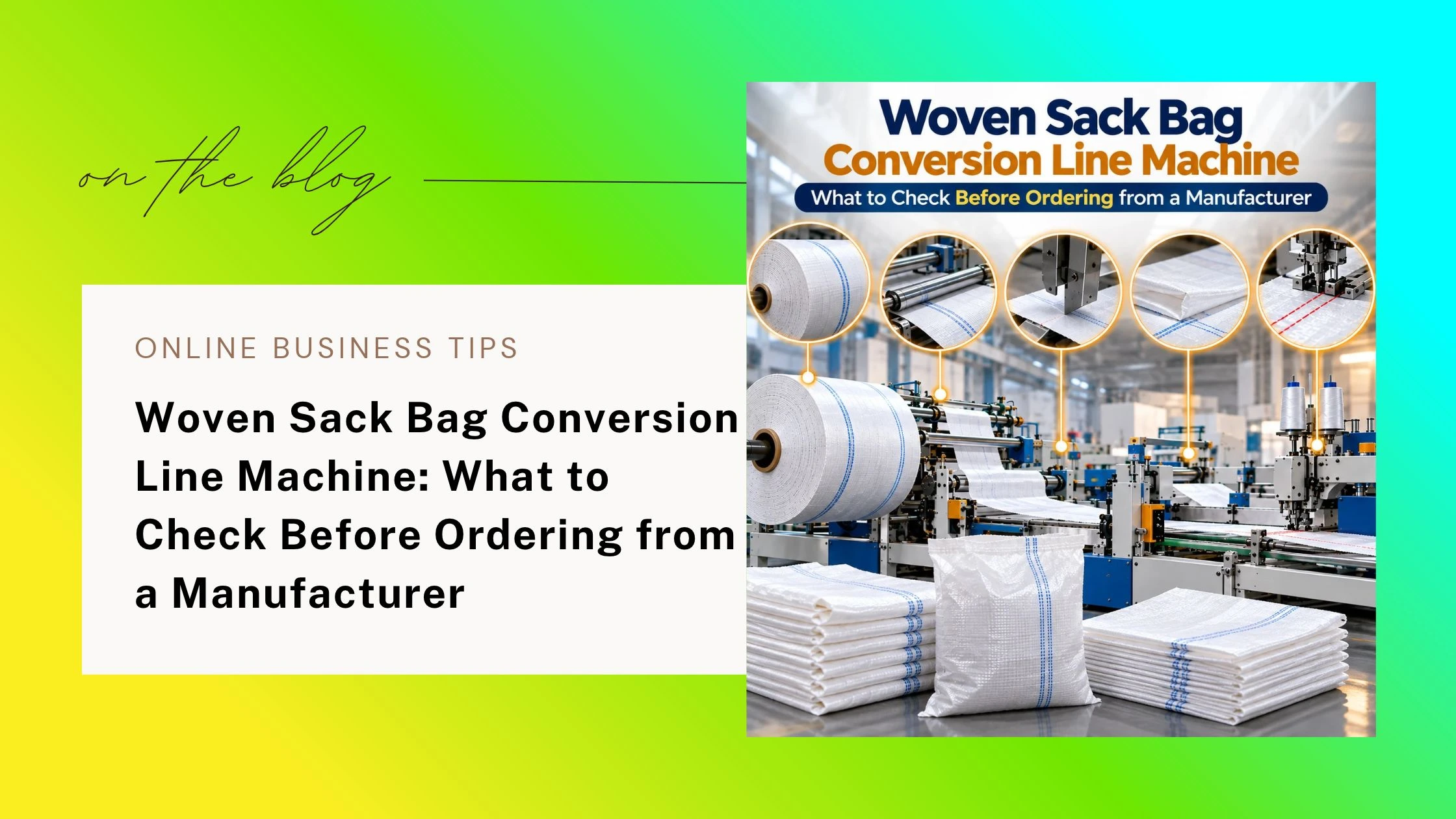
The conversion process can involve several operations, including fabric feeding, cutting, folding, gusseting, stitching, printing, and bag stacking. The exact combination depends on the bag design and its intended use. A simple agricultural sack may require a different configuration from a laminated BOPP printed bag used for premium retail packaging.
This flexibility makes PP woven packaging attractive across numerous industries. According to the International Organization for Standardization, ISO 23560:2015 specifies characteristics, requirements, and test methods for woven polypropylene sacks used for bulk foodstuff packaging, including cereals, sugar, and pulses.
Why PP Woven Bags Have So Many Applications

PP woven bags combine relatively low weight with useful strength, flexibility, and resistance to handling stresses. These characteristics make them suitable for products that need to be transported, stored, stacked, or handled repeatedly.
The construction of a PP woven bag can also be adapted to the application. Manufacturers can use different fabric weights, coatings, liners, dimensions, printing methods, and closures depending on what the bag needs to contain and how customers will use it.
This versatility explains why PP woven bag applications extend from bulk agricultural commodities to construction materials and industrial products. The same basic woven substrate can become a straightforward commodity sack or a highly printed retail-oriented package when the conversion and finishing processes are appropriately selected.
PP Woven Bag Types You Can Produce
The range of PP woven bag types depends on the capabilities and configuration of the conversion line. Common formats include standard open-mouth sacks, gusseted bags, valve-style constructions, laminated bags, printed sacks, and specialized industrial packaging.
Bag dimensions are another major differentiator. A manufacturer may produce small bags for consumer products, medium sacks for agricultural goods, or larger heavy-duty bags for industrial materials. Each format can influence cutting accuracy, stitching requirements, handling, and production speed.
The table below provides a practical overview of common applications and the characteristics manufacturers should consider.
|
Application |
Typical Bag Requirement |
Important Production Considerations |
|
Cement |
Strong, durable sacks |
Stitching, dimensions, dust control, handling |
|
Fertilizer |
Woven PP, often with liner |
Moisture protection, seam strength, filling method |
|
Rice |
Food-packaging sacks |
Clean production, print quality, dimensional accuracy |
|
Animal feed |
Durable bulk sacks |
Strength, closure, stacking and handling |
|
Agriculture |
General-purpose woven bags |
Size range, material strength, flexibility |
|
Industrial products |
Heavy-duty packaging |
Load capacity, seam performance, durability |
|
BOPP packaging |
Printed laminated bags |
Lamination, surface quality, graphics and finishing |
Cement Bag Production Machine Applications
Cement packaging places considerable demands on the finished sack because bags must withstand filling, transportation, stacking, and repeated handling. Cement bag production machine configurations therefore need to support consistent dimensions and reliable seams.
The bag design can vary depending on the filling system used by the cement manufacturer. The conversion process may need to accommodate specific bag lengths, widths, valve arrangements, stitching patterns, or other construction requirements.
For manufacturers supplying cement producers, consistency is particularly important. A small dimensional variation repeated across thousands of bags can affect filling performance, palletizing, stacking, and customer acceptance.
Fertilizer Bag Production
Fertilizer is another major application for woven polypropylene packaging. Fertilizer bags need to protect their contents during transportation and storage while providing sufficient mechanical strength for handling.
The exact construction depends on the fertilizer product and packaging requirements. Some fertilizer packaging uses a polyethylene liner in combination with a woven PP outer sack. FAO documentation, for example, describes granulated fertilizer being packed in woven polypropylene bags with polyethylene liners and mechanically sewn PP bags.
For fertilizer bag production, manufacturers should therefore consider not only the outer sack but also whether the complete packaging design requires additional lining or specialized filling and closing arrangements.
A conversion line should be selected around the finished bag specification rather than simply the material type.
Rice Bag Manufacturing
Rice packaging represents another important area for Bag Conversion Line Applications. Rice bags can range from straightforward bulk sacks to highly printed retail packages designed to communicate brand identity and product information.
Rice bag manufacturing requires consistent bag dimensions because the finished bags need to work reliably with filling, weighing, handling, transportation, and storage processes. For food packaging, cleanliness and material suitability also become important considerations.
ISO 23560 specifically addresses woven PP sacks for bulk packaging of foodstuffs such as cereals, sugar, and pulses, making it a useful reference when evaluating applicable requirements for certain food-related sack designs.
For branded rice products, print quality can be equally important. A well-converted bag provides a consistent surface and accurate dimensions for subsequent printing or laminated construction.
Animal Feed Bag Production
Animal feed bags must withstand transportation, stacking, warehouse handling, and repeated movement through the supply chain. Depending on the product, manufacturers may produce different sizes and constructions for poultry feed, livestock feed, pet food, or other feed products.
Animal feed bag production often focuses on a balance between strength, cost, filling performance, and printability. Larger bags need sufficient seam strength and fabric performance, while branded retail feed bags may require more emphasis on appearance and high-quality graphics.
The production line should therefore match both the physical demands of the filled product and the commercial requirements of the brand. A simple bulk feed sack and a premium printed pet-food package may both use PP woven fabric but require very different finishing specifications.
Agricultural Bag Manufacturing
Agricultural bag manufacturing covers a broad category because farms and agricultural supply chains handle many different products. Seeds, grains, pulses, animal feed, produce, and other agricultural commodities may require woven packaging with different sizes and performance characteristics.
The advantage of PP woven sacks in agriculture is their adaptability. Manufacturers can produce different bag widths, lengths, fabric specifications, and printed designs depending on the customer.
FAO guidance also identifies woven synthetic-material sacks, including polypropylene, as packaging used for agricultural products such as rice and fertilizer.
For a factory serving several agricultural customers, production flexibility can therefore be as valuable as maximum machine speed.
Industrial Woven Bags
Industrial woven bags are designed for demanding applications where packaging must handle heavier materials or challenging logistics. Products may include chemicals, minerals, construction materials, raw materials, and other bulk goods.
These applications can require stronger fabric, reinforced seams, specific dimensions, liners, or specialized closures. The finished bag must be compatible with the customer's filling, transportation, and storage process.
Industrial woven bags also highlight why Bag Conversion Line Applications should be evaluated at the product level. Two bags may appear similar externally but have different fabric specifications, seam requirements, and performance expectations.
A manufacturer should obtain the customer's complete bag specification before deciding on machine configuration, especially when the bags will carry dense or heavy materials.
BOPP Woven Bag Production
BOPP woven bag production is commonly associated with high-quality printed packaging where appearance and branding are important. Biaxially oriented polypropylene film can be laminated to woven PP fabric, providing a printable outer surface suitable for detailed graphics.
These bags are widely associated with applications such as rice, animal feed, pet food, fertilizer, chemicals, and other branded products. Their visual quality can make them particularly useful where packaging also functions as a marketing surface.
The conversion process for BOPP bags may require tighter attention to dimensional accuracy, surface handling, cutting, stitching, and finished appearance. Printing and lamination specifications should be considered when designing the overall production workflow.
For manufacturers targeting premium packaging markets, BOPP capability can therefore broaden the range of products that a conversion operation can serve.
Standard PP Woven Bags vs BOPP Woven Bags
Both standard PP woven bags and BOPP laminated bags use woven polypropylene as an important structural component, but their commercial positioning can differ.
Standard woven sacks are often selected where strength, practicality, and economical bulk packaging are the primary objectives. BOPP bags place greater emphasis on high-quality graphics, branding, and surface appearance while retaining the structural benefits of woven packaging.
|
Feature |
Standard PP Woven Bag |
BOPP Woven Bag |
|
Main focus |
Functional bulk packaging |
Functional + visual presentation |
|
Surface |
Woven fabric |
BOPP laminated surface |
|
Printing |
Conventional options |
High-quality graphics |
|
Common uses |
Agriculture, fertilizer, industrial |
Rice, feed, branded products |
|
Appearance |
Practical |
Premium and highly printable |
|
Production requirements |
Standard conversion |
Additional lamination/printing considerations |
The best choice depends on the customer's market, product, packaging budget, and branding strategy.
How Bag Construction Changes the Conversion Process
One of the most important aspects of Bag Conversion Line Applications is understanding that the same fabric can be converted into bags with very different constructions.
An open-mouth sack may have a relatively straightforward production sequence, while a gusseted bag requires additional material manipulation. Bags requiring special closures, liners, or reinforced stitching introduce further production considerations.
The bag's final dimensions also influence machine settings. A manufacturer producing multiple sizes should consider how quickly the line can change between specifications and how much production time is lost during setup.
This is why machine flexibility can be commercially valuable. A line that can reliably handle several customer specifications may provide more useful production capacity than one optimized for only a single bag format.
Which Bag Conversion Line Is Best for Multiple Applications?
There is no single conversion line configuration that is automatically best for every manufacturer. The right choice depends on the products, production volumes, bag specifications, and level of automation required.
A factory producing millions of standard agricultural sacks may prioritize continuous high-volume output. A company serving multiple customers may instead place greater importance on size flexibility and fast changeovers. A premium packaging producer may prioritize BOPP-compatible workflows and print quality.
The key is to start with the finished bag rather than the machine. Define what you need to produce, then work backward to determine the appropriate cutting, folding, stitching, handling, printing, and auxiliary requirements.
How to Choose Equipment for Different PP Woven Bag Applications

Before purchasing equipment, manufacturers should map their expected product range. Identify the most common bag sizes, fabric specifications, construction types, monthly volumes, and future products.
It is also useful to separate current requirements from potential future applications. A machine selected only around today's highest-volume product may become restrictive if customer demand later shifts toward different bag dimensions or premium printed packaging.
The following questions can help guide the selection process:
-
What bag sizes will the line produce most frequently?
-
What fabric specifications will be processed?
-
Will bags require gussets, liners, special closures, or reinforced seams?
-
How many different bag formats will be produced?
-
What monthly output is required?
-
Will the product range include BOPP laminated bags?
These factors provide a stronger basis for machine selection than headline speed alone.
Why Production Flexibility Matters
Production flexibility can become a major competitive advantage when a manufacturer serves several industries. Instead of depending entirely on one customer segment, a flexible factory can potentially manufacture packaging for agriculture, food products, fertilizers, feed, construction, and industrial applications.
However, flexibility must be balanced against efficiency. Frequent changes between unrelated products can increase setup time and reduce effective output. Manufacturers should therefore evaluate the expected product mix and schedule similar products together where possible.
The ideal conversion system provides enough flexibility to support profitable product diversity without creating unnecessary production complexity.
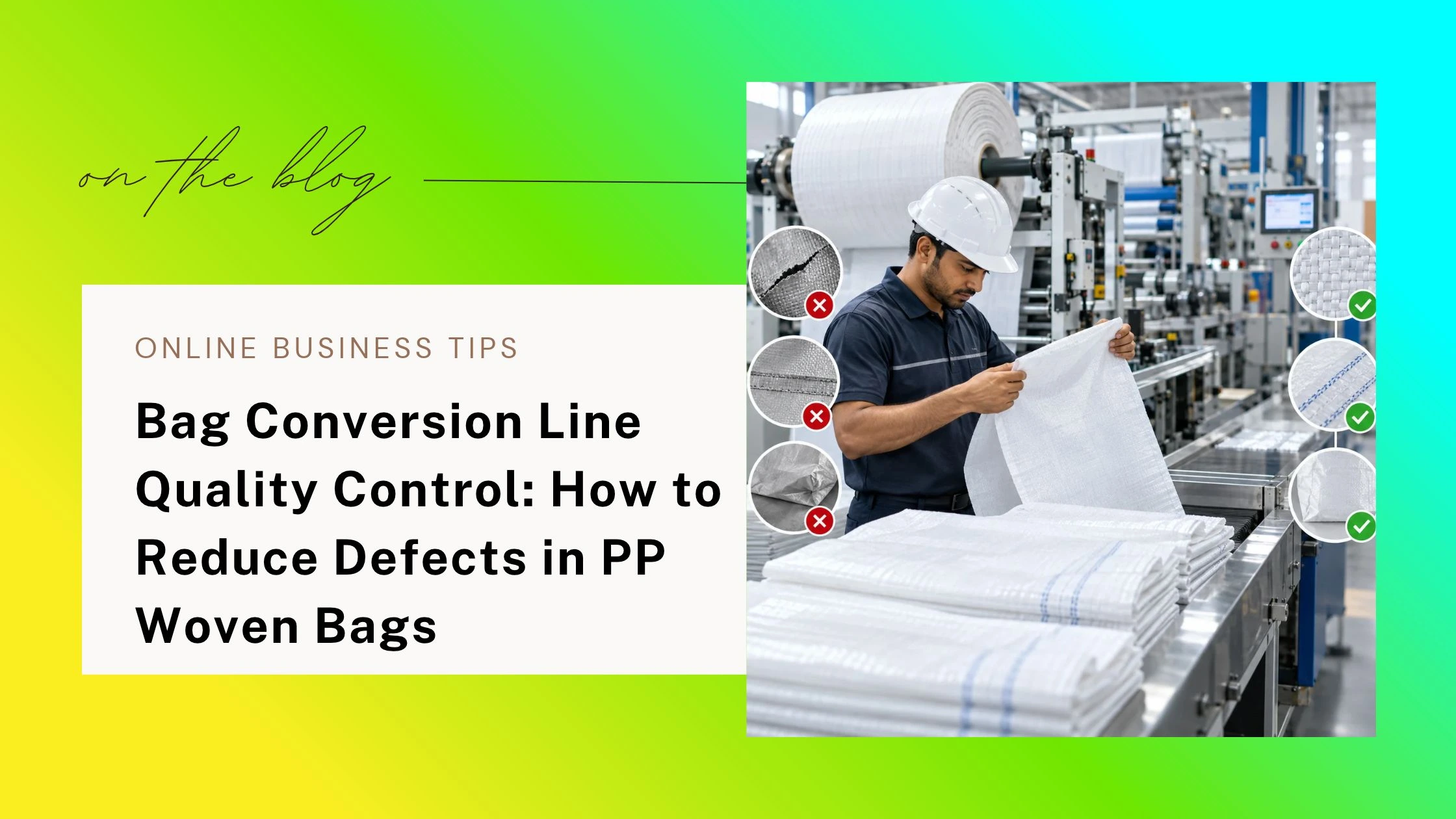
Quality Considerations Across Different Applications

Different PP woven bag applications create different quality priorities. A cement sack may emphasize seam strength and dimensional consistency, while a branded rice bag may place greater emphasis on appearance and print registration.
Food-related packaging requires particular attention to material suitability and cleanliness. Industrial bags may require stronger seams and more robust construction. Agricultural sacks may prioritize economical production combined with adequate strength and handling performance.
Quality should therefore be defined according to the end use. A bag that looks excellent but fails during transportation is not a successful product, just as a mechanically strong bag with poor printing may not satisfy a premium retail customer.
Can One Conversion Line Produce Different Types of PP Woven Bags?
Yes, a suitably configured conversion line can often produce multiple bag formats, but the actual range depends on the machine's design and specifications.
Changing bag dimensions, construction, or finishing requirements may require adjustments or additional equipment. Some applications can be handled through machine settings, while others may require different modules or complementary machinery.
Manufacturers should therefore avoid assuming that every conversion line can produce every PP woven bag type. Ask the supplier to confirm the supported bag dimensions, fabric range, construction options, changeover procedure, and expected production rate for each intended application.
This is especially important when the business plan includes several market segments.
Conclusion
Bag Conversion Line Applications cover a broad range of packaging products, from practical agricultural sacks and fertilizer bags to cement packaging, rice bags, animal feed sacks, industrial woven bags, and premium BOPP packaging. Although these products share PP woven fabric as a common foundation, their dimensions, construction, strength, printing, closure, and finishing requirements can differ considerably. Understanding those differences helps manufacturers select equipment that matches real production requirements instead of relying only on general machine specifications.
If you are planning to manufacture multiple PP woven bag types or expand into new packaging markets, choosing the right conversion configuration is an important first step. Oberon Industries can help you evaluate your intended applications and explore suitable machinery for your production requirements. You can also learn more about the bag conversion line solution and discuss your bag specifications before requesting a quotation.
Frequently Asked Questions
1. What are the main Bag Conversion Line Applications?
The main applications include cement sacks, fertilizer bags, rice bags, animal feed bags, agricultural sacks, industrial woven bags, and BOPP laminated packaging. The exact range depends on the conversion line configuration and the required bag construction.
2. Can one bag conversion line produce different PP woven bag types?
A suitably configured line can produce multiple bag types, but its flexibility depends on machine design, supported dimensions, fabric specifications, stitching configuration, and finishing requirements. Manufacturers should confirm the intended product range with the equipment supplier before purchasing.
3. What type of PP woven bag is commonly used for fertilizer?
Fertilizer is commonly packaged in woven polypropylene sacks, and some designs use a polyethylene liner for additional protection. The final construction depends on the fertilizer product, filling system, storage conditions, and customer requirements.
4. What is BOPP woven bag production used for?
BOPP woven bags are commonly used where manufacturers want strong woven packaging combined with high-quality printed graphics and branding. They are frequently considered for products such as rice, animal feed, pet food, fertilizer, and other branded bulk or retail products.
5. How do I choose a conversion line for my bag application?
Start by defining your bag dimensions, fabric specifications, construction, expected production volume, printing requirements, and product mix. Then select a conversion configuration capable of producing those bags reliably at the required commercial output.